Category Archives: Wes Studi

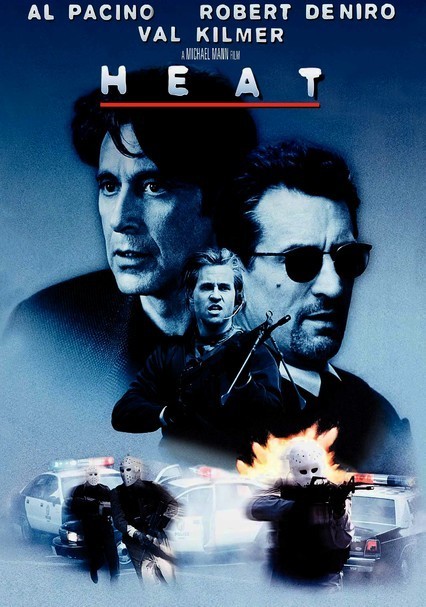
Heat-1995

Heat-1995

Director Michael Mann

Starring Al Pacino, Robert De Niro

Scott’s Review #1,228
Reviewed February 12, 2022

Grade: A-

Fans of the popular 1980s NBC television series, Miami Vice, will recall that Michael Mann was the Executive Producer of the show during its run.

He has a distinctive crime-thriller style that pairs perfectly with Heat, a sizzling 1995 offering starring two film greats, Al Pacino and Robert De Niro.

The fact that the pair do not appear together on screen too often can be forgiven because, when they do, the stars align, and the power of quiet scenes cannot be outdone. I savored the moment when they first appeared together.

Quality over quantity.

De Niro plays Neil McCauley, a lifelong criminal who is trying to handle the damage caused by one of his men while also planning one last big heist before retiring to parts unknown.

He meets a lovely young Los Angeles-based artist, played by Amy Brenneman, in a diner, and the two plan to relocate abroad.

Meanwhile, Lieutenant Hanna (Al Pacino) is a seasoned officer attempting to track down McCauley and his cohort while dealing with the chaos in his own life, including his wife’s (Diane Venora) infidelity and his stepdaughter’s (Natalie Portman) unhinged mental health.

McCauley and Hanna discover mutual respect, even as they try to thwart each other’s plans. The two characters become doppelgangers of one another.

The situation culminates in a cat-and-mouse chase on the tarmac at LAX airport.

To say that Heat is a by-the-numbers 1990s thriller is a fair assessment, although it’s way better than that classification, and it’s of that genre.

For starters, the acting is superior, and obviously, De Niro and Pacino bring a level of professionalism to the film in the lead roles.

My favorite scene is not the one you’d most expect me to say, but rather a quiet and powerful chit-chat in a small coffee shop. They are rivals, having lived opposite lives, yet their troubled lives mirror each other.

Without a doubt, Hanna wants to bring McCauley to justice, yet he admires him and sees parts of himself in him. The feeling is mutual, and the two actors relay this revelation without actually speaking the words.

Viewers immerse themselves in the characters, pivoting from this powerful scene.

There are a ton of characters in Heat, but each one feels like they have much to offer.

Juicy storylines are introduced but never forgotten, even if not part of the main canvas. Hanna’s wife and stepdaughter play a central role in the final act, even though they appear only in the first chapter.

In supporting roles, Val Kilmer and Ashley Judd share beautiful chemistry and a melancholy storyline as a damaged couple trying to survive surrounded by a life of crime.

At two hours and fifty-two minutes, there is plenty of time for each character to make their mark.

I love the rich character development that Heat offers, but sometimes it’s admittedly tough to keep track of the characters’ motivations and how they tie into the main action.

Mann’s style is all over the place, and even the musical score brought me back to the episodic song intervals that Miami Vice created.

The moody, dark atmosphere of dingy, crime-infested Los Angeles is perfectly set against glossy, glamorous high-rise and sprawling estate scenes. The bright and luminous city skyline is a feast for the eyes.

The cop/criminal dynamic is the main draw as Heat flexes its masculine muscles scene after scene. A bloody bank heist gone wrong at the beginning of the film cements what Mann is trying to create here.

A guy’s film with enough juice to hook the introspective film viewer, too.

Not remembered as well as it probably should be, Heat holds up surprisingly well when compared to similar but hokey 1990s action films like Lethal Weapon and the Die Hard films.

Though there’s not a whole lot new in Heat (1995), rich writing and powerful acting win out every time, and, of course, Pacino and De Niro are worth the price of admission.
Soul-2020

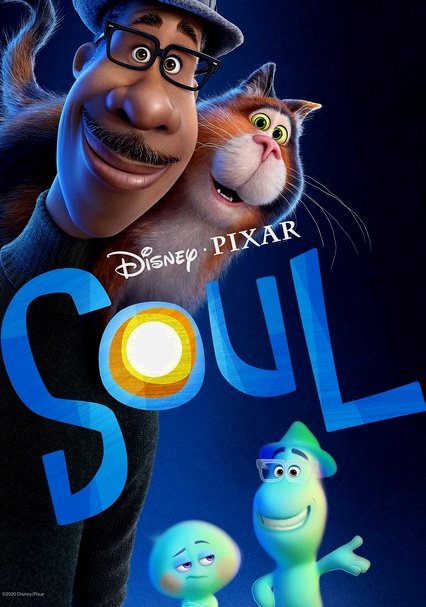
Soul-2020

Director Pete Docter

Voices: Jamie Foxx, Tina Fey

Scott’s Review #1,172

Reviewed August 18, 2021

Grade: B+

It’s pretty reassuring when a magical animated feature comes down the pike. Too often, the mainstream multiplex summer offerings are trite or too ‘kiddish’ for my tastes.

Soul (2020) is creative, colorful, and sentimental, with a terrific musical score composed by Trent Reznor (Nine Inch Nails).

The writing is fresh and inventive, with gorgeous animation that feels magical. I did not see the film on the big screen and bet it would have made the experience even more delightful.

Soul is not too dark, nor is it too trivial. It strikes a perfect balance between humanism, darkness, and hope. The title can be construed with a double meaning.

Based on the musical angle, the lead character is a piano player, the soul could mean rhythm, but I’m only half right. An out-of-body or celestial experience and the essence of a living being are also part of his soul.

While watching the film, I kept ruminating over how lovely and inspirational a film like Soul is during a crushing pandemic. It has heart and magic.

Unfulfilled music teacher Joe Gardner (Jamie Foxx) finally lands the gig of a lifetime at the best jazz club in town, supporting legendary Dorothea Williams (Angela Bassett). But his excitement gets the best of him, and he stumbles into a maintenance hole on a New York City street.

Lying in a coma, Joe enters a fantastical place: The Great Before. There, he teams up with Soul 22 (Tina Fey), and together they find the answers to some of life’s biggest questions while embarking on a journey in the switched bodies of Joe and a therapy cat.

Set in the massive Big Apple itself, the film offers a wealth of hustle, bustle, and life. I adored the setting. The smoky jazz club, with its sultry set design and creative music, made me feel immersed in the wonderful surroundings.

The story itself slightly confused me when Joe arrived in the “Great Beyond” as a soul. Assuming this meant death, I was relieved when he backtracked to the “Great Before” and met with counselors all named Jerry. The counselors, I realized, prepare unborn souls for life with the help of mentor souls.

This didn’t resonate with me as much as other aspects of the film.

Foxx and Fey are fine doing the voices for Joe and 22, respectively, but they are not the highlight either. I never really thought of either of them throughout the duration. There were better aspects to focus on.

Disney/Pixar’s feature film, which features a black central character, is worthy of mention, and it is about time. Joe’s family is black, adding an incredible mother figure and supporting characters of ethnicity to the fold.

The music, the music, the music! This makes Soul as good a film as it is.

Trent Reznor’s collaboration alone made me eager to see it. His creative use of keyboards and partnership with fellow Nine Inch Nails bandmate Atticus Ross provide proper ambiance to the metaphysical sequences.

A hallucinogenic, trance-like musical beat is unique and trippy.

Younger children may be perplexed or bewildered by much of the activity, so I’m not sure I’d recommend it for that demographic. However, music fans and admirers of rich stories with a subtext of life will likely enjoy the experience and the subsequent message that Soul (2020) provides.

Oscar Nominations: 2 wins-Best Animated Feature Film (won), Best Original Score (won), Best Sound

Dances with Wolves-1990

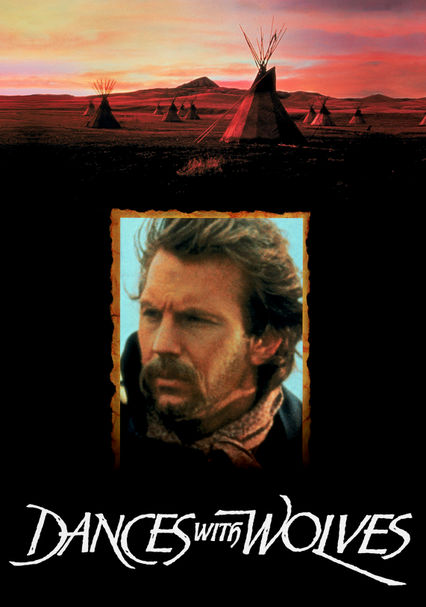
Dances with Wolves-1990

Director Kevin Costner

Starring Kevin Costner

Scott’s Review #1,091

Reviewed December 14, 2020

Grade: A

A western epic of grand proportions, Dances with Wolves (1990) is a quiet, yet bombastic story of one man’s yearning to understand and appreciate a different culture.

The liberal-leaning story is of great importance in American history, which is my main reason I love it. This project matters and is sincere and true.

The content and the gorgeous, sweeping cinematography make this a must-see on the big screen for full appreciation.

Sort of like Lawrence of Arabia (1962), in a Western style.

The lovely musical score is well-paced and simply gorgeous, only enhancing the experience and appreciation of the film.

The directorial debut of a then-inexperienced and up-and-coming star, Kevin Costner, catapulted him into the big leagues, earning him tremendous respect within the Hollywood community.

He also produced the film and used his own money when the budget ran over. The accolades were justified, leading to his becoming an A-list star.

He never achieved anything comparable to Dances with Wolves again.

The time is 1863, when the United States was embroiled in the Civil War. Union soldier John Dunbar (Kevin Costner), depressed and suicidal, is injured in battle and receives a hero’s praise. He requests a transfer to the western frontier, where he lives in solitude.

He slowly befriends the local Sioux tribe and eventually becomes an honorary member, falling in love with a white woman, Stands with a Fist (Mary McDonnell), who was raised by the tribe.

They named him Dances with Wolves.

Chaos erupts when the Union Army arrives to snatch the land at any cost.

Never the greatest actor in the world, but certainly competent, Costner has the role of a lifetime. That Dances with Wolves is Costner’s project is crucial. He had a vision and saw that vision to fulfillment.

To my knowledge, the studio didn’t interfere or seek control but gave Costner the freedom to do whatever he wanted. It shows in the final product.

The romance between Dances with Wolves and Stands with a Fist is tender, alive, and without standard obstacles. No misunderstandings or drama. Theirs doesn’t need any trimmings. The chemistry between Costner and McDonnell is strong.

At over three hours in length, the film has time to pace these brilliant moments carefully.

The film is a political vehicle to teach the audience the ravages and unfairness that Native Americans suffered at the hands of the White Man, and that is huge. Too often, the issue is skimmed over or diminished in school textbooks, so it’s nice to see the truth given its due.

Dances with Wolves serves as an educational tool, and it provides no happy ending. How great would it be if the film were shown in high schools and colleges around the United States?

I love how the film, a western, avoids the stereotypes that are always present in that genre. No good guys are wearing white or bad guys are wearing black, no shoot-em-ups at local saloons, and no cowboys to save the day.

Dances with Wolves offers a character study that explores the pivotal thoughts and motivations of the three central characters.

Graham Greene must be mentioned as an integral part of the supporting cast. His authenticity is illuminating.

Over the years, Dances with Wolves (1990) doesn’t hold up as well as other films- The Silence of the Lambs (1990) and Goodfellas (1991) are legendary contemporaries that everyone remembers better.

Dances may suffer from an “of its time” label, justifiably so, but the film is a masterpiece.

It’s recommended to dust this one off and give it a whirl, if only for old-time’s sake.

Oscar Nominations: 7 wins-Best Picture (won), Best Director-Kevin Costner (won), Best Actor-Kevin Costner, Best Supporting Actor-Graham Greene, Best Supporting Actress-Mary McDonnell, Best Screenplay Based on Material from Another Medium (won), Best Original Score (won), Best Sound (won), Best Art Direction, Best Costume Design, Best Cinematography (won), Best Film Editing (won)

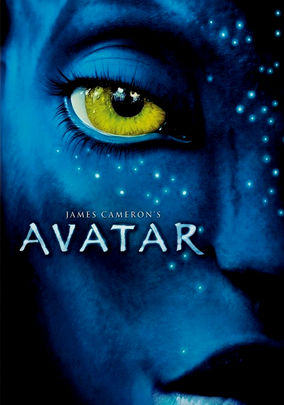
Avatar-2009

Avatar-2009

Director James Cameron

Starring Sam Worthington, Zoe Saldana

Scott’s Review #572

Reviewed December 29, 2016

Grade: A

Acclaimed director James Cameron has done it again- similar to Titanic, he has created a masterpiece, but, oddly in one facet of the film, not the entire ball of wax.

Avatar (2009) has two main factors to evaluate- the story and the visual aspect. Both are crucial, but the visual experience is immeasurable, so much so that the story is nearly irrelevant.

Futuristic in the timeline and set in the Twenty-second century, human beings begin to colonize Pandora, a lush planet, filled with lavish forests and creatures who flutter about.

Planet Earth has become depleted of resources, causing scientists to utilize Pandora for their gain. Poisonous to humans, visitors must wear protection.

Sam Worthington portrays Jake Scully, a paraplegic former Marine, who visits Pandora and falls in love with Neytiri, a native creature of the planet.

From a story perspective, Avatar is very ordinary and nothing separates the story from others that have come before it.

At the center is a love story and a rather predictable one in nature, but this is not the reason to view Avatar. Jake and Neytiri are sweet together, but I had much more fun watching the film than caring what happened between the pair.

Visually, Avatar is one of the most amazing films I have ever seen. The intricate style and the attention to detail are astounding- this is my favorite aspect of Avatar and why I feel that the story is not the reason to see the film.

Everything, from the art direction to the background pieces is perfectly made. Natives of Pandora are all CGI- blue/green in color and are gorgeous, peaceful, and moving.

Avatar will likely go down in history as a groundbreaking film- it is a visual feast.

The anti-war slant is also impressive to me, but the creative, and technical achievements set this film over the top.

James Cameron creates a magical, absorbing film that must be cherished.

Oscar Nominations: 3 wins-Best Picture, Best Director-James Cameron, Best Original Score, Best Sound Editing, Best Sound Mixing, Best Art Direction (won), Best Cinematography (won), Best Film Editing, Best Visual Effects (won)