Category Archives: 2017 Films

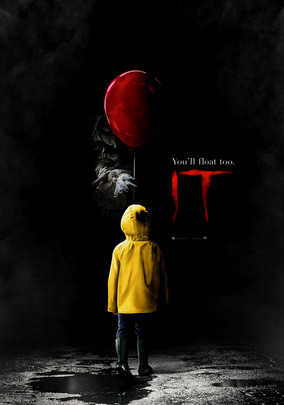
It-2017

It-2017

Director Andres Muschietti

Starring Bill Skarsgard, Jaeden Lieberher

Scott’s Review #684
Reviewed September 20, 2017

Grade: A-

An enormous hype has gone into the first big-screen adaptation of the epic-length 1986 Stephen King novel, It.

An above-average mini-series based on the book was released in 1990, but the film version is much more effective.

Officially entitled It: Chapter One (2017), it divides the story in half, only focusing on the characters as children, not as adults decades later.

The film is highly effective, with a fantastic story, visuals, cinematography, and a rocking musical score. Simply put, it is one of the better Stephen King film adaptations.

As rabid Stephen King readers will understand, at over eleven hundred pages in length and spanning thirty years, a two-hour and fifteen-minute film simply wouldn’t encompass the author’s artistic vision.

To be determined is how chapter two will measure up to the glory of the first chapter.

Derry, Maine, is the sleepy little town where the action takes place. The period is 1988, but it is worth pointing out that the novel takes place in the late 1950s.

On a stormy afternoon, seven-year-old Georgie takes a paper boat, constructed by his older brother Bill Denbrough, outside to see if it sails. He meets a clown in the storm drain, who introduces himself as “Pennywise the Dancing Clown.”

Pennywise toys with Georgie turns vicious, and tears the boy’s arm off.

Months later, life goes on as Bill and his group of friends known as “The Losers Club” all separately begin to see variations of Pennywise.

The film is part of a teenage summer adventure balanced with a terrifying horror film, and director Andres Muschietti achieves this mixture seamlessly.

Lighting is one example of how the film goes about in this fashion.

Most of the outdoor sequences are bright, sunny, and airy. Conversely, the terrifying scenes, usually involving the entity of Pennywise, are shot using dark lighting, eliciting fear and a perfect mood.

The casting is terrific—I specifically found actor Jaeden Lieberher as Stuttering Bill, Jeremy Ray Taylor as Ben Hanscom, and actress Sophia Lillis as Beverly Marsh to be wonderful performers and clear standouts among the teenage characters.

Lillis, bright-eyed and with a strong-willed composure, resembles a young Scarlett Johansson and could have a bright future ahead of her. Lieberher’s earnestness and stuttering ability are believable, and his innocence is reminiscent of every kid’s.

Lastly, Taylor fills a pudgy new kid in town, Ben, with comedy and romanticism in his unrequited love for Bev.

Thriving is the portrayal and appearance of the demonic entity Pennywise. Since the fictional clown has over thirty years of interpretation and imagination, bringing him to cinematic life was challenging.

The risk would have been making him either too horrific or cartoon-like- the result is a perfect hybrid. Bill Skarsgard exudes crazy in his brilliant performance, teetering between goofy and playful with Georgie and evil personified as he taunts and terrorizes the kids in his dusty hideaway.

Interestingly, none of the adult characters are written sympathetically. From the creepy Alvin Marsh to the nerdy pharmacist, even the stern librarian and the overbearing Mrs. Kaspbrak are each laden with an unlikable quality.

The closest adult to being “nice,” Bill’s father, finally screams at his son to accept the fact that Georgie is dead.

Two small complaints include the two secondary bullies—the King Bully Henry Bowers cohorts are not given their comeuppance and simply vanish from the screen, never to be mentioned again.

Secondly, the sound exterior shots of Derry, Maine, exude a New England freshness and a small-town mystique. It’s too bad the scenes were not filmed in Maine at all but somewhere outside of Toronto, Canada—more realism would have been nice.

Due to the massive success of the adapted film, legions of fans will undoubtedly hold their breaths waiting for the resurrection of Pennywise and “It” to be unleashed on film fans everywhere- probably in 2019.

I will be one of those fans.

XX-2017

XX-2017

Director Jovanka Vuckovic, Annie Clark, Roxanne Benjamin, Karyn Kusama, Sofia Carrillo

Starring Natalie Brown, Melanie Lynskey

Scott’s Review #677

Reviewed September 1, 2017

Grade: B

XX is a 2017 American anthology film featuring four unique horror vignettes directed by female directors—a brazen feat in itself as this gender is too often underrepresented in the genre.

The chapters do not always make complete sense, but they achieve a creative, unpredictable edge and the feeling of watching something of substance.

Another anomaly is that each features a female lead, giving the film a measure of female empowerment.

Immediately, we are treated to an odd tale named The Box, based on a short story written by an author notable for composing tales of the gruesome Jack Ketchum.

In this story, a young boy named Danny, cheerfully riding a train with his mother and sister during the holidays, innocently asks an odd-looking man to peek inside a shiny, red, gift-wrapped box.

When the man agrees, Danny initially goes about his day but stops eating, much to his parent’s horror. This installment is my favorite of the four as it is the only holiday-themed chapter and contains a morbid quality amid the cheeriness of the season.

The perspective soon switches from Danny to his mother, Susan, and the conclusion is surprising.

Next up, The Birthday Party features middle-aged Mary, intent on holding a birthday party for her young daughter, Lucy. When Mary finds her husband dead, she dresses him up in a panda costume and attempts to conceal him from the group of anxious young party-goers.

The conclusion is a mix of the hilarious and the disturbing. This vignette features a nanny and a neighbor, both odd and mysterious characters. I admire the black comedy in this one most of all.

Third in the series is Don’t Fall, which transports the viewer to the middle of the desert. Four friends are on an expedition seeking adventure. The main character, Gretchen, is deathly afraid of heights.

When the group discovers a cave with ancient, evil writings on it, one group becomes possessed and embarks on a killing spree against the others.

Very short in length, Don’t Fall suffers from absurdity and has the least character development of the four—it is also the one I found to be the weakest.

Finally, Her Only Living Son is the strangest in the quartet. Cora, a working-class single mom, has only one son, Andy. About to turn eighteen, he is rebellious and known to be cruel to classmates—even gleefully tearing off one poor girl’s fingernails.

Ironically, the high school faculty seems to worship Andy, deeming him remarkable and seeming somewhat entranced by him. As Cora becomes influenced by her mailman, Chet, it is revealed that Andy’s father is a Hollywood star and wants nothing to do with Cora or Andy.

When Andy develops claws on his fingernails and toenails, Cora fears that he is not her ex-husband’s son at all but the spawn of Satan. This tale is a miniature of the classic 1968 horror film Rosemary’s Baby, haunting and devious in tone.

Enticingly, each chapter runs the gamut in theme and is unique and different enough from the others to be distinguishable and not suffer from a blended or all-too-similar feel.

Indeed, each situation is implausible in “real life,” and some head-scratching plot points abound. For instance, how is it possible for an emaciated child, under a doctor’s care, not to be force-fed?

Also, a teenager growing claws and hooves? Really? But horror, and sometimes supernatural, or even silly, elements can be fun.

XX, new for 2017, is reminiscent of the successful horror anthology that the Showtime cable network was daring enough to air from 2005-2007- this series ran the gamut in stylized and edgy horror escapades, using various directors to achieve this result.

Here’s to hoping that XX opens new doors and prompts a new horror series. XX has a few flaws but is successful in undoubtedly pleasing the legions of horror fans.

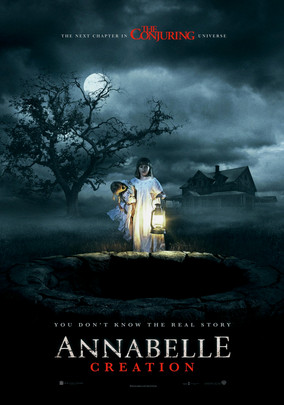
Annabelle: Creation-2017

Annabelle: Creation-2017

Director David F. Sandberg

Starring Anthony LaPaglia, Stephanie Sigman, Talitha Bateman

Scott’s Review #672

Reviewed August 17, 2017

Grade: B+

Annabelle: Creation (2017) is a prequel to the successful 2014 horror film entitled Annabelle and the fourth installment in a total of the popular The Conjuring series (2013-present).

Over just a few years, these films have become well-crafted, intertwined stories in the modern supernatural horror genre.

Compared to another latter-day horror franchise, Saw, Annabelle/The Conjuring elicits more of the classic spook factor rather than the gore associated with the Saw franchise (2004-present).

The time is 1943, set somewhere in the desert and mountainous region of California. Dollmaker Samuel Mullins (Anthony LaPaglia) and his wife Esther (Miranda Otto) live a cheerful existence with their young daughter, Annabelle, whom they nickname Bee.

The family attends church services regularly and plays cute games of hiding and seeking in their vast farmhouse and land. When one sunny day, Bee is struck and killed by a passing car, the couple is devastated beyond repair.

Twelve years later, a group of orphans led by Sister Charlotte (Stephanie Sigman) are invited by Mr. Mullins (Mrs. Mullins is now bedridden due to a mysterious accident) to spend some time at the farmhouse when their orphanage shuts down.

The six orphans, led by best friends Janice (Talitha Bateman), and Linda (Lulu Wilson) embark on the quiet farmhouse and immediately are met by strange goings-on, most notably a life-sized doll living inside a forbidden room, which Janice inevitably stumbles upon out of curiosity.

Stricken with polio, Janice has been left a disabled person, unable to move around very well.

As Janice discovers the creepy doll, or shall we say, Janice awakens the doll from a strange closet covered with bible verses, the doll terrorizes the girls. It wreaks havoc on Janice and Linda in particular.

An evil entity inhabits the doll, and the peculiar circumstances following Annabelle’s death years earlier rise to the surface as secrets are revealed and demons seek refuge in the farmhouse.

Annabelle: Creation is exceptionally well made and inundated with scary elements of surprise. The farmhouse, in particular, is a fantastic setting for a horror film—the remote locale, the eerie quiet, and the dark, unfamiliar layout of the house all come to fruition throughout the film.

Specifically, a scarecrow, a stairwell chair-lift, and the years between 1943 and 1955 are of special importance.

Besides the common horror elements that the film uses to its advantage, it is just downright scary and tense. On plenty of occasions, the cameras are positioned so that a figure or object could easily be lurking behind a particular character but out of sight from the audience.

Sometimes, nothing appears, and the scene goes on, but other times, a scare occurs that makes us jump out of our seats—this is good, classic horror at its finest. One knows not what is, or could be, coming next.

I did not find Annabelle: Creation predictable in the slightest, which makes the film succeed.

As if I was not entertained enough throughout the film, the final set of scenes, now some twelve years after 1955, brings us to the very beginning of 2014’s Annabelle. We witness the very first scenes of that picture, now making perfect sense and weaving the two films together in a compelling fashion.

Apt viewers will remember that Annabelle begins with a horrific, brilliantly crafted, and shot home invasion scene. Now, the storyline will make more sense, and viewers will experience an “oh wow” moment.

I was left with a couple of slight gripes about Annabelle: Creation.

The character’s appearances are quite modern-day—not the clothes per se, but the hairstyles, mannerisms, and figures of speech—and I never, for a second, believed the time was the mid-1950s.

To build on this point, and at the risk of an honest historical inaccuracy critique, a black orphan would never have resided with white orphans, let alone be one of the “popular girls,” nor would the orphans ever have been led by a sexy, Indian nun wearing heavy mascara.

I get that the filmmakers deemed inclusiveness a higher priority over historical accuracy. Still, these details are noticed and readily apparent as not having existed if the film were “real life.”

Furthermore, the point was repeatedly hammered home that the film was a massive supporter of Christianity and went out of its way to promote the goodness of religion over evil.

Annabelle: Creation (2017) reaffirms my belief that good, old-fashioned horror films can still be successfully made in the modern era, using elements firmly etched in the genre but used in a contemporary, scary, and sinister way.

Here’s hoping the creators come up with another good idea and create another segment in this thrilling dual franchise.

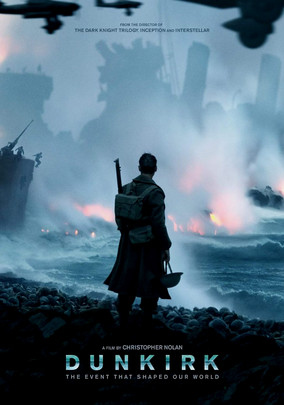
Dunkirk-2017

Dunkirk-2017

Director Christopher Nolan

Starring Fionn Whitehead, Tom Hardy

Scott’s Review #666

Reviewed July 24, 2017

Grade: A

Of the hundreds of war films made over the years, most have a similar style, with either a clear patriotic slant or a questioning/message-type nature.

Regardless, most have a certain blueprint—from the story to the visuals to the direction—and rarely stray from it.

The genre is not my favorite, as machismo is usually overdone, and too many films turn into standard “guy films” or “good guys versus the bad guys.”

Finally, along comes a film like Dunkirk (2017)that gives the stale genre a swift kick.

The story is both simple and historical.

In 1940, Nazi Germany, having successfully invaded France, pushed thousands of French and British soldiers to a seaside town named Dunkirk.

With slim hopes of rescue or survival, the soldiers are sitting ducks for the raid of German fighter planes, which drop bombs both on the soldiers and rescue ships.

In parallel stories, a kindly British civilian (Mark Rylance) and his son sail to Dunkirk to help rescue the soldiers, and two British fighter pilots chase the German fighter planes, attempting to thwart their deadly intentions.

One will immediately be struck by the film’s pacing, which is nonstop action from start to finish. The action, combined with very little dialogue and an eerie musical score, is what makes the film feel unique and fresh.

Directed by Christopher Nolan (The Dark Knight, 2008 and Inception, 2010), critics herald this film as his most remarkable work yet- I tend to agree.

Scenes involving such differing musical scores as screechy violins mixed with thunderous, heavy beats shake up the film and keep the audience on their toes as to what is coming next.

An interesting facet of the film, and certainly done on purpose, is that the characters’ backstories are not revealed- we know very little about them.  Do they have families? Are they married? This is a beautiful decision by the screenwriters and by Nolan.

For instance, the first scenes involve a disheveled private named Tommy (Fionn Whitehead).  Panicked, he runs through the streets in pursuit of the beach, where he meets a fellow soldier named Gibson, who is burying another soldier in the sand.

Together, they find a wounded soldier and carry him to a departing ship. The men never speak but communicate through their eyes and gestures—it is a powerful series of scenes.

Another positive to Dunkirk is the anonymity of the enemy. The German soldiers are never shown. We see many scenes of fighter planes overhead, pummeling the soldiers with bombs and pulsating gunfire in various scenes. Still, the mystique of the enemy troops is a constant throughout the film.

The faceless component of the villains adds terror and haunting uncertainty.  In this way, the film adds to the audience’s confusion about where the enemy may be at any given moment.

The visuals and the vastness of the oceanside beach are at the forefront throughout the entire film, which is one hour and forty-six minutes, relatively brief for a war film. It elicits both beauty and a terrible gloominess.

Scenes of the vastness of the beach peppered with thousands of cold and hungry men are both pathetic and powerful.

The best scenes occur on Mr. Dawson’s  (Rylance) mariner boat. Aided by his son Peter and Peter’s frightened schoolmate, the trio heads for dangerous Dunkirk to help rescue, but en route, he picks up a shell-shocked soldier determined to stay as far away from Dunkirk as possible.

This leads to compelling drama and deep characterization of all the central characters.

Many list 1998’s Saving Private Ryan as the best film in the modern war genre, but Dunkirk may very well rival that film in intensity and musical effectiveness. Dunkirk (2017) also contains shockingly little bloodshed or dismembered soldiers—it does not need this to tell a powerful story.

The film is sometimes emotional and intense, but it never lets go of its audience from the very first frame—it is a war film for the history books and a lesson in film creativity and thoughtfulness.

Oscar Nominations: 3 wins-Best Picture, Best Director-Christopher Nolan, Best Original Score, Best Sound Editing (won), Best Sound Mixing (won), Best Production Design, Best Cinematography, Best Film Editing (won)

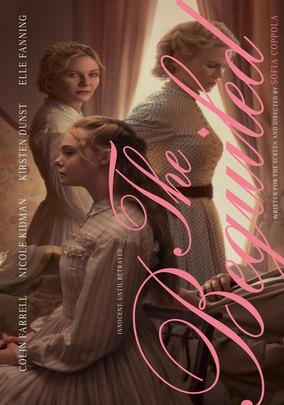
The Beguiled-2017

The Beguiled-2017

Director Sofia Coppola

Starring Nicole Kidman, Colin Farrell, Kirsten Dunst

Scott’s Review #659

Reviewed July 4, 2017

Grade: A-

A remake of the 1971 film (also adapted from an earlier novel) starring Clint Eastwood, The Beguiled is a 2017 release directed by Sofia Coppola (Lost in Translation, 2003), a director ready to burst onto the front lines.

Coppola carefully chooses her films, but each differs from the others, and The Beguiled is no different. A piece fraught with atmosphere and tension, Coppola does wonders from a directing standpoint.

The story has tons of unchartered potential and drags at times, but overall, The Beguiled is a hit if nothing more than to look at in wonderment.

The film gets off to a moody start as we follow a young girl, eerily humming as she picks mushrooms, along a deserted southern road. It is Civil War times (1864), and the setting is a mostly deserted all-girls boarding school in south Virginia.

The girl (Amy) is startled when she discovers an injured, handsome Union Army soldier, Corporal John McBurney (Farrell). Sympathetic, Amy helps the soldier back to the school, led by the headmistress, Martha Farnsworth (Kidman).

Slowly, the females in the school become enamored with John, developing rivalries to gain the upper hand in his affections.

There is something sinister and wickedly foreboding about almost every scene, as we shrink at the thought that something terrible will happen at any moment—sometimes it does, and sometimes it does not.

Almost like a horror film would, the camera angles are such that something or someone is bound to leap out and grab a character suddenly.

The colors are muted and almost pastel, and fog commonly floats through the exterior scenes.

Coppola does a fantastic job of portraying a deserted southern landscape. The film’s lighting is also intriguing, as lit candles enhance the dimness.

The final dinner scene (poison mushrooms, anyone?) is gloomy and Shakespearean.

Beyond the look of the film, The Beguiled is well-acted. With heavyweights like Farrell, Kidman, and frequent Coppola star, Kirsten Dunst, as the vulnerable and unhappy teacher, Miss Morrow, the acting is stellar and believable.

The audience is unsure if John is manipulating the women for his gain or if he has developed feelings for any (or all) of them.

With hormones raging, the lovesick teen, Alicia (Elle Fanning), sets her sights on John almost from the beginning, sneaking out of musical lessons to kiss an unconscious John goodnight.

While compelling, the story is relatively slow-moving, leaving the reader with infinite possibilities when the conclusion finally happens. Other than the tart Alicia, Miss Morrow and Miss Farnsworth could have reached endless romantic potential.

I was left wondering throughout the film when a romance would develop between Martha and John, but only towards the end was this ever addressed and barely skirted over. Stoic Martha slowly began to let her guard down as they took charge.

The film could have added some further romantic complications and beefed up the very short running time of ninety-three minutes.

As Nicole Kidman is one of my favorite film stars of all time (she can tell a story by facial expressions alone), she has wisely begun to choose fantastic supporting roles as she ages in Hollywood (2016’s Lion immediately comes to mind).

Dunst has aged gracefully into a middle-aged actress chomping at the bit for meaty roles, and Colin Farrell is as ruggedly handsome as ever, sprouting a dark and bushy beard for most of the role.

The acting in The Beguiled is fantastic.

The Beguiled is a film to watch if only to escape to the joys of superb, atmospheric filmmaking and to appreciate the outstanding talents of one of the few prominent female directors of today (hopefully, the mega success of 2017’s female-directed Wonder Woman will begin to change this).

The story has a few issues, but The Beguiled (2017) is worth the money.

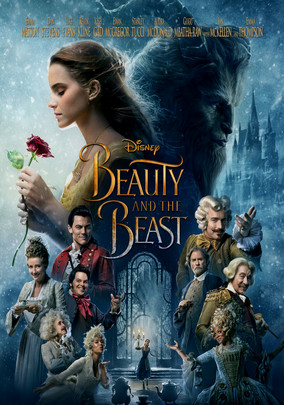
Beauty and the Beast-2017

Beauty and the Beast-2017

Director Bill Condon

Starring Emma Watson, Dan Stevens

Scott’s Review #634

Reviewed April 18, 2017

Grade: A-

When I went to see the live-action version of the Disney animated classic Beauty and the Beast, which was released in the spring of 2017, I was unsure what to expect.

Would it be a cheesy or amateurish retread of the 1991 animated smash only with human beings? Why the lackluster March release date? Indeed, this is telling; otherwise, why not release the film in the coveted fourth quarter with potential Oscar buzz?

I do not have the answers to all these questions, but this version of Beauty and the Beast is enchanting, romantic, and lovely- a spring treat for the entire family to enjoy.

Our protagonist, Belle (producers wisely casting Harry Potter legend Emma Watson), is a kindly farm girl living with her father, Maurice (Kevin Kline),  in a quaint village outside of Paris.

Considered a bit odd by her village mates because she loves to read, she rebuffs the advances of the dashing soldier, Gaston (Luke Evans), because he is arrogant- the other village ladies (as well as Gaston’s gay companion, LeFou) flaunt over Gaston’s good looks.

When Maurice ventures into unknown parts and stumbles upon a dilapidated castle, he is locked up by a vicious beast. Having once been a handsome prince, he has since been cursed by a beggar woman.

The only way the beast can return to his former self is to find true love before a wilted rose loses all of its petals—enter Belle to the rescue. Belle convinces the Beast to let her stay in prison and release her father.

Will Beast and Belle fall madly in love?

Of course they will. The fated romance is part of what makes the film heartwarming and lovely.

The now-legendary classic fairy tale feels fresh and energized with the Disney-produced project. Director Bill Condon carefully and successfully crafts an honest effort, making sure that while providing a fairy tale happy ending, not to make the film seem contrived, overblown, or overdramatized.

I fell for the film hook, line, and sinker. It is an uplifting experience. The song and dance numbers abound with gusto and good costumes—my personal favorites are the rousing “Be Our Guest” and the sentimental “Beauty and the Beast.”

The crucial romance between Watson’s Belle and the Beast, earnestly played by Dan Stevens (of Downton Abbey fame), works in spades. Their chemistry feels authentic and passionate. As Belle is at first held captive by the misunderstood bad boy instead of Maurice, the pair at first loathe each other, but this is done with innocence and no malice.

Condon wonderfully exudes the right amount of slow build to make the pair beloved by audiences with the correct pacing.

The CGI in Beauty and the Beast is heavy, as expected. However, the Beast’s distraction is a bit confusing. Was the Beast a complete CGI creation save for the close-ups, or was Watson dancing with Stevens when filming commenced in certain scenes?

I am unsure.

The controversial “gay storyline”, which helped the film be banned in the southern United States and Russia, as well as other countries, is pure and utter rubbish.

The subject is explored extremely superficially and not worthy of all the fuss.

Worthier of mention is the tremendous diversity that is featured in the film, most notably in the opening sequence. Interracial couples appear in the form of Madame de Garderobe (Audra McDonald), the opera singer turned wardrobe, and Maestro Cadenza (Stanley Tucci), turned harpsichord.

On the gay issue, it is sweet that the implied gay character of LeFlou finds love with another man at the end of the film.

A minor complaint is the scattered authentic French accents of many of the household staff and village people, but Belle and Maurice speak in the British tongue. Being a fairy tale, liberties must be taken, and suspending disbelief is necessary, but this was noticed.

Beauty and the Beast (2017) is a lovely experience that combines fantastic musical numbers with romance, with a side of diversity thrown in for good measure.

Since the film will undoubtedly be seen by many youngsters and teens, this is a wonderful aspect of the film and, hopefully, a shining, positive example in filmmaking.

Oscar Nominations: Best Production Design, Best Costume Design