Category Archives: Andrew Duggan

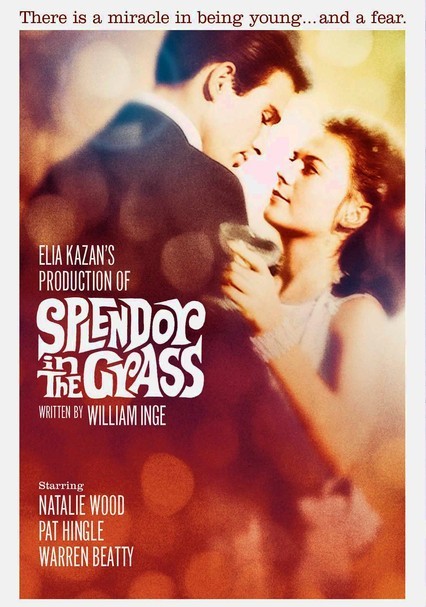
Splendor in the Grass-1961

Splendor in the Grass-1961

Director Elia Kazan

Starring Natalie Wood, Warren Beatty, Pat Hingle

Scott’s Review #1,231
Reviewed February 20, 2022

Grade: A-

Splendor in the Grass (1961) is mainly a film about teenage angst, but the angst spills over to the adults as pressures are heaved on many characters.

Fortunes are gained and lost following the Wall Street Crash of 1929, which handicapped some characters obsessed with money while the teenage characters battled emotions.

It offers poetic relics and references from English poet William Wordsworth about life and longing for love that can be thought about.

The film was written by William Inge, who also wrote 1955’s Picnic, and directed by Elia Kazan, famous for A Streetcar Named Desire (1951) and On The Waterfront (1954).

Splendor in the Grass is an uneasy watch but provides slices of the brilliance of those other films. Isn’t the point of a superior movie to make us think and ponder?

At the risk of feeling a tad dated some sixty years later, how powerful a film must have been in 1961, sending inevitable shock waves to audiences expecting a more wholesome show.

It’s also legendary Hollywood actor Warren Beatty’s debut, showcasing an emotionally superb performance by Natalie Wood.

Bud Stamper (Warren Beatty) and his high school sweetheart, Deanie Loomis (Natalie Wood), have an innocently blossoming relationship if only they could be left alone.

Their parents’ mutual oppressiveness weighs it down.

Bud’s father, Ace (a terrific Pat Hingle), is hell-bent on Bud attending Yale University in the fall. He is afraid Deanie will become pregnant, ruining the bright future he expects from the affluent young man.

Deanie’s mother (Audrey Christie) cautions her daughter from engaging in sexual relations and remaining a ‘good girl’ because she is frightened of Bud not marrying a girl with questionable morals.

Both parents’ meddling causes the teens emotional pressure and threatens to ruin their relationship and, perhaps, their futures. Bud’s mother is complacent, and Deanie’s father offers proper support to his daughter.

There is a lot of story going on in Splendor in the Grass, and all of it is juicy and relevant from the perspective of whoever the viewer takes. This is part of the beauty of the film- told through the eyes of Bud and Deanie and the fragile feelings teenagers possess, their parents can be dissected as well, and want the very best for their kids.

The romance is not just about Bud and Deanie. Other players and potential love interests are introduced, and we wonder if Bud and Deanie will ride off into the sunset together.

Inge and Kazan make us pose several questions. Do people who belong together make it? Do some people settle for different lives based on sacrifice? Can heartbreak lead to madness and a different perspective for some?

The terrific screenplay written by Inge is the film’s sweet spot. It’s complex and fraught with emotion and questions. The setting of remote Kansas in the late 1920s gave me a feeling of stifling predictability and one’s life already planned for them rather than encouragement to reach for the stars.

This is dangerous territory in itself.

Bud is expected to get an education but wants to live on a simple ranch and be a family man. Deanie is trained to be sweet and kind and to resist the pleasures of the flesh like her mother did, but is that enough for her?

Kazan, a master of brutal yet realistic films, brings excellent writing to life. Based on his other films, I knew I was not in for a cheery experience but rather a harsh reality. That sits well with me, as films that make one think are celebrated.

Splendor in the Grass (1961) resembles Rebel Without a Cause (1955) and stars Wood. The film teaches me that although generations come and go, the feelings and emotions young people feel in the moments when they are young never change.

Oscar Nominations: 1 win-Best Actress-Natalie Wood, Best Original Screenplay (won)
Bone-1972

Bone-1972

Director Larry Cohen

Starring Yaphet Kotto, Andrew Duggan, Joyce Van Patten

Scott’s Review #1,121

Reviewed March 12, 2021

Grade: B+

It’s tough to review a film like Bone (1972) because it’s a tough film to categorize. Is it a satire, or does it dissect racism and classism?

The truth is, it does all of the above and offers a bizarre, jagged cinematic experience that will leave the viewer perplexed, scratching their head, and ruminating about it long after the credits roll.

I was originally expecting Bone to be a 1970s exploitation film, but it’s not that at all.

One lazy sunny day, in Los Angeles’s illustrious Beverly Hills, local salesman Bill (Andrew Duggan) and his wife Bernadette (Joyce Van Patten) bicker beside their luscious pool.

They are horrified when they realize a filthy rat has become stuck in the filter. This provides some symbolism as the film chugs along. When they rush to call the exterminator, a threatening black man named Bone (Yaphet Kotto) suddenly appears.

Frightened, they first assume he is with the exterminator company, but when he terrorizes them with the now-dead rat, they offer him money to leave. While they search for banking materials, Bone realizes that Bernadette and Bill are not as wealthy as their appearances suggest.

Bone sends Bill to the bank to withdraw cash, or else he will rape and beat Bernadette. At the same time, Bernadette becomes suspicious of Bill’s financial intentions.

There are moments in the film that left me feeling like I was watching something bizarre or nonsensical. I’m still not sure what the opening scene of Bill filming a television commercial featuring cars involved in wrecks with dead bodies inside meant.

The images are bloody and horrific- artistic, but unclear is the message.

The conclusion is also unclear. When one character appears to murder another, a third character vanishes. Naming the characters would ruin the story, but suffice it to say that one may wonder whether the entire film was a dream.

The realization that Bill and Bernadette make individually is that they don’t care for one another and would happily leave the other to die. We know little about their life before, but assume, while rich, they live a life of boredom, each yearning for some spice.

How many nights does Bernadette sit alone by the pool, drowning her sorrows in Chardonnay?

Yaphet Kotto is wonderfully cast. Soon to be well-known as a James Bond villain in Live and Let Die (1973), his character in Bone starts as menacing and slowly becomes sympathetic, almost relatable.

When he reveals to Bernadette that he cannot maintain an erection unless he is raping someone, the thought is sickening, but he also appears vulnerable and feeble.

He gradually becomes my favorite character of the three, whereas in a conventional film, he would be the one not to root for.

Bill’s experiences are a mind-fuck.

Tasked with withdrawing money from his bank to save his wife, he thinks why should I? He meets a gregarious woman at a bar, played by Brett Somers, and a chatty young woman online at the bank, who beds him and makes him a salted steak.

They frolic away the afternoon as, for all he knows, his wife could be dead!

The issues of classism and racism are the meat and potatoes of Bone, and where the film succeeds. We feel the pain of Bone when he, as a black man, must stand out like a sore thumb in swanky Beverly Hills.

He has had to struggle for every crumb he has gotten, while spoiled brats like Bill and Bernadette get everything and work half as hard. It’s not fair, and the audience is meant to empathize with him.

Larry Cohen, well-known for the low-budget campy circuit, creates a perplexing project with added black comedy. The rat, the chatty girl, the X-Ray lady, everyone in the film is wacko!

Bone (1972) is a weird film that I don’t know what to make of.  I took it as a glimpse into social issues, and I loved the food references, the steak, and eggs, mostly.

The plot and conclusion will leave you wondering, but I guess that’s better than forgetting the film five minutes later. I’m still trying to make heads or tails of it.