Category Archives: Robert W. Castle

Philadelphia-1993

Philadelphia-1993

Director Jonathan Demme

Starring Tom Hanks, Denzel Washington

Top 250 Films #171

Scott’s Review #782

Reviewed July 3, 2018

Grade: A

Having the powerful distinction of being one of the first Hollywood LGBT films to deal with heavy issues such as HIV/AIDS and homophobia, Philadelphia (1993) is a film to champion.

The film does contain some less-than-positive stereotypes across the board, but it was a tremendous box office success and, more importantly, introduced a large audience to a still (at that time) taboo subject.

Hopefully, this had a tremendous effect on creating an understanding of a vicious disease and its ramifications.

Tom Hanks deservedly won the Best Actor Oscar for his lead performance as an AIDS and discrimination victim, as did the heartbreaking theme song “Streets of Philadelphia”, penned by Bruce Springsteen, win for Best Original Song.

Director Jonathan Demme creates a world that is quite realistic in portrayal at the corporate level. Hotshot attorney Andrew Beckett (Hanks) has a promising future at one of the country’s largest law firms in Philadelphia.

Assigned a high-profile case, it is noticed that Andrew has developed lesions across his body and is subsequently fired from the firm.

After deciding to sue the firm and having no luck finding an attorney to represent him, he finally meets struggling black attorney Joe Miller (Denzel Washington), who begrudgingly takes the case to gain exposure.

Philadelphia is a film that is a courtroom drama with a cause, firmly ensconced in the “message movie” genre. A lesser version, and perhaps one made even a decade or so after 1993, might be reduced to the Hallmark television movie category.

Fortunately, the timing is perfect, and Philadelphia can be remembered as a film championing LGBT rights.

Hanks’s performance is just dynamic- his character is meant to be empathetic, a victimized man unjustly suffering not only discrimination but a death sentence.

The audience knows what is to come, and as Andrew loses more weight and appears more sullen and haggard, the tale grows sadder.

The final act of Andrew’s court victory is to be celebrated, but it is also heartbreaking as a feeble and dying Andrew now lies close to death.

Hanks brilliantly infuses Andrew with courage, heart, and values, so much so that he becomes a hero to the audience even if their sexuality is different than his.

As much as the undying love for Hanks is deserved, the powerful supporting cast is a treasure. Washington is not as sympathetic a character as Andrew is, but he learns a lesson and eventually sets his machismo aside.

The heart-wrenching death scene culminating in the hospital room involves lover Miguel (Antonio Banderas), surrounded by Andrew’s family, all-embracing as one. There is beauty mixed with tragedy in this one scene alone.

Even Mary Steenburgen, as the tough defense lawyer, shows some heart. And who can say more about the dynamic Joanne Woodward as Andrew’s mother?

Unfortunately, there are a few stereotypes to endure, and sadly, many early LGBT films (and some still do!) include these for emphasis- or perhaps ignorance? Nonetheless, these make the film seem slightly dated, given the progress LGBT people have made in the decades since it was released.

Joe Miller is portrayed as a macho guy afraid to be viewed as gay- he even jokes around about being a “man” with his wife. Joe also grimaces when he shakes hands with Andrew and suddenly realizes Andrew has AIDS.

Nearly all of Andrew and Miguel’s gay friends are effeminate- this hardly seems possible.

Such is a monumental achievement when a film breaks barriers by telling a story of critical importance. Philadelphia (1993) does just that by patiently asking its audience for tolerance, understanding, and heart.

In return, the film educates, floods with emotion, and breaks hearts. Other LGBT films would come along that were arguably even better, but Philadelphia is a groundbreaking experience sure to be remembered as the first of its kind.

Oscar Nominations: 2 wins-Best Actor-Tom Hanks (won), Best Original Screenplay, Best Original Song-“Streets of Philadelphia” (won), “Philadelphia”, Best Makeup
Rachel Getting Married-2008

Rachel Getting Married-2008

Director Jonathan Demme

Starring Anne Hathaway, Rosemarie DeWitt

Scott’s Review #1,153

Reviewed June 17, 2021

Grade: A-

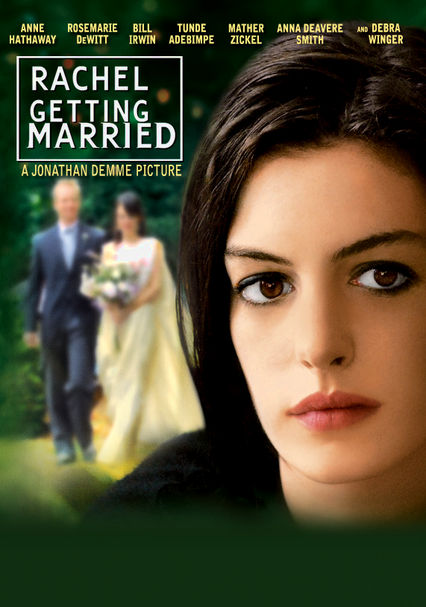
Rachel Getting Married (2008) is the film that put Anne Hathaway on the map as a powerful and respected actress. Deserving the heaps of praise put upon her she was congratulated with an Oscar nomination for the role and would win a few years later for Les Miserables (2012).

Hathaway proves that good nuts-and-bolts acting never goes out of style.

Director Jonathan Demme goes for simplicity with his project. The film is a quiet family drama with members gathered for a specific event. As the film progresses we witness deep-seated emotions and history bubble to the surface through terrific scenes exposing quality acting chops by the entire cast.

Pain, truth, and wry humor are explored as a naturalistic approach is possessed. Not all the characters are likable and debatable is if any of them are.

Thankfully, humorous moments are added to lighten the mood.

The screenplay was written by Jenny Lumet, the daughter of famed director Sidney Lumet and granddaughter of Lena Horne.

Filming took place in Stamford, Connecticut, a small city outside of New York City.

The Buchmans, an affluent New England family, prepare for the wedding of their daughter, Rachel (Rosemarie DeWitt). Their other daughter, Kym (Anne Hathaway), is permitted to attend the wedding despite being in the middle of a stint at rehab- she’s been there before.

As Kym causes upheaval and drama, Rachel resents her sister, causing family tensions to resurface.

Parents Paul and Abby, played by Bill Irwin and Debra Winger do their best to calm the flames created by the bickering siblings. Unfortunately, tensions begin to erupt between Rachel and Abby and away from Rachel.

Events come to a head on Rachel’s wedding day, hence the title.

Under different circumstances, Rachel Getting Married could have been a standard lifetime television film. A girl with a drug addiction returning to the fold to stir up family drama is hardly a novel idea and has been told many times before in almost every medium.

I even cringed at first when I read the premise.

But, the film feels as fresh and energetic as a new idea. The pacing is the first notice as it moves at a brisk pace and the running time is under two hours. Kym is frenetic acting which also helps the allusion of a faster pace.

A dark secret is quickly revealed. Due to drunkenness, Kym caused the car she was driving to careen off a bridge, killing her younger brother. She has harbored guilt ever since and endured the wrath of her family.

It has made her struggle with addiction even worse.

I don’t think enough praise can be given to Hathaway for quite simply kicking the film’s ass. Nearly destined for wimpy romantic comedies, Kym gives the actress a role she can not only sink her teeth into but infuse with emotion and empathy.

At times the audience will hate Kym and other times will sob along with her.

DeWitt and especially Winger, returning to the cinematic spotlight after a long absence, have plenty to infuse their characters with. Anger, jealousy, and unbridled sympathy are just a few of the emotions their characters experience.

Demme creates an independent film that feels raw and is filled with naturalistic settings and emotions. He takes a basic story and ravages it completely with great acting, handheld cameras that provide a real-life approach, and a story that will leave audiences thinking about the events and perhaps their own lives after the credits roll.

Oscar Nominations: Best Actress-Anne Hathaway

Independent Spirit Award Nominations: Best Film, Best Director-Jonathan Demme, Best Female Lead-Anne Hathaway, Best First Screenplay, Best Supporting Female-Rosemarie DeWitt, Debra Winger

Big Night-1996

Big Night-1996

Director Stanley Tucci, Campbell Scott

Starring Stanley Tucci, Tony Shalhoub

Scott’s Review #300

305300

Reviewed December 16, 2015

Grade: B+

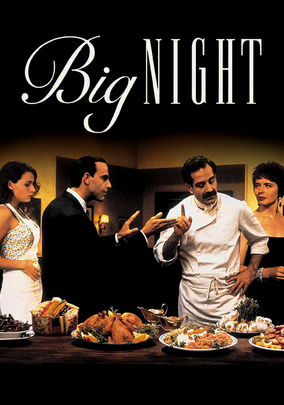
Big Night (1996) is a sweet, whimsical little film that is a food lover’s dream come true since that is the focal point of the story with more than one dish being prepared on-screen giving it realism.

It centers on the restaurant business and, specifically, how two brothers struggle to keep their failing restaurant afloat through their love and passion for food.

The story tells of two Italian immigrant brothers, Primo and Secondo, played by Tony Shalhoub and Stanley Tucci, respectively.

The time is the 1950s and they reside in blue-collar New Jersey. Times are tough for them as they try to succeed in the difficult restaurant business- they specialize in Italian food of course.

Secondo is a playboy of sorts- suave and handsome, he dates Phyllis (Minnie Driver) while galavanting with a sophisticated older woman named Gabriela, the wife of a competitor.

Primo, on the other hand, is quiet, and serious, yet an all-star chef. The food he prepares is wonderful and his talent is evident.

But how can they market themselves to be successful?

At this point, their restaurant is dying and they risk being reduced to returning to Italy or eke out a meager existence working for someone else.

An idea is announced to have a celebrity singer (Louis Prima) perform for a one-night extravaganza at their restaurant, where they will make the meal of their lives and impress the town, thus achieving success.

The film is charming and my favorite parts are on the “big night”. As the duo prepared the liquor order and shopped for flowers and other decorations in preparation, the mood and spirit left me with a warm feeling.

What a sense of togetherness Primo and Secondo, along with friends, felt to achieve this challenging goal. Inevitably, there is tension between the brothers, and between Secondo and Phyllis, but truthfully, these are merely sub-plots, and the heart of the film is in the food.

The scenes that take place in the kitchen left my mouth watering. As Secondo prepares a baked pasta dish (Timpano), the meal oozes with love and tastiness. The entire story arc is grand and magnificent.

The group of diners revels in the dining room of the restaurant enjoying spirits and dancing the night away. By morning everyone is full and drunk, both with love and alcohol, but most are happy. They get merry as they eat the night away.

I could almost taste the main course!

A subplot that works for me is the burgeoning romance between reserved Primo and equally reserved flower shop owner, Ann. Both very timid, they finally muster the courage to admit their feelings for each other while enjoying (what else?) wine and food- what better way to begin a romance?

The tenderness and chemistry between these two are very innocent and captivated me while watching the film.

The final scene of the brothers making an omelet is also wonderful and a fitting way to stress togetherness and perseverance, which is what the small film is really about.

For lovers of food, Big Night (1996) is a shining moment.

Independent Spirit Award Nominations: 1 win-Best Male Lead-Tony Shalhoub, Stanley Tucci, Best First Screenplay (won), Best First Feature