Tag Archives: Top 40 Horror Films

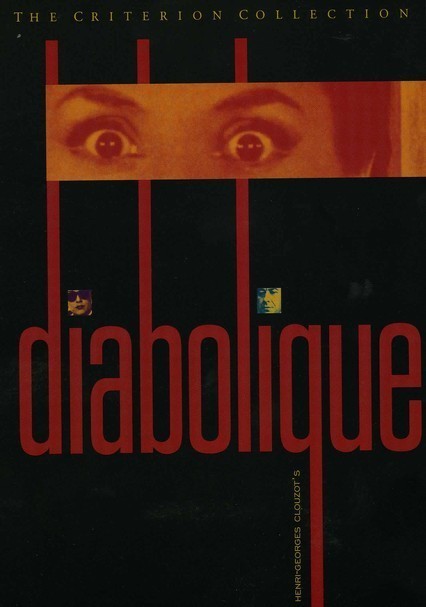
Diabolique-1955

Diabolique-1955

Director Henri-Georges Clouzot

Starring Simone Signoret, Vera Clouzot, Paul Meuisse

Top 250 Films #198

Top 40 Horror Films #27

Scott’s Review #878
Reviewed March 16, 2019

Grade: A

Diabolique (1955) is a masterful French thriller as compelling as frightening. It will have an insurmountable influence on future generations.

Shamefully remade and Americanized in 1996, starring Sharon Stone, a waste of time if you ask me, the original is the one to discover.

The film perfectly blends psychological intrigue, never-ending suspense, and even a good mix of horror that Hitchcock would find impressive (more about him later). Its pacing and frequent twists and turns make it brilliant.

Directed by Henri-Georges Clouzot, Les Diaboliques is set in a crumbling boarding school in Paris. Sadistic headmaster Michel Delassalle (Paul Meuisse) runs a tight ship but works for his Venezuelan wife, Christina (Vera Clouzot), who owns the school.

Michel is immersed in a torrid affair with schoolteacher Nicole Horner (Simone Signoret) and regularly abuses both women as well as his students. The two women embark on a plot to kill Michel, but when they succeed in their plan, Michel’s body goes missing.

The women panic.

In a few fun trivia tidbits, director Clouzot optioned the screenplay rights right after finishing Wages of Fear (1953), preventing Hitchcock from making the film. This movie helped inspire Hitchcock’s Psycho (1960).

Robert Bloch himself, the author of the novel version of Psycho, has stated in an interview that his all-time favorite horror film is Diabolique. If the film displays nuances incorporated in Psycho, this is undoubtedly the reason.

Clouzot also directs his wife, Vera, in the prominent role of Christina.

Hitchcock could have made the brilliance since the entire experience has his stamp and influence even though his best works lay ahead of him in 1955.

Still, from the Gothic mood to the “can’t believe your eyes” twisted, blood-curdling ending, the director immediately comes to mind every time I watch the film. The “shock” ending only exceeds expectations with a fantastic delivery.

The film takes an unusual stance on the dynamic between the two women, Christina and Nicole. Rather than take a traditional route and make the women rivals for the man’s affections, Clouzot makes the pair co-conspirators.

This only deepens their relationship as events unfold and take a darker and more dire turn.

They rely on each other as teammates rather than despise each other over their love for another man. Intelligently, they spend their energy ensuring the insipid man gets his just comeuppance for his dirty deeds.

Nicole leads Christina in the direction she needs to go.

The black-and-white cinematography is highly influential on the mood. With each unexpected twist or scene of peril, the lighting radiates suspense. The camera juxtaposes the frequent glowing of the white against the dark black, exuding a frightening, ghost-like presentation.

The entire setting of the school is laden with dark corners that provide good elements of foreboding and sinister moments to come.

As the women become more and more unnerved by the limitless possibilities that the missing body presents, many questions are asked but are impossible to answer. “Where is the body?”, “Could Michel be alive?” “If he is alive, is he hell-bent on revenge?” The viewer will also ask these questions throughout most of the final half.

When an unknown person begins to call the women, the questions multiply.

Clouzet uses frequent shots of objects to enhance the tension even further. There are close-ups of a dripping bathtub, a typewriter with a man’s hat and gloves, a woman’s feet as she removes her shoes, and a woman running in terror through the school.

These facets only enhance the overall experience as the suspense and the terror begin to mount.

Diabolique (1955) is considered one of the greatest thrillers of all time, and I concur with this assessment. A French version of Psycho (1960) that combines an acclaimed director’s ingenious subtle ideas into a giant web of delicious filmmaking.

The surprise ending is never seen coming, even if the viewer thinks they have the plot figured out. This point alone is reason enough for the film to realize its greatness.
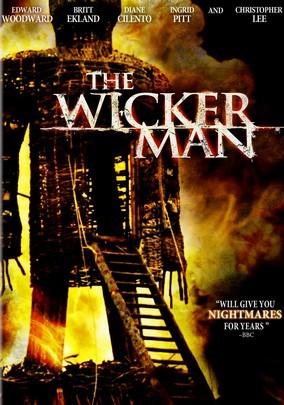
The Wicker Man-1973

The Wicker Man-1973

Director Robin Hardy

Starring Edward Woodward, Christopher Lee

Top 250 Films #199

Top 40 Horror Films #28

Scott’s Review #245

60021185

Reviewed May 31, 2015

Grade: B+

The Wicker Man is a cult horror film from 1973 that is considered one of the finest by horror critics.

While the film does not enamor me quite as much as some other favorites in the horror genre (Halloween, Rosemary’s Baby, The Shining, Dressed to Kill, and Suspiria) immediately spring to mind while thinking of 1970s-style horror gems, I cannot help but admire The Wicker Man’s creativity and religious overtones.

Despite not awarding the film a solid “A” rating, I look forward to viewing this film again and, perhaps over time, as some films do, it will see an adjustment in scoring.

Set on an island in the Scottish Hebrides, named Summerisle, a devout Christian (Edward Woodward) named Sergeant Howie travels to the island in search of a missing young girl named Rowan Morrison, thought to have disappeared under mysterious circumstances.

The inhabitants are vague, aloof, or hostile towards the policeman. He immediately is disturbed to notice the group worships Celtic gods and notices other strange acts of worship and sexual behavior (a naked dance), which he resists and disapproves of.

He is tempted by a gorgeous seductress, Willow, played by Britt Ekland- most notably known as a Bond girl in The Man with the Golden Gun, and butts heads with the island leader, Lord Summerisle, played by horror legend Christopher Lee.

As he attempts to locate the missing girl, he uncovers some very dark goings-on around the island as the annual Mayday harvest celebration is about to occur. He deduces that Rowan is slated to be the sacrifice at the celebration and he races to find her before it is too late.

But is there more to the island than meets the eye?

The Wicker Man is not mainstream fare and that is what I admire most about it, as well as its British flare. It strives to challenge the norm in horror and question who is right and who is wrong and who the audience should champion.

Religion and the occult have been portrayed in horror films for eons, but rarely given a normal face. Typically, the villains are scary, horrid, or even cartoonish, clearly defined as bad.

Despite all of the townspeople being in on the sacrifice, they are seemingly ordinary appearing. They raise their kids, farm, run stores, and teach the kids in a classroom setting.

On the surface, they appear wholesome and that is part of what makes The Wicker Man so scary. Rosemary’s Baby did the same thing.

Typically, any sort of satanic overtones or human/animal sacrifices, frighten audiences, especially if the culprits could be their neighbors, friends, or even loved ones. The realness is unnerving.

Differing, controversial, religious beliefs are a prevalent theme throughout The Wicker Man as are elements of good vs. evil.

The film is not predictable. It delves into questions of morals and beliefs- for example, Howie is a virgin- saving himself for marriage and trying to be a good, decent person.

He is the moral center of the film and, in his belief, everyone on the island is either perverted, crazy or a sinner.

By this logic, Howie looks down on others who are dissimilar to him and comes across as preachy. I do not get the impression that the film wants the audience to love Howie- or hate him.

The balance between the old gods (Christianity) and new gods (Celtic paganism) makes the film interesting.

The shocking conclusion involving an enormous, life-sized burning wicker man is terrifying beyond belief and by far the best part of the film, as the hero must come to terms with his fate.

The final thirty minutes are quite spectacular from the final twist through the ending.

My lack of an exceptional grade for The Wicker Man stems from it being a tad too slow-moving. Perhaps a few additional jumps or frights along the way would have been beneficial, but, on the other hand, it is not a scary film, nor does it try to be.

It is, however, quite intelligent and, I suspect will increase my enjoyment with each subsequent viewing.

A fine addition to the relics of classic horror, The Wicker Man (1973) is a creative, mysterious, and left-of-the-center film.

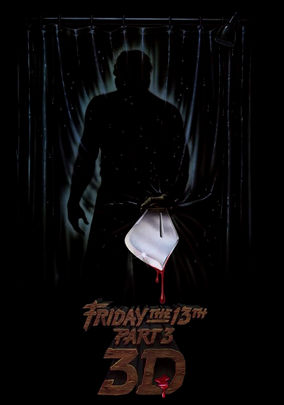
Friday the 13th: Part III: 1982

Friday the 13th: Part III: 1982

Director Steve Miner

Starring Dana Kimmell, Paul Kratka

Top 250 Films #207

Top 40 Horror Films #29

Scott’s Review #743

Reviewed April 17, 2018

Grade: A-

By 1982 the Friday the 13th installments were becoming an almost annual event, which would continue until the late 1980s.

Still popular and fresh at the time (the novelty would soon wear thin), Part III has the distinction of being released in 3-D, a highly novel concept and just perfect for a slasher film, including sharp weapons to shove at the camera at every turn.

Directed once again by Steve Miner, who also directed Part II,  the film charters familiar territory that will certainly please fans of the genre.

The horror gem still feels fresh to me decades after its original release.

The plot originally was intended to copy 1981’s successful Halloween II and capitalize on the return of one central character, Ginny (Amy Steel), and continue her night of terror as she is whisked away to a local hospital following her ordeal at Camp Crystal Lake.

While this plot seems laden with good, gruesome “kill” possibilities (think syringes, scalpels, and other neat medical objects), unfortunately, this was not to be after Steel balked at a return appearance.

Directly following the bloody events the night before, a new batch of teenagers- oblivious to the recent killings- except for tortured Chris (Dana Kimmell), who once was attacked by the crazed killer, travel to Camp Crystal Lake for a weekend of fun and partying.

As Chris teeters between imagining sounds and shadows, traumatized by her past, Jason lurks nearby waiting to pounce on unsuspecting victims. In this installment, Chris is most certainly the “final girl”, a fact that is obvious with the immediate backstory.

The other characters fall in line with traditional slasher stereotypes- the lovelorn couple, the prankster, and a stoner couple. Also, a rival biker gang is thrown in for added drama as they vow revenge on the group following an incident at a convenience store.

A few main differences between Part III and Parts I and II follow:  Part III incorporates fewer “point of view” camera shots from Jason’s perspective, and more from the viewpoint of the victims.

The result is neither better nor worse- just different.

This is the first installment in which Jason dons his trademark hockey mask giving the film a slicker feel, and more identity, than Part II did, where Jason mostly wore a burlap sack.

Cleverly, Jason steals the hockey mask from one of his victims.

Finally, as evidenced by the soundtrack, Part III adds a disco/techno beat to the famous “chi chi chi” sounds, giving the music a distinct 1980s feel that the two preceding installments do not have- those feel more like 1970s films.

Memorable slayings include a knife shoved through a victim’s chest while resting on a hammock, electrocution via a basement fuse box,  and death via a shooting spear gun.

The main draw to the kills and thus the film itself is the clever use of 3-D technology, which makes the audience feel like the center of the action.

What a treat to see the implements used in the killings coming right at me!

Credit must be given to the added diversity Friday the 13th: Part III incorporates. For the first time (a glorified black extra in Part II does not count) minority characters are featured.

Bikers Fox (Hispanic) and Ali (Black) as well as pretty Vera Sanchez are included giving the film more of an inclusive feel- though each of these characters is killed off.

Enjoyable also is the inclusion of a quick recap of Part II, similar to what Part II did with the original so that the climax of the preceding film gives the viewer a good glimpse of how the action left off.

The screenwriters add a few comical characters, admittedly offed rather quickly into the mix.

I would have loved to have seen a bit more junk food-eating Harold and his nagging wife Edna, for example, before they meet their maker.

Hardly high art, Friday the 13th: Part III (1982) is mostly remembered for some cool, innovative technology, a tiny bit of camp that does not overwhelm the straight-forward horror flavor, and for still seeming fresh before the franchise got old, stale, and tired.

Part III, along with I and II, make for a wonderful trio in one of horror’s finest franchises.

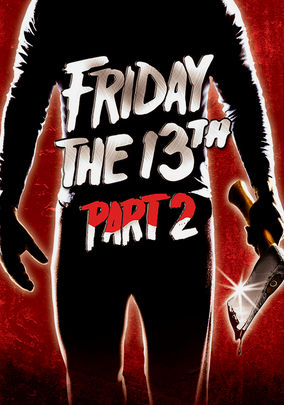
Friday the 13th: Part II: 1981

Friday the 13th: Part II: 1981

Director Steve Miner

Starring Amy Steel, John Furey

Top 250 Films #214

Top 40 Horror Films #30

Scott’s Review #742

Reviewed April 15, 2018

Grade: A-

Hot on the heels of the surprising success of the low-budget slasher film, Friday the 13th, a sequel to the 1980 film was immediately ordered.

The film was released merely a year later and is nearly as good as its predecessor, but not quite to the level of that horror masterpiece.

Part II (1981) is a well above-average sequel with a fun style all its while wisely keeping facets that made the franchise adored by horror fans everywhere.

Gushing fans must have been chomping at the bit for a follow-up film with an opening sequence that is quite lengthy.

The heroine of the first Friday, Alice Hardy (Adrienne King), takes center stage, eliciting a clever twist that must have shocked fans as she is offed less than fifteen minutes into the film- think the sequence with Drew Barrymore in 1996’s Scream for comparison.

Regardless of the reasons King would not be the star of the film (money demands or a rumored stalker), the fact of the matter is this improves the overall film adding an immediate surprise.

After this compelling opening number, things become much more familiar and predictable as the viewer is enshrined in the antics of young and horny camp counselors rushing to sunny Camp Crystal Lake (or in this installment, a neighboring camp) to set up for the impending arrival of kids.

The young adults are all beautiful, fresh-faced, and ready to be sliced to ribbons or dismembered in some fashion as the case may be.

As any horror aficionado knows, this is a major part of the appeal of slasher films, and Friday the 13th: Part II follows a familiar formula.

Paul (John Furey) and Ginny (Amy Steel) are the lead counselors- a bit more adult and responsible than the others, thus they ignore the authority’s warnings not to re-open the camp since it has only been five years since the original massacres.

As the day turns into evening, Paul teases the group with the story of the legend of Jason and how he survived his drowning only to live in the woods fending for himself and avenging the death of his mother.

Little do they know that the legend is real and Jason is lurking among the trees ready to off the group individually.

Besides Paul and Ginny, the supporting characters include sexy Terry, known to wear skimpy attire, sly Scott, who has designs on Terry, wheelchair-bound Mark, sweet and innocent, Vickie, jokester Ted, and, finally, madly in love, Jeff and Sandra, who are curious about the history of Camp Crystal Lake.

Delightfully, the character of Crazy Ralph (Walt Gorney), the comic relief of the original film, makes a heralded return to warn the youths of impending doom and gloom.

Friday the 13th: Part II mixes pranks and flirtations among many of the characters, but the audience knows full well what’s in store for each of them- save for the honorable “final girl”.

With Ginny receiving this title the others meet their fates in bloody style with interesting kills such as a throat slit by a machete while in a rope trap, a duo impaled with a spear as they engage in sex, and bludgeoning with a kitchen knife.

The final twenty minutes are quite engaging as Ginny must flee from the camp while enduring repeated obstacles preventing her safety such as a run through the woods, tripping and falling, and a failed barricade in a cabin.

A wonderful touch within this sequence is the return of Betsy Palmer (Mrs. Voorhees) in a cameo appearance as Jason sees a vision of his mother. This move successfully creates a tie-in to the original that works quite nicely as coupled with the opening sequence.

The final “jump out of your seat” moment is highly effective as Jason thought to be bested, leaps through a window for one final attack.

Interesting to note is what appear to be identical camera angles through much of the film, as the camera uses the point of view of the killer numerous times to elicit scares, and the viewer serves as the killer- reminiscent of the first film.

Additionally, camera shots of the peaceful, sunny camp and lake during the daytime are used, in contrast to the violence occurring at night.  Even the approaching car the counselor drives (a truck) is shot the same way as we see them arriving at the camp in full anticipation of a fun time.

Friday the 13th: Part II (1981) is a fun follow-up to one of the most celebrated horror films of the slasher genre and is a perfect counterpart to the original.

A viewing tip is to watch both films in sequence on perhaps a late-night horror extravaganza.

Subsequently followed by a slew of not-so-great sequels as the franchise became dated by the late 1980s, Part 2 serves as an excellent follow-up to the original using a similar style that will please fans.

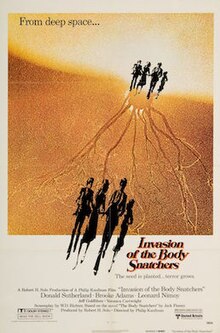
Invasion of the Body Snatchers-1978

Invasion of the Body Snatchers-1978

Director Philip Kaufman

Starring Donald Sutherland, Brooke Adams, Veronica Cartwright

Top 250 Films #217

Top 40 Horror Films #31

Scott’s Review #1,434

Reviewed July 22, 2024

Grade: A-

Even though this film is a remake and remakes are usually not as good as the original, I am partial to the 1978 version of Invasion of the Body Snatchers versus the 1956 release.

This might even be one of the best remakes ever.

The 1950s version has a campy science fiction element popular in the decade, featuring frightening, otherworldly elements like The Day the Earth Stood Still (1951) or Invaders from Mars (1953), which were meant to promote the idea of invaders taking over the Earth.

This was enough to scare the bejesus out of middle America, USA, and their white picket fence-encased neighborhoods.

The 1970s version leaves behind any camp in favor of a straight-ahead sci-fi/horror hybrid. A glamorous and artistic approach oozes from the 1970s and various exterior sequences of San Francisco that make it superior to the original.

It’s a more polished and mainstream-ready product that works better for this film.

By far the best scene is the final scene between a perfectly cast Donald Sutherland and Veronica Cartwright, which left chills going up and down my spine.

I won’t spoil the fun, but suffice it to say that the actor’s facial expressions make the scene exceptional, mixed with the creepy sound effects.

Director Philip Kaufman also toys with his audience when he teeters ambiguously between his leading ladies. Is Cartright the ‘final girl’ or is it Brooke Adams? In parallel to Hitchcock’s Psycho (1960), the lead may not be who you assume it to be.

Matthew Bennell (Donald Sutherland) is a health inspector who assumes that when his friend and colleague Elizabeth (Brooke Adams) complains of her husband’s strange mood, it’s a cheating husband or an exaggerated concern.

He begins to worry, however, as more people report similar observations about their loved one’s strange behavior.

His concern is confirmed when writer Jack Bellicec (Jeff Goldblum) and his wife (Veronica Cartwright) discover a mutated corpse creating a city-wide epidemic where humans are replaced by alien doubles void of humanity or emotion.

The casting is first-rate, especially because Sutherland is front and center. The actor does wonders with his bulging blue eyes and a spacey demeanor. This works well in a film where we wonder whether his character is ‘one of them’.

He’s also a good actor and easily carries the film along with Adams and Cartright.

Kaufman peppers the film with eerie atmospheric elements like the mysterious parasitic alien race scurrying to harvest before their planet dies, and small seed pods amid hallucinogenic pink flowers.

The success is mainly because the audience is left uncertain about whether to hate the aliens or feel sorry for them. Since they are ambiguous, this leaves confusion and, therefore, a sense of empathy.

Speaking of the exterior sequences, a great one occurs on the streets of San Francisco when a hysterical man warns Elizabeth and Matthew of danger as a mob pursues him. He is then killed in a hit-and-run, surrounded by emotionless onlookers.

Eagle-eyed viewers will spot Kevin McCarthy, the leading man in the 1950s film, and director Don Siegel.

When this scene plays, it is eerie and cements the fact that the small group of friends must stick together against a mob of clones.

Wisely, Kaufman assures that the story does not play for laughs or appear over the top or silly. The gritty camera angles, superior makeup crew, and wonderfully practical sound effects confirm that he is making a film to be remembered.

Taking what the 1950s version created but only scratched the surface of the potential during a cinematically safe decade, the 1978 Invasion of the Body Snatchers has muscle and compels from start to finish.

Years later, it still holds up wonderfully well among similar stylistic and popular horror films like Jaws (1975), Carrie (1976), Dawn of the Dead (1978), and Halloween (1978).

On a larger level, it also confirms the 1970s as the greatest decade for horror films.

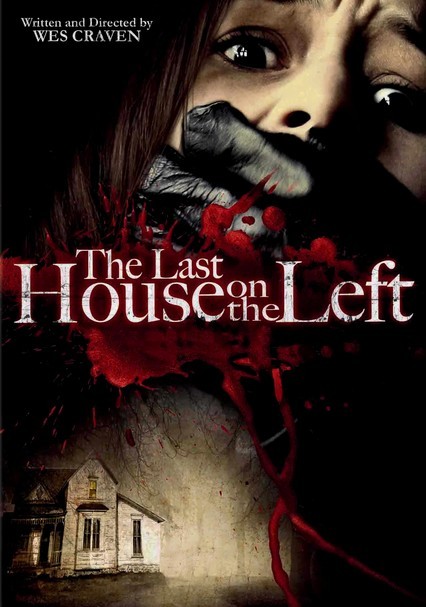
The Last House on the Left-1972

The Last House on the Left-1972

Director Wes Craven

Starring Sandra Cassel, Richard Towers, Eleanor Shaw

Top 250 Films #218

Top 40 Horror Films #32

Scott’s Review #1,387

Reviewed August 6, 2023

Grade: A

Heavily influenced by Ingmar Bergman’s 1960 masterpiece The Virgin Spring, The Last House on the Left (1972) is essentially the same story.

The time is modern and the locale is switched from Sweden to New York and the religious exploration is not there. But, rest assured, both films are brutal and not for the faint of heart.

It’s not violence for violence’s sake though and a powerful revenge tale surfaces amid unique camera styles and settings.

Wes Craven, who put the horror genre back on the map decades later in 1996 with Scream writes and directs the independent and raw The Last House on the Left.

He was accused of going too far in the film and exploiting pain and suffering, mostly by victimizing female characters, but the truth is the situation can and has occurred in real-life.

The film brings powerful realism to the terrifying actions of horrible people and if that’s too much for some they shouldn’t watch this film.

But, lovers of experimental cinema should.

Craven’s genius is mixing sunny, cheery sequences, poppy music, and comic relief with uncomfortable scenes of rape and torture so well that the audience’s reaction is guttural and rage infused. The dark scenes occur on a sunny afternoon in the woods with upbeat music on what would otherwise be a pleasant day.

Many horror sequences add darkness, thunderstorms, or other special effects to set the proper mood but Craven goes way left of center.

Perky teenagers Mari (Sandra Cassel) and Phyllis (Lucy Grantham) head into New York City for a concert where they look for some marijuana. They stumble upon a foursome (three men and one woman) of escaped convicts who force them to endure a night of rape and torture.

The following day the gang kills the girls in the woods, not realizing they’re near Mari’s house. When they pose as salesmen and are taken in by Mari’s mother (Eleanor Shaw) and father (Richard Towers), the parents quickly figure out their identities and plot revenge.

A side story involves two incompetent police officers who unsuccessfully try to pursue the escaped convicts.

I immediately was made aware of the very low-budget filmmaking with muted, grainy visuals. The cinematography is what makes The Last House on the Left work so well. With high caliber, glossy texture it would seem too polished.

The acting isn’t brilliant and the overall look and feel is reminiscent of a John Waters film. Again, this only enhances the bare bones, late-night viewing experience.

There are warnings galore. The pain and suffering endured by Mari and Phyllis are hard to watch and I felt their degradation in my bones. I won’t go into gory details but it isn’t fun.

However, there is some satisfaction to be had. When Mari’s parents cleverly set traps inside their house for the murderers to fall into there are cheer out loud moments of celebration for the audience.

One murderer even gets his penis bitten off.

Suspension of disbelief must be given to justify how this chain of events could occur. What are the chances the convicts would happen to bring the girls to Mari’s house in the middle of nowhere?

Wouldn’t the parents be in shock or having a meltdown over the realization of Mari’s death? Somehow they find the wherewithal to construct a stagey revenge plot on the fly.

The dumb cops will do no favors for police officers looking for some respect.

Still, the utter depravity and brutality of The Last House on the Left (1972) make it one of the most genuine feeling horror films of all time. Add the fact that the situation could happen and the result is a frightening one.

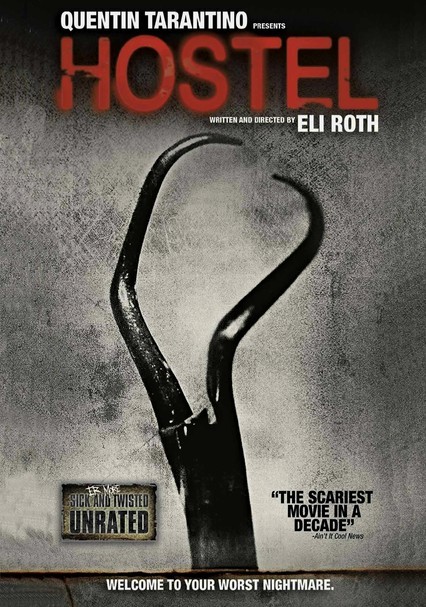
Hostel-2006

Hostel-2006

Director Eli Roth

Starring Jay Hernandez, Derek Richardson

Top 250 Films #220

Top 40 Horror Films #33

Scott’s Review #951

Reviewed October 24, 2019

Grade: A-

During the early 2000’s the traditional horror genre catapulted into a sub-genre commonly referred to as “torture porn” led by the Saw franchise, debuting in 2004.

Hostel (2006) takes note and creates a terrifying production that holds up arguably the best in the bunch.

With Quentin Tarantino serving as producer and Eli Roth (Cabin Fever-2002) as the writer and director chair, one knows something memorable is in store.

The film is hardly everyone’s cup of tea but a delight for horror fanatics.

American college students Paxton (Jay Hernandez) and Josh (Derek Richardson) travel across Europe seeking adventure and dalliances. They are advised to visit Slovakia, where they are told the women are beautiful, picking up a new Icelandic acquaintance, Oli, along the way.

They encounter a strange Dutch businessman, a pack of rebellious street kids, two Asian girls, and two gorgeous European women, Natalya and Svetlana, as they travel.

When Oli disappears, and Paxton and Josh are drugged by the girls, events turn gruesome as the young men find themselves in a horrific remote dungeon facility where tourists are accosted and sold to willing buyers who brutalize and experiment on the victims.

Paxton must figure out a way to escape his peril and try to save any of the others before it is too late.

Hostel portrays the loneliness and insecurity of traveling abroad successfully as confusion and disorientation are commonalities that anyone who has traveled to a foreign country can relate to. The country of Slovakia (as an aside the film was shot in the Czech Republic) looks eerie and desolate with a quiet and cold tone.

As the group is preyed upon by a mysterious organization that tortures and kills kidnapped tourists, the thought and realism this conjures up adds to the fright.

In a unique measure, Roth turns the traditional gender stereotypes upside down. Based on an unbalanced scale females are killed much more often in horror films than males are. A refreshing point is the three principles are males, not females and we wonder which ones will “get theirs” and how.

Similarities thereby abound with Halloween (1978) when the trio were females and audiences watched their daytime adventures while salivating at the thought of the antics that would transpire when darkness finally falls.

Hostel kicks into high gear during the final thirty minutes once the blood-letting begins to take place. The dark and dingy dungeon is laden with corpses, severed limbs, and blood.

A melancholy scene occurs when one character, alive yet pretending to be dead, is affixed in a position where he must stare into the dead eyes of his friend. In another scene, one character must cut off the dangling eyeball of another so that they can escape the dungeon.

The scenes have equal power in different ways.

A slight irritant to Hostel is the prevalence of homophobia throughout the film. When the guys get into a scuffle with a long-haired bar patron and use a homophobic slur or a scene in which Paxton states “that’s so gay” as a negative seems unnecessary.

Is this to make the main characters less sympathetic or for the viewer to hope that they suffer a horrible fate? Or is Roth just known for homophobia?

In 2006 the LGBT community was becoming prominent in the film, so the inclusion is off-putting and out of line.

Hostel (2006) remains a superlative horror film that is a shock-fest and is still one of the best of its decade. The gruesome scenes still resonate well and watching the film more than a decade later it feels as fresh as when released with only the homophobic slurs needing to be removed.

Influence by Tarantino is always a fine element and his stamp is all over the film.

Followed by two sub-par sequels that tread the same blueprint of European travels gone deadly.

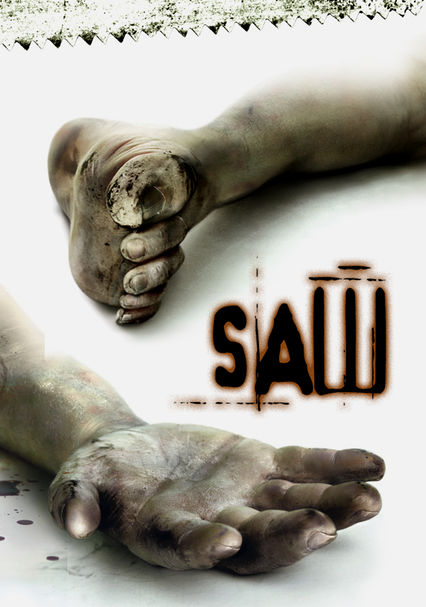
Saw-2004

Saw-2004

Director James Wan

Starring Cary Elwes, Leigh Whannell

Top 250 Films #222

Top 40 Horror Films #34

Scott’s Review #1,285

Reviewed August 4, 2022

Grade: A

One of the many reasons that I love the horror genre so much is how it changes and develops over time. Many classic horror films are influential to more modern ones and that’s all well and good.

But then sometimes a new idea or style comes along that throws everything topsy turvy and influences other films for years to come.

Saw (2004) is one of those films. It smacked everyone who thought they knew horror films upside the head with a relentless and pulsating gore-fest.

I was fortunate enough to see the film when it premiered and boy was it the ‘water cooler’ film of its day. The clever writing and intricate plot and set pieces were unheard of in a world of maniac-wielding knife setups and redundant endings.

It invented the grisly ‘torture porn’ moniker that became popular with films like Hostel (2005) and many more that would come after it.

The Saw franchise ultimately produced perhaps one too many sequels that left it feeling stale and exhausted, but what an influence the original Saw had, and continues to have.

I still remember the hold the film had over me and how much it resonated in nastiness, butchery, and enough creative killings to last a lifetime.

Needless to say, it’s not for the squeamish or faint of heart, and watching Saw now knowing the surprise twist doesn’t pack quite the same punch that it did in 2004, but I’ll never forget how I felt when first watching this film.

The twist ending is unforgettable.

Events get off to a kick-ass start when two men awake in peril. Photographer Adam Stanheight (Leigh Whannell) and oncologist Lawrence Gordon (Cary Elwes) who do not know one another, regain consciousness while chained to pipes at either end of a filthy bathroom.

As the confused men realize they’ve been trapped by a sadistic serial killer nicknamed “Jigsaw” and must complete his perverse puzzle to live, flashbacks unravel the mystery of other character connections.

Meanwhile, Dr. Gordon’s wife (Monica Potter) and young daughter (Makenzie Vega) are forced to watch his torture via closed-circuit video.

A massive clue to the puzzle that Saw presents is lying right there in the bathroom but of course, the unwitting audience knows none of this. The fun of the film is to sit back and let the filmmakers slowly unpeel the onion and reveal the who’s who of the backstory.

And let the blood drip.

Unlike legacy films like Halloween (1978) and Friday the 13th (1980) or even later efforts like Scream (1996) that brought thousands of rabid horror fans back to movie theaters, nobody is being chased with a knife in Saw.

It’s much more cerebral than that.

Who can ever forget the sound of Jigsaw’s grave voice pouring out of a tape recorder stating “I want to play a game” in a robotic tone? It is still as ominous a sound as one could imagine, and the big reveal still comes as a genuine shock.

Most of the characters have secrets to reveal and most of those secrets are dirty.

Director James Wan and writer Leigh Whannell who also stars in Saw, brilliantly craft a web of deceit amongst their players. The characters who suffer the most have committed a hateful act of deception or schemed their way to benefit based on someone else’s ruin.

In perfect form, all the victims almost deserve their fates like being caught in a shotgun trap, shot in the chest, or being forced to ‘saw’ off their foot to escape death.

The final reveal is downright freaky and will make the audience quickly rewind the events of the film in their heads. The character thought to be the main killer, and wonderfully played by creepy actor Michael Emerson (star of television’s Lost) is merely a pawn of someone more sinister.

Saw (2004) savagely hacked its way into viewers’ heads with a sophisticated, plot-driven experience with a film style enhanced by an independent look.

It’s had its day but it must never be forgotten for the influence left behind.

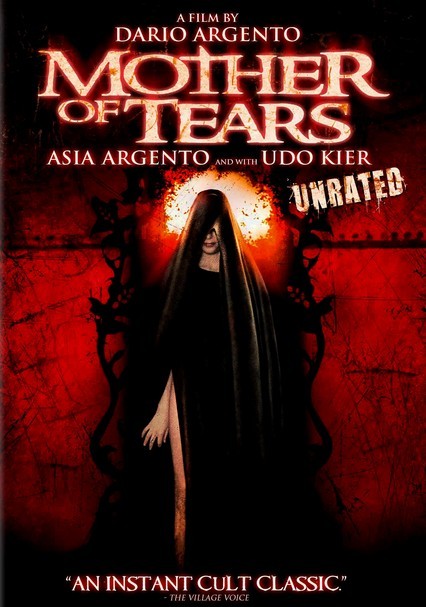
Mother of Tears-2007

Mother of Tears-2007

Director Dario Argento

Starring Asia Argento, Cristian Solimeno

Top 250 Films #227

Top 40 Horror Films #35

Scott’s Review #1,360

Reviewed May 13, 2023

Grade: B+

Mother of Tears (2007) is a film I have a great fondness for and I’ll never forget its debut in my life. It is the very first film my husband and I saw in a movie theater together. So, I’m pretty partial to the nostalgic feeling it emotes on a personal level.

Both fans of esteemed horror director Dario Argento, we cohabitated in the dusty art theater one rainy Saturday evening following a delicious Italian dinner on one of our first dates.

The atmosphere was nearly as perfect as an Argento film itself since he is known for operatic, visceral, and visual perfections.

The film is the concluding installment of Argento’s supernatural horror trilogy The Three Mothers, preceded by Suspiria (1977) and Inferno (1980), and depicts the confrontation with the final “Mother” witch, known as Mater Lachrymarum.

Grisly deaths await several unlucky Italian citizens after an American archaeology student named Sarah Mandy (Asia Argento) innocently releases a demonic witch from her ancient prison. A mysterious urn comes into her possession and when attempted to be restored at the Museum of Ancient Art in Rome, all hell breaks loose.

Sarah harbors a personal connection to the witch since her mother was once embroiled in a feud with her.

Making Mother of Tears a family affair and comfort for viewers of Argento’s work, daughter Asia plays the lead character while younger brother Claudio co-produces the picture along with Dario.

Religion is always a fun theme in horror, especially in the oft-targeted Roman Catholic church. Like The Exorcist did in 1973, and many other horror films followed over the years, the religion is mocked in the kindest of ways.

As an ode to previous works involving children, a child is massacred and more than one baby is sacrificed in the name of Mater Lachrymarum so be forewarned if this is a dealbreaker for some.

Who doesn’t enjoy a coven of witches flocking down on Rome screeching at passerby folks and wreaking havoc on the sacred city now overcrowded with demons?

For the bloodthirsty types who crave a healthy dose of bloodletting Mother of Tears lets the floodgates spill wide open. One poor woman is speared through her private area and upwards while another’s mouth and face are expanded until they pop. Several eyes are violently gouged.

You get the idea.

Recommended is to watch Suspiria and Inferno first for chronological ease but this is not a must and a stand-alone viewing will do just fine.

Nothing can match the sheer madness and visual mastery of 1977’s Suspiria and Mother of Tears is the weakest of the three films but this is not a gripe merely a comparison. They work well together and the final confrontation involving Sarah and Mater Lachrymarum’s fight over a red tunic is the highlight.

The dark texture of the filming mixed with glowing lights and red colors are easily noticeable. This aligns nicely with religious or occult characters like a monsignor, cardinal, and various witches.

The film, though American-made, feels Italian and is quite authentic. Further, it naturally sits well with films of Argento’s heyday, the 1970s, and 1980s. Most if not all actors appear to be Italian or European adding flavor and culture to the experience.

If one has traveled to Rome, many exterior shots of the ancient city appear adding to the enjoyment. Sarah ravages the streets and scurries through the vast train station in one powerful sequence. Since trains are the main mode of transportation in Italy viewers can transport themselves back to a previous trip.

To know Dario Argento is to love him. Mother of Tears (2007) may not measure up to his very best works but it is an entertaining and enthralling visit to the macabre world.

It may or may not win over new fans but it will satisfy existing fans of the director.

The Substance-2024

The Substance-2024

Director Coralie Fargeat

Starring Demi Moore, Margaret Qualley, Dennis Quaid

Top 250 Films #238

Top 40 Horror Films #36

Scott’s Review #1,461

Reviewed January 18, 2025

Grade: A

Demi Moore takes her languishing career by the reigns in a risky role, leaving any glitz and glamour by the wayside in the wacky horror film The Substance (2024).

She also sheds her mainstream blockbuster image for darker cinematic territory, propelling her into a fresh new image.

Respectability.

The film received widespread critical acclaim, a gaspy crowd reaction, and buzz during awards season, making it the most talked-about film of the season.

Moore portrays a fading celebrity, Elisabeth Sparkle, wired by her producer (Dennis Quaid) on her fiftieth birthday due to her age.

She decides to use a black-market drug that creates a much younger version of herself (Margaret Qualley) with unexpected side effects.

As she drives home after being fired, she is involved in a car accident. At the hospital, she meets a handsome young nurse who casually advertises a new product. He boldly tells her that it changed his life.

It creates a younger, more beautiful, more perfect you. The catch is that you share time, one week for one and one week for the other—an ideal balance of seven days each.

What could go wrong?

The film begins with a weird shot of a camera looking down at the creation of a famous star on Hollywood Boulevard, where anyone who’s anyone has their name in a star on the famous street.

The sequence reveals that Elisabeth was once a big star. Workers sand her name on the sidewalk amid the celebration, and people stop in awe of her name. As the years go by, people comment that she was in some movie they can’t remember, and then someone callously spills garbage on her name, thinking nothing of it.

The story has powerful meaning about the societal pressures on women’s bodies and aging, especially in the media spotlight.

But this isn’t simply about women. Anyone of any gender or humanity can reflect on the insecurities of aging, whether in the corporate world or being cast aside for a younger person in any way.

I found The Substance incredibly relatable.

Besides the story, Coralie Fargeat, a French director I’d like to see more of, directs The Substance very well.

She bravely incorporates snippets of Stanley Kubrick’s work, adding her funky weirdness and creating an insane experience for viewers.

Kubrick famously created long shots of hallways, which Fargeat brilliantly borrows. Elisabeth watches her producer and team rapidly walk towards her and reminds her that ‘pretty girls always smile,’ reinforcing ridiculous stereotypes attractive women are ‘supposed’ to follow.

Fargeat counterbalances the long shots with several close-ups, mainly of Moore staring at herself in the mirror. Seeing every wrinkle and blemish, she becomes increasingly obsessed with the younger version of herself.

The film does so much with very little dialogue, allowing Moore to deliver a performance of a lifetime.

As the film progresses, it becomes wackier and wackier in only the finest of ways as the older version becomes obsessed with her younger self. As she decays, she becomes a bald hunchback, unrecognizable.

At a diner, she runs into the older version of the young nurse, who admits that the process gets worse with each transformation.

The finale, set on New Year’s Eve, when Elisabeth is set to host events for millions to see, becomes horrific as her monster is set loose. A weird combination of human being and lumpy clay emerges on stage as Elisabeth begs the crowd to accept her.

The result is a moment that combines 1931’s Frankenstein with 1976’s Carrie as a horrific and quite bloody witch hunt ensues.

The film also reminds me of 2the 2000sRequiem for a Dream in style and addiction.

Fargeat, who directed, wrote, and produced the film, creates a feminist message that is awe-inspiring.

Combining unique camera angles that infuse a futuristic feel, astounding makeup work, and an exceptional performance by Moore makes The Substance (2024) the year’s surprise hit.

Oscar Nominations: 1 win-Best Picture, Best Director-Coralie Fargeat, Best Actress-Demi Moore, Best Original Screenplay, Best Makeup and Hairstyling (won)

Independent Spirit Award Nominations: Best Feature, Best Lead Performance, Demi Moore

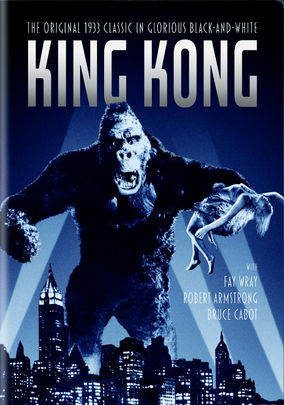
King Kong-1933

King Kong-1933

Director Merian C. Cooper, Ernest B. Schoedsack

Starring Fay Wray, Robert Armstrong

Top 250 Films #240

Top 40 Horror Films #37

Scott’s Review #624

Reviewed March 11, 2017

Grade: A

The original, black-and-white 1933 version of King Kong (a few other remakes or reboots followed) is a masterful achievement in special effects never before done in film. It is also a great horror/adventure film that is timeless in its look and feel, capturing 1930s New York City, especially in majestic fashion.

Some of the dialogue and scenes are now dated or slightly racist, but the film still holds up well as an overall lesson in film exploration and is a treasure to watch again and again.

The film is a take on the classic tale Beauty and the Beast, sans the happy ending.

In the watery harbors of New York City, filmmaker Carl Denham (Robert Armstrong) prepares to embark, via ship, on a journey to film his latest picture.

Known for films about exotic wildlife, he has a film to end all movies in mind and, reluctantly, is talked into casting a female lead in the part. He scours the streets of New York City, finding broke and hungry Ann (Fay Wray)—a struggling actress unable to find work. She agrees to the role and heads off to a destination unknown.

Weeks later, he reveals to the crew that they are headed for Skull Island, a secret island known for pre-historic creatures and a beast only known as “Kong.”

Amid the voyage to the island, Ann and First Mate Jack Driscoll (Bruce Cabot) fall madly in love, giving the film a nice romantic slant along with the male-driven adventure story.

The adventure begins when the crew arrives at Skull Island to find a weird, ancient ritual marriage occurring among the tribal people. All hell breaks loose when the dangerous “King Kong” escapes from captivity and falls in love with Ann.

Mixed in with the story are enormous dinosaurs who destroy everything in their paths, including many of the men from the island and the film crew.

As I watched the film in 2017, not too far from 100 years after its incarnation, I often sat in wonderment, amazed at how the filmmakers achieved the luminous special effects throughout the second half of the film.

Given that the film is in black and white, the contrast between the dark, enormous ape (Kong) and the bright New York City and the majestic Empire State Building is prominently featured in the final, climactic act.

The scenes of a struggling Ann in King Kong’s hand seem flawless and believable. I marvel at how these scenes were shot and the enormous amount of effort it took to make them dramatic and not hokey-looking.

Since the film was made “pre-code”, several shocking scenes exist- when Kong rips off Ann’s clothes as she struggles in his palm and Kong’s stepping on and squashing men are featured sparing no graphic details.

In addition to the great adventure story of King Kong, there is also a tender love story and a bit of melancholy. King Kong is not so much a dangerous creature; instead, he has fallen in love with Ann and serves as her protector.

He is a scared animal, chained and confined, and subsequently shown to a stuffy Broadway crowd as entertainment—he becomes angry. I find Kong to be a sympathetic, misunderstood character. Because the human beings in the story are frightened, he becomes their enemy. He adores Ann and would not harm her in any way, but he is perceived as vicious, which he is not.

It can be argued who the real villain of the story is. Would it not have been filmmaker Carl, intent on exploiting King Kong and gaining profit from it? Is it the tribe people who keep Kong locked up, or is it for their protection?

My favorite scene is the climax of the film. After taking Ann from a hotel room, he scales the Empire State Building and is pursued by four military airplanes.

When he sets Ann down on the rooftop ledge, he battles the planes, only to sadly topple down to the ground- dead. As he swipes at the aircraft and succumbs to gunshot wounds, it is a sad and powerful scene.

King Kong (1933) is a legendary film. Audiences will empathize with the “villain” of the story, be impressed by the technical nuances, and enjoy the conventional and unconventional love stories presented.

One thing is sure: King Kong is one of the most influential films ever made.

Eraserhead-1977

Eraserhead-1977

Director David Lynch

Starring Jack Nance, Charlotte Stewart

Top 250 Films #249

Top 40 Horror Films #38

Scott’s Review #541

Reviewed December 10, 2016

Grade: B+

Eraserhead is one of the oddest films that I have ever seen. The film is an early (1977) David Lynch film and is shot entirely in black and white.

It is a surrealist horror film.

Entrancing is the locale of the film- a bleak wasteland, of sorts, in an even bleaker town. The name is unknown.

Factory worker Henry Spencer (Nance) is garish in appearance/with spiky hair, and wild eyes, he is peculiar, to say the least.

He trods day after day, to and from his job, meeting interesting, yet grotesque characters. He has a child, who is inhuman with a snakelike face.

Henry meets an odd woman while carrying groceries home, and his apartment is filled with rotting vegetation.

While not one of Lynch’s best works, since the “plot” is incomprehensible to follow or make very much sense of, still, Eraserhead is a blueprint for his later works, with odd visuals, and even odder characters, and is to be revered for its imagination alone.

The film is fascinating in its weirdness, but I probably never need to see it again.

It’s a must-see for any David Lynch fan for the warped experience.

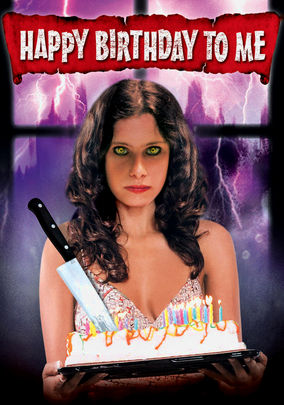
Happy Birthday to Me-1981

Happy Birthday to Me-1981

Director J. Lee Thompson

Starring Melissa Sue Anderson, Glenn Ford

Top 40 Horror Films #39

Scott’s Review #621

Reviewed March 4, 2017

Grade: A-

Happy Birthday to Me is a 1981 slasher film that I fondly remember scaring the shit out of me as a little kid-too young to be watching a film of this nature, but sneaking into my parent’s bedroom with my brother to catch it on HBO.

Certain that the film helped shape my passion for the horror genre, I hold a fondness for it- critics be damned. My opinion is that the film is a small treasure in the land of 1980s slasher films, containing a neat whodunit and a grotesque ending.

Melissa Sue Anderson, desiring to break out of her nice television persona thanks to the wholesome Little House on the Prairie, is cast in the lead role.

Happy Birthday to Me also achieves some merit since the film is directed by acclaimed British director, J. Lee Thompson (Cape Fear).

Anderson carries the film quite well in a challenging part and Glenn Ford co-stars as a Doctor.

Virginia Wainwright is a pretty and popular senior at exclusive Crawford Academy- a school for elite, rich kids. She is part of the “Top Ten”, the most popular and richest kids in the school. The ten friends meet nightly at the local pub.

One night, Bernadette, one of the top ten, is murdered by an assailant on her way to meet her friends.

This murder sets the tone as, one by one, the others are subsequently killed off, sending the school and local townspeople into a frenzy of panic.

To thicken the plot, Virginia was involved in a horrible car accident four years earlier, which killed her mother, and caused Virginia to only have sparse memories of the accident.

This piece is key to the film’s mystery.

There are many comparisons I can make to slasher classics that heavily influenced Happy Birthday to Me, but the most prominent must be 1978’s Halloween.

The character of Virginia is very similar to Laurie Strode (Jamie Lee Curtis), in their somewhat virginal, good girl characters, and both have an almost identical hairstyle!

Also, Happy Birthday to Me successfully uses the killer’s point of view as the camera frequently serves as the perspective of either the killer or somebody lurking around spying on someone else.

The film also just “looks” similar to Halloween.

The whodunit aspect is the most effective of all the qualities of the film. There are a multitude of likely suspects and the film does not shy away from this, purposely casting doubt on several characters- could it be the creepy Alfred, who carries around a pet mouse and creates a fake head of the murdered Bernadette?

Or the suave French student, Etienne, who snoops in Virginia’s bedroom and steals a pair of her panties? Finally, could it be Head Mistress, Mrs. Patterson, a harsh, no-nonsense woman harboring resentment for the snobbish, elitism that exists at her school?

When the killer is finally revealed a measure of pure shock and confusion will undoubtedly transpire- how can this be? But by the time the ultimate finale is played out, all will make sense.

The conclusion does disappoint slightly in the implausibility factor, and the original ending is much more logical and compelling than what was actually in the final cut- rumors have run rampant that the screenplay of the film was rewritten numerous times well into the production- never a good thing.

So, the motivations of the actual killer are quite weak, but the buildup is amazing.

Not to be outdone by the whodunit, the kills themselves are superlative: a shish kabob to the throat, falling gym weights, a scarf caught in the spokes of a bike, and the traditional fireplace poker are done in macabre and fantastic fashion.

We always see the killer’s gloved hands and we are aware that the victim is friendly with the killer, so we continually try and deduce who it could be.

The gruesome “Birthday party” finale is gruesome and gleeful at the same time. Each murder victim is propped up around a dining room table, each with a party hat on and all in various forms of dismemberment or blood-soaked from their murder wounds.

It is a grim and hilarious reveal. The murderer parades out of the kitchen wielding an enormous birthday cake, cheerily singing “Happy Birthday to Me”.

This is one great finale.

Happy Birthday to Me (1981) is a wonderful trip down memory lane and still holds up as a key, perhaps overlooked part of the slasher genre that should be rediscovered by fans and followers everywhere.

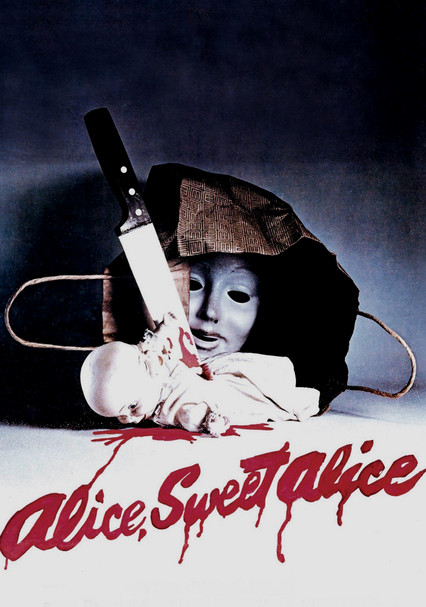
Alice, Sweet Alice-1977

Alice, Sweet Alice-1977

Director Alfred Sole

Starring Paula Sheppard, Linda Miller

Top 40 Horror Films #40

Scott’s Review #1,343

Reviewed February 12, 2023

Grade: A-

Originally titled ‘Communion’ and re-titled and re-released as Alice, Sweet Alice in 1977, the film can proudly tout it as the debut film of star Brooke Shields. Her role, while quite small, is essential to the story.

Any film that either challenges, mocks, or showcases Catholicism, especially within the horror genre has instant appeal for me. There is something so warped yet satisfying to me.

Like The Exorcist did in 1973, Alice, Sweet Alice will leave Catholics and the otherwise religious squirming in their seats or scrambling for the ‘stop’ button on their remotes.

Director Alfred Sole, also a well-known production designer was inspired by Alfred Hitchcock’s films and the 1973 masterpiece, Don’t Look Now. Does it ever show if one looks closely enough?

The story is sometimes muddled and confusing to say nothing of implausible but the overall tone and content are fascinating. The camera angles, production design, musical score, and overall style are exceptional and make the film a major success.

On her First Communion day, Karen (Brooke Shields) is viciously strangled and set afire in church after being stuffed in a wooden chest. Her emotionally unstable and unattractive sister, Alice (Paula Sheppard) is immediately considered a suspect because of her jealousy and her possession of a translucent mask and Karen’s crucifix and veil.

Alice is no saint since she enjoys tormenting Karen and the obese landlord who lives in the apartment below her family.

Aunt Annie (Jane Lowry), a staunch catholic who hates Alice, is later stabbed on an apartment complex stairway by a childlike figure wearing a translucent mask and a yellow rain slicker. Annie insists her attacker was Alice.

In a subplot, the girls’ mother Catherine, played by Linda Miller embarks on a tender romance with her dashing ex-husband, now dating another woman, until he too is brutally murdered.

I was immediately struck smitten by the haunting musical score, a clear homage to Hitchcock’s Psycho from 1960. The shrill violins and the palpable bass are familiar bringing fond memories of that legendary masterpiece.

Instead of a direct copy though, composer Stephen J. Lawrence superbly enhances the effects to meet a more modern style horror film and it works.

Mr. Hitchcock’s fascination with stairways is also mirrored many times and Sole imprints many effective scenes using only shots of feet either walking up or down the stairs.

And, anytime a mask is used in a horror film it’s scary.

In terms of the plot, while the events are compelling, they also don’t make much sense. It would be too predictable and unsatisfying if Alice were the killer (she isn’t) although the terrific final sequence leaves room for a sequel as Alice maniacally studies a bloodied butcher knife.

However, there is a constant theme of hysterical religious judgment, punishment for sins, and sacrificing someone for the greater good. These align perfectly with the many hypocritical aspects of religion at a time when the catholic church was facing much criticism.

Characters like Aunt Annie and the wacky housekeeper, Mrs. Tredoni (Mildred Clinton) are played as over the top but work surprisingly well.

And it’s likely no accident how Sole cast the adorably handsome Rudolph Willrich as the much sought-after Father Tom.

In 1977, Alice, Sweet Alice was quite timely and fits nicely with other 1970s horror films with a religious theme.

Paula Sheppard all but carries the film though the supporting actors are all effective too. Her facial expressions teeter between soft and angelic, and demonic and cagey. It’s an exceptional part of the film.

Alice, Sweet Alice (1977) is an under-appreciated gem that needs to immediately be dusted off and uncovered by rabid horror fans seeking a superior watch.