Category Archives: Patrick Troughton

The Red Shoes-1948

The Red Shoes-1948

Director Michael Powell, Emeric Pressburger

Starring Moira Shearer, Marius Goring

Top 250 Films #108

Scott’s Review #683
Reviewed September 19, 2017

Grade: A

The best in the collection of cinematic ballet films, 1948’s The Red Shoes is a highly artistic and influential film, one that is undoubtedly studied in film schools everywhere.

One cannot view The Red Shoes without amazement, and the realization that this piece must have been dissected by legendary director Darren Aronofsky before he created his creepy 2010 psychological thriller, Black Swan, is evident.

The Red Shoes is a British film that imbues it with a transparent element of grace, class, and sophistication, perfectly encapsulating the themes of love, ambition, and jealousy —the Brits do it right.

Director Michael Powell later crafted the odd and controversial 1960 film Peeping Tom, which was sure to have wholly ruined his career, yet he brought his A-game to this 1948 work.

Decades later, Powell is now considered a genius director.

The film is laden with foreshadowing, at least a handful of times during its running time, as we meet our heroine, Vicky Page (Moira Shearer), a bright-eyed young woman with flowing red locks and aspirations of grandeur as she emerges as a fledgling ballerina in the Covent Garden area of London.

Partially due to her aristocratic upbringing and her assertive, snooty aunt, she lands an audition for the ballet company led by the sophisticated Boris Lermontov (Anton Walbrook).

He is immediately enamored of her, yet gives her the cold shoulder, making her question her talent. The key here is the incorporation of trains in multiple sequences.

As Lermontov and Vicky’s lives begin to intertwine, a young music student named Julian (Marius Goring) is perturbed by the plagiarism of his music by his professor, who had conducted Heart of Fire under the guise of it being his work. When Julian expresses his displeasure to Lermontov, he is hired to perform with the orchestra.

The addition of Julian to the plot kicks off a compelling triangle between the three characters, whose lives overlap in a mixture of young love, passion, and jealous rage.

The action takes off even further as the film moves to the gorgeous setting of Paris and Monte Carlo, a treat for any worldly or aspiring world traveler, as the photography and cinematic angles of the lush locales are breathtaking.

As former prima ballerina Irina Boronskaya decides to leave the company to be married, Lermontov creates a new ballet, The Red Shoes, starring Vicky, with music composed by Julian.

This creates enormous pressure for all involved as the film takes a dark turn.

Dashes of influence surrounding the exquisite performance of the famous Swan Lake dance number heavily influenced the 1950s classic An American in Paris (1951).

The long, colorful, dramatic sequence emits lush, vivacious music and performance. This “time out” from the heavy drama encompassing the rest of the film is beautiful and peaceful, and one of the sheer highlights of The Red Shoes.

The film hinges on the dynamic between the three principal characters, as each actor is spot-on and rich in flair.

Incredibly profound are the performances by Shearer and Walbrook, as each actor brings their respective character to life with the perfect amount of fury, ambition, and tension. Still, Goring as Julian is equally worthy of mention. Kudos.

I adore witnessing Moira Shearer dance; her talent and tenacity are astounding. An internationally renowned British ballet dancer and actress, Vicky’s role is ideally suited to her, as the character must have been close to her heart.

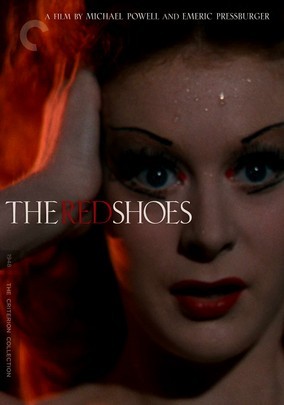
Who can forget the most famous scene, where a determined and crazed Vicky finishes her stage performance, Powell firmly holding the camera on her makeup-stained face, her blue eyes wide and hair wild?

Her look of triumph and insanity, lost in the moment, is a grand and unforgettable image that is often repeated in cinema reference books.

Equal parts dramatic, romantic, eerie, lustful, and wise, The Red Shoes (1948) is a classic film made way ahead of its time. Its startling visuals, treasured art and set designs, powerful acting, and compelling story make it a must-see.

No wonder this film had such a profound influence on other masterpieces to come.

Oscar Nominations: 2 wins-Best Picture, Best Motion Picture Story, Best Scoring of a Dramatic or Comedy Picture (won), Best Art Direction-Set Decoration, Color (won), Best Film Editing
The Omen-1976

The Omen-1976

Director Richard Donner

Starring Gregory Peck, Lee Remick

Top 250 Films #110

Top 40 Horror Films #21

Scott’s Review #331

60002150

Reviewed January 8, 2016

Grade: A

On the heels of similarly themed supernatural horror films, and all three classics, in my view, The Omen (1976) follows suit with a religiously minded, terrifying piece that resembles both The Exorcist (1973) and Rosemary’s Baby (1968).

All three films are cherished gems and among my favorite horror films.

The Omen (the last to be released) is quite possibly the weakest entry, having taken much from the other two films, and at the forefront is a child encompassed by devilish forces.

But to say “weaker” implies it is not good, which is not the case- The Omen is a masterpiece.

Set mostly in London, the film begins in Rome. Gregory Peck plays a powerful diplomat, Robert Thorn. Robert’s wife, Katherine (Lee Remick), has just given birth to a baby, who dies.

Unbeknownst to her, Robert and a priest have taken a newborn whose mother has just died, thereby fooling Katherine into thinking she has delivered a healthy baby boy. They name their child Damien.

Soon, Robert is named U.S. Ambassador to the United Kingdom- an astounding honor. Still, his and Katherine’s lives spin out of control as strange events surrounding Damien begin to occur, and they realize the child is not “right”.

I adore the many aspects of The Omen. The locale of sophisticated and royal London is perfect. The Thorns live in a grand, palatial estate, oozing with potential horror elements.

During a vast party for little Damien’s fifth birthday, the attendees are gathered on the perfectly manicured grounds of the Thorn home. It is a bright and cheery afternoon.

Suddenly, from the top-floor bedroom window, Damien’s fresh-faced nanny publicly hangs herself from the window, proudly shouting, “This is all for you, Damien”!

This scene is one of the most horrific and surprising scenes in the film.

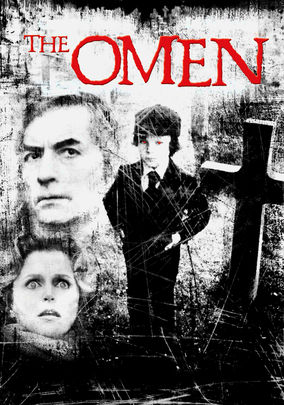
When Damien’s new nanny shows up, she is off-putting and sinister. The inclusion of a pack of black dogs hovering around the estate is fiendish, and an innocent trip to the zoo results in the scared animals fleeing from Damien as if he were the antichrist, which, of course, he is revealed to be.

Fantastic is the religious element of The Omen, a sure measure to frighten and freak out audiences brave enough to watch this film.

Who will not be on edge as a sweet-looking little kid is assumed to be the devil?  Religious elements in horror have been prevalent throughout the ages.

Perhaps it is the Italian and British accents and settings that add layers of fear to the film.

What I love most about the film is its cynicism. The Omen is not a happy film by any means, nor does it result in a happy ending- Satan wins in the end.

Two memorable scenes are the pole through the heart of the priest scene and the gruesome decapitation of a photographer by a sheet of glass. In both scenes, Satan causes the deaths.

The finale of the film is incredibly compelling and downright shocking- the face-off of Robert and Damien in a church, and the prevailing conclusion sets the stage for a sequel, which, of course, there was more than one.

The sinister smile at the end of the film is immeasurably evil.

The Omen (1976) is a film I love to watch and revel in the fright when the chills creep up my back.

What a fantastic film.

Oscar Nominations: 1 win-Best Original Score (won), Best Original Song-“Ave Satani”

The Phantom of the Opera-1962

The Phantom of the Opera-1962

Director Terence Fisher

Starring Herbert Lom, Michael Gough, Heather Sears

Scott’s Review #1,254

Reviewed May 12, 2022

Grade: B+

It’s not the best-known film adaptation of Gaston Leroux’s famous 1910 French novel, but it is the most horrific.

Hammer Horror Productions’s acquisition of this is a significant win since the story is ideally suited for the horror genre.

I’ve not yet seen the 1925 silent film version of The Phantom of the Opera starring Lon Chaney, which I hear is terrific, so I cannot compare that to this.

The possibilities for a macabre telling are endless. Terence Fisher, a familiar director in Hammer films, is back at the helm to mix the dreariness of a musty London theater with the creepy face mask of its lonely and wounded inhabitant.

I’ve said it before, but it bears repeating in this review: The horror films achieved astounding achievements by making lemonade out of lemons budget-wise. The limited funds necessitated creativity, seen in every series frame, especially the colorful sets and costumes.

The Phantom of the Opera (1962) is no different and even better than some others in the brilliant mix of mood and sympathy for its primary victim, specifically the luminous and disfigured ‘phantom’ played by Herbert Lom.

Dastardly Composer Lord Ambrose D’Arcy, wonderfully played by Michael Gough, and his bullied backer, Harry Hunter (Edward De Souza), struggle to find a replacement for the female lead in their new opera after she quits and flees town in the wake of a gruesome theater murder.

When a new prospect, the virginal Christine Charles (Heather Sears), disappears after the advances of Ambrose, Harry cautiously investigates, unaware that there is a lonely figure inhabiting the theater.

Meanwhile, a mysterious masked man (Lom) who is eerily familiar with the opera holds Christine captive and offers to groom her to play the part.

He is a mix of crazy and passionate, and his plight is sympathetic when what he’s been through is finally explained.

The atmosphere sets The Phantom of the Opera apart from similar films of the 1960s, even Hammer films.

This is never more evident than in an early scene when the camera follows the characters on the misty streets of London. The darkness and shadows become prominent as they walk through the streets and dark alleys.

Five years into his association with the production company, Fisher has hit his stride. A limited budget might reduce another director to a fretting basket case, but the result and ease he parlays to The Phantom of the Opera is quite beautiful.

Many scenes are set in the theater, adding a foreboding element to the events. Dusty yet brimming with musicianship and artistry, it’s fun to watch the characters sneak around and scheme within the confines of this structure.

Therefore, the mood and trimmings are exquisite without actually being so.

The music sequences are impressive without going on for too long. Although the locale is switched from Paris to London for obvious reasons, the foremost being that the actors are British, this doesn’t hamper the overall experience.

The best and most gruesome scene occurs when a poor chap swings across the theater stage in a neck rope, dead as a doornail. The creaking sound of the rope as the man swings back and forth is chilling and dubious.

Lom is my favorite actor in the film. His character’s backstory is impressive and humanistic. Who can’t relate to being cheated out of work that is rightfully theirs?

Gough, also familiar to Hammer Horror fans, is tremendous as the treacherous main villain.

Sears is okay, but perhaps not the greatest actress or best choice for the role. She’s rather bland and unmemorable.

The Phantom of the Opera (1962) falters when its ending is too sudden, and many Hammer films suffer the same fate.

This film is not for those expecting a grandiose Andrew Lloyd Webber-style musical, but for fans of down-and-dirty horror, it’s just what the doctor ordered.