Category Archives: International

Tanna-2016

Tanna-2016

Director Bentley Dean, Martin Butler

Starring Mungau Dain, Marie Wawa

Scott’s Review #673

Reviewed August 18, 2017

Grade: A

Tanna, named for the tiny South Pacific nation of Vanuatu, close to Australia, was made in 2016 and nominated for the Best Foreign Language Academy Award.

It is a marvelous work in every way, but the crowning achievement is how this film was made.

Shot entirely on the island with a minimal budget and the use of nonactors, the result is a romantic yet tragic love story that will move its viewer to tears in its innocence and beauty.

Tanna is shot in the  Nauvhal and Nafe languages.

Film-makers reportedly spent seven months in the village of Yakel, immersing themselves in the tribe’s culture and civilization. The people are the last of their kind, rebuffing nearby colonial and Christian influences in favor of their traditional values and beliefs.

The film is based on a true story of love by two tribe members and played out by the villagers, each portraying a role close to their lives and hearts.

As the movie opens, we are immediately exposed to a tribal community living their daily lives. They wash, hunt, and wander through the jungles, exploring their natural surroundings.

The men wear simple penis sheaths, and the women are primarily topless. We sense a great community and a sense of togetherness.

When Dain and Wawa  (I am unsure if these are the “actors” names or the real-life people) lay eyes on one another from across the jungle, they instantly fall in love and secretly begin to spend time in a tender and romantic courtship.

A traditional rule is arranged marriage, which becomes a significant problem for Dain and Wawa as their love blossoms. When a neighboring tribe attacks the Shaman over a dispute regarding bad crops, Dain wants revenge.

When cooler heads prevail, the leaders of each tribe decide that Wawa will marry a member of the other tribe, leaving her and Dain distraught and desperate.

Their love is then tested ultimately.

The actors who play Dain and Wawa are authentic and truthful. Although they have never acted before or seen a camera, both pour their souls into the characters they portray.

This also applies to Wawa’s little sister, a goldmine in her honest portrayal. All the performances are rich.

Visually, Tanna is breathtaking. One thing is the exotic lushness of the green jungles, mixed with the gorgeous running streams and waterfalls. Still, the oozing volcano inhabiting the island is colorful and picturesque during the night scenes.

The entire film is shot outdoors and captures the tribal world incredibly well. Thus, the film immerses the audience wholly in the tribal world.

Comparisons to the William Shakespeare play Romeo and Juliet must be made.

The film is a romantic tragedy of epic proportions, and the doomed couple shares everlasting love and a bond that can never be broken.

The truth in this tale is genuine as the couple must agonize over a decision to either remain together or risk the threat of Dain’s life and Wawa’s freedom if they return to their native village.

The film is almost poetic, never more so than in the final act, set upon the glorious spitting volcano.

Sadly, films similar in richness and honesty are rarely made today, but Tanna (2016) stands out as a treasure in beauty and thought.

Interestingly, because of the real-life couple’s determination and strength, the age-old tradition of chosen marriages has since been lifted, and true love encouraged.

Oscar Nominations: Best Foreign Language Film

Fire At Sea-2016

Fire at Sea-2016

Director Gianfranco Rosi

Scott’s Review #671

Reviewed August 12, 2017

Grade: B+

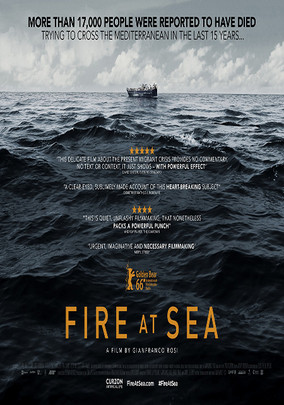
Fire at Sea was honored with a coveted 2017 Best Documentary Feature Oscar Award nomination, but despite this high achievement, it received largely negative reviews from its viewers.

This is not as surprising as it might seem.

The documentary was also the Italian entry for the Best Foreign Language Film category but was not chosen. It is a hybrid between a “typical” film and a documentary, making it all the more unique.

The lackluster comments are undoubtedly due to the documentary’s slow pace and the way it intersperses snippets of the story, which do not weave together with the main message.

Compounded by the length (one hour and fifty-four minutes is very long for a documentary), the work will not go down in history as a rousing crowd-pleaser.

But it is an important film.

The story tells of a group of modest individuals inhabiting a tiny Sicilian fishing island named Lampedusa between Sicily and Libya. The island is prominent for being a rescue area for migrants forging a treacherous journey from African countries (mainly Libya and Sudan) to the island for safety and medical treatment.

It is implied that the migrants do not stay on the island for very long. Lampedusa serves as a temporary sanctuary. It is not explained where the migrants go or what happens to them after medical treatment.

After a slightly tedious start, I immersed myself in the various stories and began to appreciate the slow pace.

I found this calming.

We see snippets of daily events: a young boy and his friend carve a face out of cactus plants. Later, the boy undergoes an eye exam and is told he needs glasses. We then see a lengthy scene of his family eating pasta.

We also get to know a resident doctor, grandmother, disc jockey, and scuba diver.

Admittedly, I began to wonder what a young boy preparing a slingshot or a grandmother preparing sauce had to do with the documentary’s main subject, migrants coming to the island.

Then I realized that director Gianfranco Rosi was telling a human story. The ordinary Lampedusa citizens’ lives contrast with the fleeing and terrified migrants.

I was able to put all the pieces together.

Fire at Sea is unusual, as it is told without narration and with dialogue in Italian containing sub-titles. These are additional unique aspects of the project, but I admired its essential message.

The most powerful scene in the film is a quiet one with a resident doctor describing his experiences with the migrants.

He professes how any decent person should help any needy soul and describes the grisly task of performing autopsies on the people (many women and children) who do not survive the harried journey across the Mediterranean Sea. Many die of hunger and thirst or are burned by the diesel fuels from the tiny boats they are stuffed into.

His long yet powerful account will move one to tears.

This testimonial speaks volumes regarding the influx of needy individuals, mainly from Syria, who need help from neighboring countries.

Some have been kind and have let individuals into their countries, while others have shunned the migrants (namely in 2017, the United States).

The honest account from the doctor summarizes the message of humanity that Fire at Sea represents.

Another powerful scene emerges towards the end of the documentary, as several African men are rushed from their ship to another ship and tended to by rescuers.

Sadly, the barely alive yet conscious men are not long for this world as a few minutes later, we see a series of body bags lined up containing the expired men. This tragic realization speaks volumes about the need for such humanistic individuals in Lampedusa.

Fire at Sea (2016) is worth watching. It is a story about the fiery waters the residents could see from afar during World War II. It teaches kindness and decency and reminds us that some people are just good, generous souls, all but willing to help those in need.

We can all learn from this documentary.

Oscar Nominations: Best Documentary-Feature

Punish Me-2005

Punish Me-2005

Director Angelina Maccarone

Starring Maron Kroymann, Kostja Ullman

Scott’s Review #670

Reviewed August 9, 2017

Grade: A-

Punish Me (sometimes titled Hounded) is a provocative 2005 German-language film that pushes boundaries and titillates the viewer with its racy themes of masochism and pedophilia that will be way too much for your average viewer to marinate and digest.

Some may be completely turned off (rather than on) by this film. However, for the edgy thinker, the film is quite the find. Unique, extreme, and thoughtful, Punish Me is an experience to remember.

Shot entirely in black and white (rare for twenty-first-century cinema) the film appears bleak and harsh, cold almost- and that is no doubt an intentional measure.

The grizzled German landscape (the city is unidentified), gives the film interesting and effective cinematography, transforming the black and white colors exceptionally well, whether the scene is set in daylight or nighttime. Something about the black-and-white decision is genius.

Elsa Seifert (Maren Kroymann) is a fifty-year-old probation officer. Married and raising a teenage daughter, she appears to live a stable, middle-class existence. When one of her charges, Jan (Kostja Ullman), a sixteen-year-old, handsome young man, gives pursuit of her, their relationship turns into an obsessive, lustful situation for both.

Jan, you see, likes to be sexually beaten, and, at first, hesitant, Elsa slowly gets immersed in Jan’s world.   When other characters begin to catch wind of the situation between Jan and Elsa, the film becomes intense.

Astounding to me is the fact that Punish Me is directed by a woman, Angelina Maccarone. This both surprises and impresses me. Thought-provoking is the female perspective in the film.

Elsa is not an unhappy woman- though she nervously chain-smokes in almost every scene.

She initially has no intention of being sucked into Jan’s eccentricities. As she awkwardly spanks him in their first steamy, sexual encounter, she is gentle, yet she quickly intensifies.

Is she insecure with her middle-aged body? She gets carried away by Jan’s charms, putting both her career and her husband at risk.

Can she stop herself before it’s too late?

One wonders a few things- How would this film feel if it were directed by a man? Maccarone centers the perspective on Elsa more than she does Jan- or are we to assume that Jan, at sixteen, is merely experimenting with his sexuality and therefore not the more interesting character?

This was my determination. Elsa has way more to lose than Jan does. We are not sure why Jan is so troubled, to begin with, or why he likes to be beaten- was he abused by his parents? sexually or otherwise? What deep-rooted issues does Elsa have?

I imagined the complexities offered had the film gone something like this- Elsa is a male character. Would the man-on-boy be too much? Is female on boy safer?

One wonders, but if Elsa was a male and Jan a female, I do not think the film would be half as controversial or daring. It would seem more exploitative or dare I say, conventional.

Instead, Maccarone turns the film into a psychoanalytical feast as we wonder what makes both Elsa and Jan tick and why they enjoy the discipline scene. Perhaps there is no clearly defined answer.

The supporting characters are not explored very well, other than a fellow troubled girl that Jan beds, commenting that she is too fat (she is not), or Elsa’s husband is revealed to have once had an affair with another woman pronouncing “it was only sex, not love”.

From this, one concludes that Elsa and her husband will reunite and resume their middle-class life together, but what will become of Jan?

Thanks to effortless direction and good choices by Maccarone, she makes Punish Me (2005) an examine-worthy look at sexuality, desire, and emotions.

Many will loathe the film or not bother to give it the time of day based on the subject matter, but the film is a treat for the creative cinematic lover and lovers of analysis.

The Salesman-2016

The Salesman-2016

Director Asghar Farhadi

Starring Shahab Hosseini, Taraneh Alidoosti

Scott’s Review #668

Reviewed August 2, 2017

Grade: A

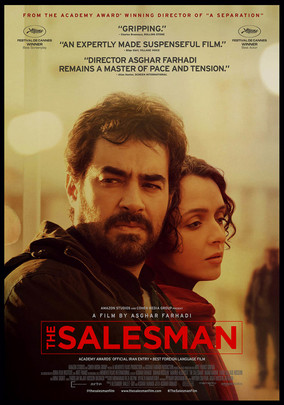
The Salesman is the latest film directed by Asghar Farhadi to win the coveted Best Foreign Language Film Oscar. 2011’s A Separation also won the crown, and 2013’s The Past, nestled between the other films, is nearly as good.

All contain mesmerizing and gripping plot elements that leave the audience in good discussion long after the film has concluded. That is what good storytelling is all about.

Rich with empathetic elements and crisp writing, Farhadi has become one of my favorite international filmmakers. Each of his pictures is as powerful in humanity as their counterparts.

Along with fellow contemporary Claude Chabrol (admittedly around a lot longer), similarities abound between the two creative maestros in the form of thrills, mystery, and differing character allegiances. I adore how both directors incorporate the same actors into their films.

Farhadi incorporates the classic stage production Death of a Salesman by Arthur Miller into the story. The play and the film contain similar themes- humiliation and secrets.

The young and good-looking couple, Emad (Shahab Hosseini) and Rana (Taraneh Alidoosti), are community theater actors living in metropolitan Tehran, Iran.

They have wonderful friends and companions and are popular with their close neighbors and theater buddies. Emad, a well-liked high school teacher, and Rana, a housewife, make a perfect couple, but their bond will soon be severely tested.

Forced to move from their crumbling apartment into temporary quarters owned by a theater friend, they are unaware that the former tenant worked as a prostitute and had a bevy of gentleman callers.

She carelessly left the unit, leaving behind all of her belongings for them to sift through. One night, when Rana is home alone, she inadvertently allows a mystery person to enter, which leads to a terrible incident.

The film centers on determining what exactly happened between Rana and the intruder. Is she hiding the truth? Can she and Emad overcome the implications of the events?

The audience is presented with a powerful, intriguing mystery to absorb and unravel. Throughout most of the film, questions are raised to be considered: Who was the intruder? Will Emad exact revenge? What happened?

The brilliance of The Salesman is that we, as the audience, never actually see the incident inside Emad and Rana’s apartment, so we are baffled by what has transpired. We merely witness the after-effects and the questions the characters (mainly Emad) have.

Is Rana being truthful? Did she know the man who entered the apartment? Was it even a man or perhaps the former female tenant? With Farhadi, anything is possible, but rest assured, a startling climax will ensue.

The genius is how the viewer’s loyalties will be divided by character and change within a scene.

In one tense sequence, a heroic character becomes the villain and slowly returns to being the hero again, which is a topsy-turvy experience!

The Salesman is smothered with a roller coaster of emotions and feelings.

The way that more than one of the central characters changes their motivations is essentially the film’s most tremendous success. Rana, Emad, and “the Man” are flawed, complex characters, and what a treat it must have been for these actors to sink their teeth into these roles.

A special mention must be given to the other actors involved in the film. The Salesman is fraught with great performances, big and small.

In addition to the leads (Hosseini and Alidoosti), the supporting cast exudes immeasurable talent. Farid Sajadhosseini as “the Man” is astounding, and his family members, who appear mainly in the conclusion, deserve much praise.

These minor characters appear during the most pivotal part, giving it the acting chops to pull the result.

Asghar Farhadi hits another one out of the park with The Salesman (2016), and how deserving is the Oscar win for this man, a director whose films are always sure to be compelling, thought-provoking treats?

I cannot wait for his next film.

Oscar Nominations: 1 win-Best Foreign Language Film (won)

A Man Called Ove-2016

A Man Called Ove-2016

Director Hannes Holm

Starring Rolf Lassgård, Ida Engvoll

Scott’s Review #653

Reviewed June 12, 2017

Grade: A

A Man Called Ove is a fantastic 2016 Swedish film honored with a Best Foreign Language Film Oscar nomination and is a darling watch.

The film is terrific.

Equal parts whimsical, humorous, and heartbreaking, the film churns up emotions brought to the surface, which is quite telling about the experience.

The film is magical in a sense.

The lovely scenery of Sweden also abounds, making A Man Called Ove an unexpected marvel worth checking out for good film lovers.

Ove (Rolf Lassgard) is a fifty-nine-year-old curmudgeon living in suburban Sweden. He is the keeper of law and order in his quaint, little community of bungalows, regularly ridiculing rule breakers and the oblivious with torrents of shouts and insults.

He despises several neighbors, including a beautiful cat who walks around the complex as if she owns it.

When an interracial family moves in next door to Ove, his life forever changes as he becomes acquainted with the husband, the wife, and their two young girls. In his newfound entertainment, Ove regularly visits his deceased wife’s gravestone, bringing her flowers and plotting his suicide.

Through flashbacks, we are taken on a journey through the past as we learn all there is to know about Ove.

The film is a beautiful experience. I worried that A Man Called Ove would be too lighthearted and sentimental.  The type of foreign language film the Academy far too often recognizes in place of darker, more complex (and, in my mind, deserving) films.

A Man Called Ove is not exactly dark, but it is certainly not trivial or fluff. The film is rich with excellent writing and character development.

Romance is also a significant theme, but not in a corny way. For much of the running time, Ove’s deceased wife, Sonja, is a complete mystery. We only know that Ove misses her terribly and cannot wait to be with her in the afterlife. We only get brief glimpses of her photo on the table.

When finally introduced to the story, we see them both in their younger years, filled with hope and promise. I beamed with delight during these wonderful moments. The scenes of their innocent first dates and the connection they develop are heartwarming.

Later, when Sonja’s story is fully explored, we show a new appreciation for Ove and why he is the way he is today. We understand him better, and the character develops.

Some paths that life takes Ove and Sonja down are tear-inducing and emotional, primarily due to Sonja’s character and personality. Along with the backstory of Ove and Sonja, we are treated to scenes of Ove and his father in the past.

With his mother dying way too young, the pair develop an unrelenting bond that is severed only by tragic circumstances.

Ove’s constant bungled attempts at suicide (he buys poor-quality rope to hang himself, a visitor interrupts his attempt to breathe in toxic garage fumes, and he ends up saving a life when he intends to be hit by a train) are the comic turns that the film mixes perfectly with the heavy drama.

A Man Called Ove (2016) is a pure treat in modern cinema. It perfectly balances drama, comedy, churning emotions, and heartbreaking honesty. It is highly recommended for those seeking a treasure with many characteristics.

Oscar Nominations: Best Foreign Language Film

Spa Night-2016

Spa Night-2016

Director Andrew Ahn

Starring Joe Seo

Scott’s Review #645

Reviewed May 19, 2017

Grade: B+

On the surface, Spa Night (2016) may seem like a straight-ahead independent LGBTQ-themed film (of which, in recent years, there has been no shortage), but the film’s plot is twofold.

Sure, it tells the coming-of-age story of a young man’s sexuality. Still, Spa Night is also a story of the boy’s Korean parent’s financial struggles and their desire to raise a son into a successful young man, sacrificing their happiness.

The film’s tone is very subtle, and the action moves slowly, but it is a sweet and relevant story.

David Cho is a shy Korean-American high school student on the cusp of going to college. His parents (who only speak Korean) have sadly recently lost their take-out restaurant in Los Angeles. The parents struggle to make ends meet (she by waitressing, he by doing odd moving jobs), while David takes SAT classes to ensure he gets into a great college.

David is also struggling with his sexuality and one-night visits a local male spa with drunken friends. He gets a job there and begins to experience male-on-male shenanigans taking place on the sly in the spa, all the while developing his blossoming sexual feelings.

David’s development in the story is key- he is resistant to coming out as gay because his parents are traditionally Korean, constantly mentioning David finding a girlfriend and succeeding in school, becoming what they have failed to achieve.

When, at one point, he fools around with another male in the spa, David insists on a no-kissing policy. This reveals to the audience that he has issues with intimacy with another male, and in one compelling scene, some self-loathing occurs.

When he stares too long at a buddy in the bathroom, while both are inebriated, this clues in the friend, who is then distant towards David.

The film is enjoyable because it tells two stories rather than one, which helps it succeed. We also care greatly about David’s parents, who are compassionately portrayed rather than the stereotypical “tiger mom” and rigid father.

Wanting only the best for him and having no clue about his sexuality struggles, they trudge along with their issues. The father drinks too much, and the parents frequently squabble.

This is a clue to the film because it explains why David hesitates to mention anything to them, even though he is close to his parents.

I also enjoyed the slice-of-life and coming-of-age appeal that the film possesses.

Several shots of day-to-day life in Los Angeles are shown, mainly as characters go about their daily routines.

The budget allotted for Spa Night must have certainly been minimal. Still, the lesson learned is that some fantastic films are made for minuscule money, but as long as the characters are rich and the story humanistic, the film succeeds- this is the case in Spa Night.

Almost every character is of Asian descent- I am guessing all Korean actors. This is another positive I give to Spa Night.

In the cinematic world, where other cultures and races are woefully underutilized or still stereotypically portrayed, how refreshing is it that Spa Night breaks some new ground with an LGBTQ-centered film with Korean characters?

Spa Night has deservedly crowned the coveted John Cassavetes Award at the 2016 Independent Spirit Awards (for films made for under $500,000), and director Andrew Ahn is undoubtedly a talented novice director to be on the watch for.

He seems destined to tell good, interesting stories about people.

Independent Spirit Award Nominations: 1 win-John Cassavetes Award (won), Acura Someone to Watch Award

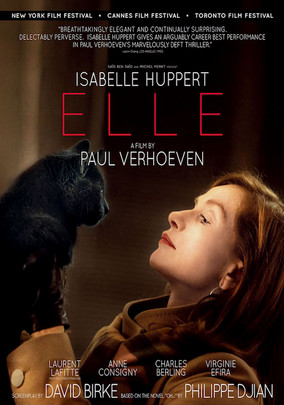
Elle-2016

Elle-2016

Director Paul Verhoeven

Starring Isabelle Huppert

Scott’s Review #644

Reviewed May 17, 2017

Grade: A-

Sure to evoke both disgust and intrigue from viewers brave enough to watch it all the way through and hopefully ponder the character dynamics, Elle is a titillating French film that was showered with heaps of praise upon its release in 2016.

Controversial without question, in large part by the film’s main character, Elle, will undoubtedly divide film fans- some heralding the picture as greatness, others detesting it as too exploitive.

It is not an easy watch by any measure, but one aspect is cemented in truth-Isabelle Huppert gives a fantastic performance in a complex and perverse role.

Unique even in its first scene, Michele Leblanc (Huppert) is a ruthless, alpha businesswoman who is raped and beaten by an intruder in her lavish Paris home.

The violent act occurs in the first scene, immediately giving the film an “in your face” presence. When the rapist, who wears a ski mask, flees, Michele shakes off the incident with nary an emotional scar.

Through backstory, we learn that years ago, Michele’s father brutally murdered many people and was imprisoned for life. Michele’s mother is an aging glamour girl who hires sexy male escorts. Michele’s son is engaged to a domineering pregnant woman, and her ex-husband is dating a younger woman.

Michele lives a complicated life.

At first, Michele seems sympathetic, and we feel her pain as she is taunted by a woman in a coffee shop for her father’s past deeds.

To say nothing of her rape, we cringe when Michele hears noises and imagines the masked intruder returning to rape again, empathizing with the character.

When the mystery man harasses Michele, he sends notes and leaves “gifts” in her home, and we are scared for her. However, as the film goes along, Michele’s obsession and other questionable actions make the character challenging to like.

I also began to wonder if Michele was perhaps dreaming the entire film!

As a fan of acclaimed film director Claude Chabrol, Elle appears to be heavily influenced by him.

Director Paul Verhoeven certainly must have studied his works. He is no slouch himself—female-empowering sex films such as Basic Instinct (1992) and Showgirls (1995) that he directed come to mind. He gives Elle a sleek and sexy feel.

The fact that it is set in romantic Paris helps make the film glamorous and cultured. Verhoeven even weaves a whodunit into the story for much of the movie until the rapist is revealed shockingly.

If the film had ended with the big reveal, this would have made for a compelling, if not mainstream, Lifetime television-type film, but Elle takes off from this point. Michele, already fancying her handsome rapist, actually begins a macabre relationship with the man, going so far as to act out the rape again- her fantasies coming true!

This story turn may repel the average viewer, but to me, this turns the film into a completely left-of-center, layered, psychologically themed story.

Elle is not a revenge tale or a film about a victimized woman; it is much more.

What a dynamic performance Ruppert gives, and here is why- she successfully makes Michele both sympathetic and reviled.

Besides the aforementioned rape complexities, she despises her mother and sleeps with her best friend’s husband. In a scene that arguably makes Michele cross the line in reprehensible behavior, she confesses her affair to a best friend, Anna, when Anna is at her happiest moment- this is downright cruel!

So, no, the audience does not entirely sympathize with this character, but how layered this makes the character, and what a treat it is for actress Ruppert to sink her teeth into a character like this one.

With a wounded yet cold central character, partly thanks to exceptional direction by Verhoeven and a brilliant portrayal by Huppert, he takes Elle into largely unchartered territory and brave waters to create a film that will make the viewer both think and loathe.

Part nymphomaniac wounded bird and vicious shark, Elle contains a complex and memorable leading character.

Oscar Nominations: Best Actress-Isabelle Huppert

Independent Spirit Award Nominations: 1 win-Best Female Lead-Isabelle Huppert (won)

Free Fall-2013

Free Fall-2013

Director Stephan Lacant

Starring Hanno Koffler, Max Riemelt

Scott’s Review #641

Reviewed May 3, 2017

Grade: A-

Free Fall is a 2013 German-language film that is very reminiscent of the highly influential LGBT film, Brokeback Mountain (2005), only set in Germany- during present times.

The loneliness, struggles, and deceit that the characters face are similar in both films and both are arguably bleak as overall films. I, however, truly enjoyed this film and embraced the touching aspects and truthful writing.

In the case of Free Fall, as compared with Brokeback Mountain, only one of the male characters is a family man- coming to terms with his sexuality at very bad timing, while the other male character is more comfortable in his skin.

A case could be made that a similar characterization is apparent in Brokeback. In both films, a love story develops between two men, and outside forces thwart their happiness.

The film is a very good watch and the love scenes are particularly steamy and emotional.

Marc Borgmann is a young police officer, fresh out of the academy, living with his very pregnant girlfriend, Bettina. They are temporarily staying with Marc’s parents until the baby is born.

Seemingly happy, Marc befriends a recruit, Kay, and they begin a ritual of jogging together in the forest.

Both men are young and handsome and very masculine- an aspect in an LGBT film that I find as a positive. Kay is much more brazen about his sexuality than Marc, and they eventually fall in love with the added pressure of their very macho surroundings, and Marc’s pregnant girlfriend to contend with.

Free Fall, as the title implies, is not a cheerful, romantic film, as a whole- nor is it completely bleak either. Yes, the love affair between Marc and Kay has some happy moments, but more often than not they face some sort of peril and do not get much time to relax and enjoy each other.

As circumstances begin to unravel, Marc’s girlfriend slowly suspects something is going on with Marc, but when Kay is outed (the film suggests he purposely outs himself) during a gay nightclub raid, their lives spiral out of control.

The film itself is very realistic and does not come across as forced or plot-driven. The acting by both principal actors (Koffler and Riemelt) is quite strong and I buy their attraction instantly.

The scenes where Marc questions whether the pair are buddies while internally fighting his attraction for Kay are excellent and very passionate. The range of emotions on the face of the actor, Koffler, is excellent.

Passion is felt during every scene the pair share together.

The way many of the supporting characters are portrayed, however, is disappointing,  yet also a brutal strength of the film. Marc’s parents are quite unsympathetic to either Marc or Kay and are written as stereotypical, anti-progressive, and rigid.

When Marc’s mother catches Marc and Kay kissing, she coldly chastises Marc for being “raised better than that”. In her mind being gay is bad- the father wholeheartedly shares her beliefs.

Another of the cops in the police academy is written as homophobic, but the film wisely writes Marc and Kay exceptionally well, proudly with none of the unfair effeminate qualities films and television still seem to cling to.

The characters are not written for laughs, nor should they be. They are strong men.

The film wisely throws in a handful of supportive characters, like the police force as a whole- teaching and recognizing diversity and inclusion, and a fellow cop who is supportive of the situation with Marc and Kay, but most of the characters come across as harsh and unfeeling to same-sex attraction.

The conclusion of the film is slightly disappointing as the story ends abruptly and in a rather unsatisfying way- rumors of a proposed sequel have circulated the film.

Shot on a very small budget, the funding for a follow-up film must still be raised, which hopefully will occur. A nicer (and happier) ultimate resolution would be great.

American LGBT films, sometimes going too much the comical, or worse yet, the sappier route, can take a lesson from this treasure of a German-language film.

Free Fall (2012) is a humanistic, realistic, and brave film that I hope more people find themselves experiencing. The film will touch those who are either involved in or sympathetic towards the LGBT community.

The Visitor-2011

The Visitor-2011

Director Tor Iben

Starring Sinan Hancili, Engin Cert

Scott’s Review #630

Reviewed April 4, 2017

Grade: B-

The Visitor is a 2011 LGBT-centered film that is set in Berlin, Germany but features mainly Turkish characters.

While the film tells a nice story and features some cool shots of the metropolitan city, it is rather amateurish in style.

The pieces of the film do not always come together or fit very well and there is no character development to speak of, but still, the film does have good intentions with a nice message and theme that deserves at least a few props.

The story involves a young male and female couple, Cibrial and Christine, who are dating. Cibrail works as a policeman and the pair seem to be in a happy relationship, enjoying walks and dinners together.

One day, when Christine’s gay cousin, Stefan, comes to town, the relationship between Cibrail and Christine sours. The cousin is openly gay and comfortable with his sexuality, while Cibrail secretly harbors feelings for the same sex, which he dares not tell Christine about, though she eventually catches on dramatically.

Stefan is looking for action, cruising the city and parks for sex and companionship, while Cibrail is both lustful and jealous of Stefan.

Many scenes involve Cibrail looking longingly at Stefan and fantasizing about him. In that regard, the film teeters on being quite steamy and features more than one nude shower scene- this smoldering element helps the film avoid complete doldrums.

Specifically, Cibrail showers alone during one scene, washing and presumably daydreaming about Stefan. But too many other scenes show a character jogging or walking around the park- too much like filler material.

The climax of the film is highly predictable as the two men find their way into each other’s arms, though the passion is not exactly evident to the audience.

The lack of buildup is a negative aspect of the film because there is very little rooting value and too many questions.

Is the film a love story? Is it supposed to be about Cibrail coming to terms with his sexuality? Why do we not see more of a blowup scene between Cibrail and Christine?

He simply moves out once she catches him in bed with Stefan and before we know it, Stefan and Cibrail passionately embrace and the film closes in celebration.

A side story involving a dead body found in the park- a park known for gay shenanigans- is included as Cibrail investigates the crime with his police partner, but this seems to have nothing to do with the main plot unless we are to suspect one of the two men as the killer, but this is hardly focused on.

Another shot of a gay pride parade in Berlin is included, but is this to make it known that The Visitor is a gay film?

Additionally, a statue of two men is shown in several scenes for seemingly no other reason than to reinforce that the film is gay-themed.

The Visitor is a simple story of two men finding each other, which is a nice message, but the film’s run time is a brief seventy minutes, hardly enough time for character development.

A muted, videotaped look does not help the film seem very professional, and seems downright amateurish as an entire film, so much so that I would not be surprised if a film student might have made The Visitor (2011).

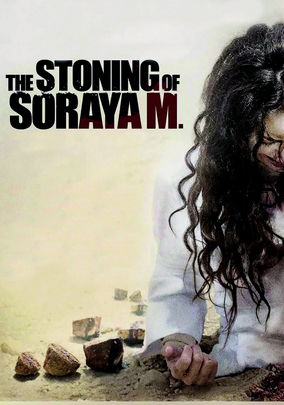
The Stoning of Soraya M.-2008

The Stoning of Soraya M.-2008

Director Cyrus Nowrasteh

Starring Shohreh Aghdashloo

Top 10 Most Disturbing Films #2

Scott’s Review #618

Reviewed February 18, 2017

Grade: A

The Stoning of Soraya M. (2008) is a brutal film and one of the most disturbing films that I have ever seen. I have viewed the film a total of two times and that is enough for me.

The terrifying aspect of the film is that the story is true and the events depicted not only have happened to the woman featured but happen to women day in and day out in certain cultures.

The film is a frightening reminder of the atrocities of human suffering.

The film is an American Persian language film made in 2008. Academy Award nominee, Shohreh Aghdashloo, stars as a woman living in a remote village in Iran- the time is 1986.

Interestingly, the film begins following the events that conclude the story and works in reverse. A reporter who has car trouble and is lost in the village is taken by the aunt of Soraya (Aghdashloo) who must tell the journalist the painful story of a tragedy that befell poor Soraya the day before.

Soraya was brutally stoned to death, and wrongfully accused of adultery, and the journalist wisely records the aunt’s tale with his tape recorder. The journalist must then escape the village alive for Soraya’s story to be told to the masses.

From this point, the film transfers to several days earlier.

Soraya’s abusive husband, Ali, wishes to divorce Soraya so that he can marry a fourteen-year-old girl from the village. When she refuses, Ali uses manipulation and blackmail to turn many in the village against Soraya, including her two teenage sons.

Ali convinces everyone that Soraya has been unfaithful to him with a widower whom Soraya innocently works for. Ali is then granted his divorce and Soraya is sentenced to be stoned, as an example, in front of the entire village.

The message is clear- women are not equal to men and are not permitted to do the things that men can.

Throughout the film, we get to know Soraya and she does have her loyal female friends and supporters. Aghdashloo portrays Soraya with gusto and bravery and the fact that we care for the character so much makes the inevitable stoning sequence heartbreaking and painful to watch.

When Soraya is chained to a short pole and buried up to her neck so that she cannot move, the scene of her victimization is almost unbearable to watch. Ali and her sons are the first to cast the stones that strike her square in the head.

Director, Nowrasteh provides the stoning sequence with a dull, muted sound so that we almost experience the thuds of the rocks from Soraya’s perspective, making the scene all the more chilling.

The scene also goes on for seemingly an eternity as it takes a long time for Soraya to succumb to her many wounds. Needless to say, she is a bloody mess and unrecognizable.

This scene is not for the squeamish.

How disheartening to know that experiences like Soraya’s still occurring to this day in Iran and many other countries and there is not much that is done to help.

The Stoning of Soraya M. is based on a 1990 book, Le Femme Lapidee, written by Freidoune Sahebjam, who appears in the film as a journalist. The book has been banned in Iran.

The Stoning of Soraya M. (2008) is one of the most disturbing films that I have ever seen and as much as the message is tragic and painful, I never want to see this film again.

The pain rings too real and the thought fills me with sadness.

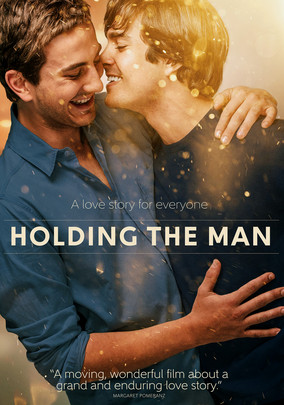
Holding the Man-2015

Holding the Man-2015

Director Neil Armfield

Starring Ryan Corr, Craig Stott

Scott’s Review #612

Reviewed January 24, 2016

Grade: B+

Holding the Man (2015) is a brave love story centering on two young men and spanning fifteen years as the men begin as high school sweethearts and progress into adulthood and sadly both contract AIDS.

This is a pivotal aspect of the film as it is set during the 1970s and 1980s- a time when this disease was dreadful and more or less a death sentence.

The film is tender and poignant, but despite these characteristics, I felt something with more vigor was missing. I did not have the exact emotional reaction I thought I might have.

The film is set in Australia and adapted from a 1995 memoir of the same name.

The action begins in 1976 as we meet Tim and John, both high school students. They are from opposite social groups, Tim a theater student, and John captain of his soccer team.

Surprisingly, they connect romantically as Tim asks John out on a date.

The pair receive little hassle and are quite open with their relationship. Certainly, they face a bit of opposition from officials at the school, but this is not the main aspect that the film goes for.

Instead, the main problems come from John’s family- specifically, his father, but this is played safely. Tim’s family is much more accepting.

Over the next fifteen years, the couple encounters death directly when they are simultaneously told they have acquired HIV.

The film is mostly told chronologically but goes back and forth at times. Specifically, we are reminded of John’s youthful good looks in flashbacks, when he is close to death, bald and sickly looking.

The main point is the men’s enduring love for each other, which is a nice message.

Otherwise, the film (2015 and long since the AIDS plague), goes for a reminder of how harsh those times were for gay men, though there is a softness to the film that I felt instead of the brutal reality.

The actors playing John and Tim (Craig Stott and Ryan Corr, respectively) have decent chemistry, but this may have been stronger than my perception was, and the reason I did not feel emotionally invested in the film.

The film was nice and sweet-the romance part, but when one of the men succumbs to AIDS I should have been a puddle of tears and I just wasn’t.

I did enjoy how the film does not focus too much on the opposition by John’s father (Anthony LaPaglia). He would wish his son’s sexuality differently but is more concerned with how his son’s relationship with a male looks to Dad’s friends and neighbors.

The deeper story was the love between the men who knew no barriers.

It was nice to see Geoffrey Rush and Guy Pearce in supporting turns as a drama teacher (Rush) and as Tim’s father, Dick (Pearce). Both do well with limited roles and I adore how the film portrays Dick as a supportive father- even dancing a slow dance with his son at a wedding- free of embarrassment.

Also notable is the sweet ending where a photo of the real Tim and John is shown during a narrative from an interview with the real Tim before his death.

Holding the Man (2015) is a nice film, but does not have the power that other LGBT films in recent decades had. Brokeback Mountain (2006) immediately comes to mind as a similar film, but one that was more emotional and engaged me much more.

An honest effort, though.

The Secret in Their Eyes-2009

The Secret in Their Eyes-2009

Director Juan Jose Campanella

Starring Soledad Villamil, Ricardo Darin

Scott’s Review #565

Reviewed December 26, 2016

Grade: A

The Secret in Their Eyes is a wonderful film and one of the best of the year 2009- deservedly it won the Best Foreign Language Film of that year.

Argentinian-spoken, the film is a multi-faceted story with twists and turns, leaving the audience guessing.

The remarkable characteristic of the film is that it crosses genres. It lies somewhere between a thriller and a romantic film, with much depth.

The story concerns a criminal investigator who decides to write a memoir of a case that happened twenty-five years ago as he reflects on the present as well as the past. This story angle in itself is highly appealing.

The film contains many flashbacks- a young newlywed was raped and murdered years ago in an unsolved case, and the film is influenced heavily by both Alfred Hitchcock and Dirty Harry.

The tale has a few surprises and twists, especially as the plot moves along. I adored the use of mirrors, reflections, shadows, and eyeglasses. Hitchcock lovers will know all about that.

I was fortunate to see this film at my local art theater and close to three hours, it can be slow-moving at times, but well worth the payoff.

The Secret in Their Eyes (2009) is a very, very well-made film.

Oscar Nominations: 1 win-Best Foreign Language Film (won)

The Bridesmaid-2004

The Bridesmaid-2004

Director Claude Chabrol

Starring Benoit Magimel, Laura Smet

Scott’s Review #548

Reviewed December 14, 2016

Grade: B+

A more modern offering by Claude Chabrol, (many of his films were made in the 1960s and 1970s), his 2004 film entitled, The Bridesmaid, continues the tradition of compelling, macabre, story-telling immersing the viewer in strange behavior by the central characters, as they obsess over each other in one way or another.

The film is in the French language.

The Bridesmaid contains two plots- one explored fully, the other not explored as much as might have been hoped- the latter being the more interesting of the two.

Philippe is the only son of his mother, Christine, and the only male in the household- his two other sisters live there as well. Christine is divorced and works as a hairdresser.

The family is a rather typical one save for a creepy incestuous bond between Philippe and Christine-very romantic in their conversations with each other, and Philippe’s penchant for carrying around a head statue carved to resemble his mother.

He regularly sleeps with the statue and kisses it on the lips.

As the youngest daughter is to be married, Philippe meets and bonds with one of the bridesmaids- Senta. The two embark on a torrid love affair and become inseparable. As their love flourishes, Senta becomes obsessive in her undying love for Philippe and asks him to kill a stranger as a way of proving his love for her.

This leads to confusion as Senta kills another character, thinking this is what Philippe wants. Philippe becomes both afraid and titillated by the young girl.

The main plot is very reminiscent of the Hitchcock classic, Strangers on a Train, as one party is bloodthirsty and the other a more innocent victim of the plot, yet in Chabrol’s film, the other party suffers from issues of their own in the emotional sense.

Senta is unbalanced, and a mysterious figure from her past- Rita- described as her stepmother, appears a few times, as she dances with her much younger partner.

A local girl mysteriously disappears early on in the film, which may be a red herring to the stories, or perhaps related to all the events of the film.

I was more intrigued by the mommy/son angle, but perhaps that is Chabrol’s way of confusing the audience. Oddly, the duo has simmering chemistry, yet each character never fesses up to being obsessed with the other- it is merely implied.

Philippe dislikes Christine’s beau, who figures prominently in the main story of Senta’s machinations, but I wanted more of Christine and Philippe.

Stylistically, The Bridesmaid is dreamy and builds at a slow momentum, similar to Chabrol’s earlier films- we are aware that the story will play out in a strange, interesting fashion, but we do not always know just what road Chabrol might take, nor what plot points may or may not be revealed.

Perhaps less developed than some of his fantastic earlier efforts, but a recommended watch for someone in the mood for a morbid, left of center, story to sink one’s teeth into.

Claude Chabrol is a director I admire greatly for his use of fascinating elements that keep the audience guessing as to what is coming next, and this is a joy in itself.

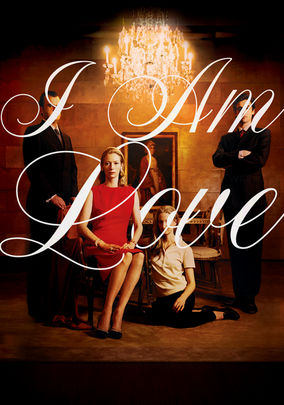
I Am Love-2009

I Am Love-2009

Director Luca Guadagnino

Starring Tilda Swinton

Scott’s Review #545

Reviewed December 11, 2016

Grade: A

Tilda Swinton shines in I Am Love,  an amazing Italian film from 2009 that I wish received wider recognition, but alas, some of the best films do not receive their due.

Swinton stars as a matriarch of a wealthy Italian family, who owns a successful business. To make this film very authentic, it was shot in and around Milan and contains a highly stylish and exquisite appearance.

It is a grand film with high-class set pieces and a great look. I do not hesitate to categorize it as an artistic, female version of The Godfather because it is that good.

It focuses on the family as a whole but more so on Swinton’s character, who is bored and unhappy with her life and yearns for passion and feeling.

One day she meets a friend of her sons and drama ensues.

The boy is only half her age, but they share a passion that awakens her from her doldrums. The conflict in the film is how the affair looks to society and affects the family business- not to mention detrimental to her marriage.

I Am Love (2009) is a great film that should be discovered by those looking for a gorgeous film with great drama.

Oscar Nominations: Best Costume Design

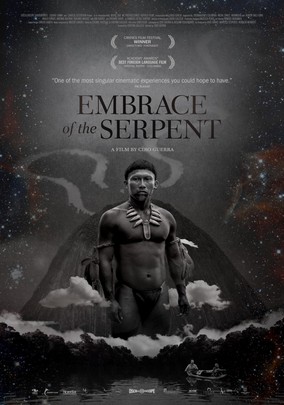
Embrace of the Serpent-2015

Embrace of the Serpent-2015

Director Ciro Guerra

Starring Nilbio Torres, Antonio Bolivar

Scott’s Review #524

80060032

Reviewed November 23, 2016

Grade: B+

Embrace of the Serpent (2015) is a cerebral experience of complex storytelling, weaving two parallel stories set forty years apart.

It is an immensely creative film crafting a black-and-white cinematic expressionism into its lurid walls.

Admittedly I found the stories tough to follow at times, and the film contains an impressionistic quality, but I knew I was watching something creative and brave.

That is worthy of a hefty thumbs up.

The setting is the Amazon jungle, along the vast Amazon River, deep in the heart of South America. The periods are 1909 and 1940, and both feature an Amazonian shaman who is the very last of his people and very resentful of white men.

In 1909, he traveled with a dying German scientist and in 1940, an American.

Both are looking for a sacred healing plant, which contains magical powers.

The parallel stories both feature a Spanish Catholic Mission by the side of an Amazon tributary.

In 1909, the leading priest was sadistic and abusive towards the young boys in his charge. Years later, the young boys are now hardened and grizzled. Both stories also feature the revelation of the plant, though in different ways and with vastly different outcomes.

The best part, much better than the storyline, is the use of black-and-white visuals. This gives the film a mysterious, old-world vibe that makes it feel like a film made in the 1940s, if not earlier.

In this way, it makes Embrace of the Serpent a visual spectacle, especially as countless scenes occur along the Amazon- we see the characters float, via canoe, and are treated to the beauty of the water and the surrounding luscious mountains.

It appears other-worldly, a part of the remote continent that few see or appreciate.

This is my favorite aspect of the film.

The stories are complex, sometimes not making complete sense, and I found myself a bit confused throughout, but this may have been due to the film’s clear art film persona, leading the film to be open to interpretation.

Both white men have different experiences with the sought-after plant.

I was left with some questions even having read the synopsis. One of the men has a dreamy, hallucinating experience with the magical plant, but what happens after?

The shaman is an interesting character as we see him as a young man and an old man, living as a lonely, resentful man.

Embrace of the Serpent (2015) is a perplexing, interpretative film, containing a magical quality and, if the story is muddy, one can whisk away to a fantastic experience just watching and enjoying the cinematic treats offered.

Oscar Nominations: Best Foreign Language Film

Independent Spirit Award Nominations: Best International Film

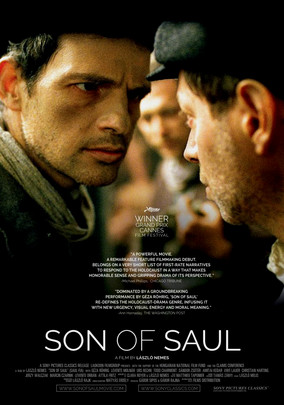
Son of Saul-2015

Son of Saul-2015

Director Laszlo Nemes

Starring Geza Rohrig

Scott’s Review #520

80057661

Reviewed November 16, 2016

Grade: A

Son of Saul, arguably the deserving winner of the 2015 Best Foreign Language Film Oscar, is a grim yet refreshing and inventive look at a subject matter that has been covered in great length in cinema.

The topic is a heavy one and to describe the film as a downer is justified, but there is also something brave and even heartwarming about this film, and the central character’s desire to do something decent in the face of death and hatred.

The film is Hungarian and takes place in 1944 when Saul is a prisoner in a Nazi extermination camp. He is given various duties,  considered a “glorified” prisoner, as he takes valuables from the belongings of those gassed, and scrubs the floors after the gassing has occurred.

He later must dump the dead bodies into a pit to be incinerated.

One day, after a group of Jews, are gassed, a young boy is miraculously still breathing. Soon after being discovered, the boy is suffocated. Convinced the boy is his son, Saul is determined to bury the boy properly for religious purposes.

I was immediately struck by two aspects of Son of Saul that separate it from the pack; the camera work, and the coloring.

The character of Saul is immediately shoved in our faces from scene one allowing us to see things from his point of view. Extreme closeups of Hungarian actor Geza Rohrig overwhelm the viewer as suffocation is apparent.

When close-ups are not used, we are treated to the camera following Saul around as he performs his duties without emotion,  clearly having done them on multiple occasions.

We become Saul and experience activities solely as he sees or hears them. This is understated yet compelling.

Secondly, the film contains a rustic, beige color, mixed with sickly greens and yellows- muted almost, which is highly effective given the amount of death involved.

Not glossy, the color scheme portrays a sense of ruin and discourse without overwhelming or going for total bleakness. The style is a dusty, smoky variety, nauseating at times. I found this to separate Son of Saul from other films with the same subject matter, making it quite distinctive.

Not a happy film and neither is the piece a complete downer that will leave one entirely depressed. Saul’s intentions to give his son a decent burial (and it is unclear if the boy is Saul’s son or hoped to be) is admirable and a small glimmer of goodness in a world that contains evil.

Other prisoners aid Saul in his efforts, telling us that their world is not without hope.

Still, despite the goodness of some of the prisoners, a couple of scenes are tough to take. Early on, dozens of people are huddled-naked, into a small room. They are promised coffee, jobs, and most importantly, hope.

Sadly, the viewer quickly realizes that the intention is to exterminate them, though the film wisely does not visually show this. A brilliant distinction to Son of Saul is the background sound and what is happening near Saul.

We hear the gasping, the pleading, and the screaming of the victims, while the camera stays on Saul and his stoic reactions.

We realize this is a typical day in his life.

Deserving of its accolades in a year of exceptional foreign language films, Son of Saul (2015) takes a familiar subject matter and gives new and unique elements to it.

The film also departs on a cliffhanger involving a second young boy, a clever moment in an already superior film.

Oscar Nominations: 1 win-Best Foreign Language Film (won)

Independent Spirit Award Nominations: 1 win-Best International Film (won)

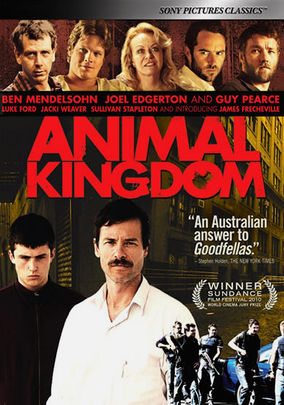
Animal Kingdom-2010

Animal Kingdom-2010

Director David Michod

Starring Ben Mendelsohn, Joel Edgerton

Scott’s Review #519

70129388

Reviewed November 15, 2016

Grade: A-

Animal Kingdom (2010) is an excellent Australian crime drama movie that is in the same vein as Goodfellas (1990), The Godfather (1972), or a myriad of other mafia/mob-type films- only Aussie style, which in itself piques interest.

The film has an indie feel, is raw and not slickly produced, and is not over-dramatized with explosions, CGI effects, and various other bells and whistles, making it character-driven.

It is simply a well-made drama about a seventeen-year-old boy named Joshua, who is taken in by his extended family of criminals.

Starting like an innocent, he slowly becomes entangled in the family’s web of corruption. This is similar to Al Pacino’s Michael Corleone from The Godfather.

Making the plot even more compelling, is the arrival of a goodhearted detective (Guy Pearce) who tries to steer Joshua on the straight and narrow.

The acting is topnotch (Jacki Weaver in particular is amazing as the diabolical leader of the family), shocking events happen out of the blue, and operatic music mixed in with dramatic events is well done.

Animal Kingdom (2010) is a diamond in the rough.

Oscar Nominations: Best Supporting Actress-Jacki Weaver

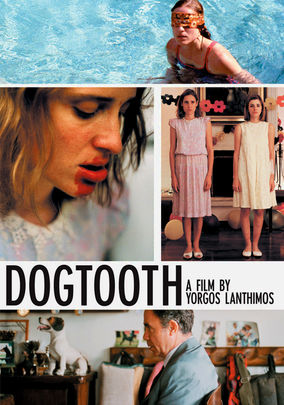
Dogtooth-2009

Dogtooth-2009

Director Yorgos Lanthimos

Starring Christos Stergioglou, Angeliki Papoulia

Top 10 Most Disturbing Films #9

Scott’s Review #515

70119657

Reviewed November 11, 2016

Grade: A-

Dogtooth is a Greek drama nominated for the 2010 Best Foreign film academy award. The film is not for the weak at heart and is most bizarre and disturbing- troubling even.

But upon digestion afterward, I realized how much I appreciated its creativity.

It tells the story of three siblings who are homeschooled and shut out from the rest of the world by their overprotective parents. The teenage kids are curious, damaged, and sad.

They know no other world besides the one their parents created for them.

Certain words mean certain things to them- a language of their own. It challenges the art of parental control as the kid’s curiosity builds and builds.

The movie itself is very difficult to follow (non-linear) yet is mesmerizing and perverse.

Warning: Some subject matters can be hard to take for some (incest, cruelty to animals, full-frontal nudity).

I thought it was a fascinating and bravely made film.

Oscar Nominations: Best Foreign Language Film

Kisses-2008

Kisses-2008

Director Lance Daly

Starring Kelly O’Neill, Shane Curry

Scott’s Review #500

70109157

Reviewed October 28, 2016

Grade: B+

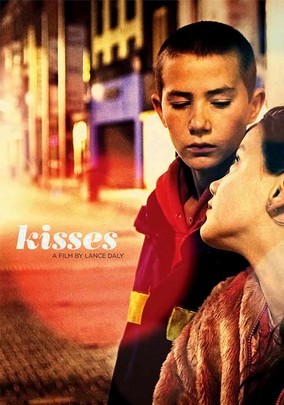
Kisses (2008) is an Irish film that tells the story of two pre-teenage kids (Dylan and Kylie), who run away to Dublin on Christmas to escape their dysfunctional families and their small town, morose life.

Instead, they become attracted to the “big city” and the hope of finding Dylan’s older brother, himself having run away to escape the oppressive environment.

At first, Dylan and Kylie barely know each other, neighbors, but far from close. Gradually they become best friends and form an unbreakable bond.

While in Dublin, they face terror and charming moments of wonderment as they traverse the city, mainly at nighttime.

Great acting and chemistry from the two leads, especially being untrained actors. Kylie- an extrovert and full of life, successfully brings out the best in Dylan, who is reserved and withdrawn, so the pair complement each other as they experience their adventures.

The cinematography in Kisses (2008) is fantastic as one gets to experience the hustle and bustle of Dublin, and the quiet countryside of a small Irish town, which is an immense threat, and a contradiction in lifestyles.

Show Me Love-1998

Show Me Love-1998

Director Lukas Moodysson

Starring Alexandra Dahlstrom, Rebecca Liljeberg

Scott’s Review #496

60000454

Reviewed October 22, 2016

Grade: B

Throughout the latter part of the 1990s, films with more of an LGBT perspective (then simply referred to as the gay and lesbian genre) were being released more readily, though it was not until the 2000s when mainstream offerings on the subject (Monster-2003, Brokeback Mountain-2006) hit the big screen to wide acclaim.

Show Me Love (1998) is a Swedish coming-of-age story about two high school girls, opposites in social acceptance, who find love.

Interestingly, the film was directed by a male- Lukas Moodysson.

Show Me Love originally had a different title, a crude reference to the town the film is set in, in western Sweden, but when the film was considered for Academy Award contention (it did not cut), filmmakers were advised to modify the title for the film to have any shot.

The film contains a grainy look- using handheld cameras in parts and, of course, is in the Swedish language.

Agnes is sullen, introverted, and brooding. Known throughout the high school hallways as the angry, weird lesbian, she has few friends, and the ones who are kind to her, she shuns away.

Elin, by contrast, is popular, lively, and charming- everybody loves her. However, Elin is restless in the tiny Swedish town where she lives and yearns for excitement. When Agnes develops a crush on Elin, she confesses all to her computer, but nobody else.

The film is nicely put together and given the time of 1998, is quite brave. Today, many years have passed and progress within the LGBT community made, a film like Show Me Love is a more common occurrence.

Director, Moodysson, does not go for anything gratuitous or steamy but rather spins a sweet coming-of-age tale, not only of teen love and hormones but of outcasts and feelings of loneliness.

It’s a film that most can relate to in some way.

The actresses portraying the leads (Dahlstrom and Liljeberg) are fantastic in their roles and play the parts with conviction and believability. Despite being opposites, we buy their attraction and chemistry. Nothing is forced or dishonest.

My favorite scenes are the awkward 16th birthday party for Agnes, thrown by her well-meaning yet clueless parents. When nobody except a handicapped girl shows up, Agnes viciously insults her, causing her to leave.

The family sits in the living room eating the food that was planned for anticipated guests. It’s a poignant moment and rather sweet. Despite Agnes’s unpopularity at school, she has a very strong, loyal family unit- that is nice to see.

Later, Elin and her sister attend the party, but more as an excuse to avoid another one. Finally, Elin and Agnes share a kiss, but is it a mean dare or is it authentic?

A clever aspect of the film is how Moodysson distinguishes both Elin and Agnes’s sexuality. Agnes is gay, open, and out. Elin is very different and has boys interested in her.

The girls could not be more different and this adds a layer of complexity as each is in a different place in self-discovery. This feature also makes Show Me Love very honest in its storytelling.

The film is not a masterpiece and could have dared to venture into more controversial territory. Could they be harmed for being lesbians given the town they live in? Why is Agnes so sullen?

This is a stereotype (the brooding lesbian) that needs to be changed- though, given the time of the film, I will give it a slight pass. Why not make Agnes a happy, cheerful girl who is gay? How will Elin’s sister deal with Elin’s sexuality or is it merely a phase for her?

All sorts of darker issues might have been explored, but Show Me Love (1998) is tender, sweet, and lighter fare, but still an adventurous offering.

Belle De Jour-1967

Belle De Jour-1967

Director Luis Buñuel

Starring Catherine Deneuve, Jean Sorel

Scott’s Review #486

60000631

Reviewed September 29, 2016

Grade: A

Belle De Jour, the title translates to “lady of the day”, a French pun for “lady of the night”, a kind phrase for prostitution, is a fantastic art film.

Stylish, sophisticated, and open to interpretation (at least in my opinion), Belle De Jour is a late 1960s journey into eroticism, social norms, and sexual freedom.

Gorgeous star Catherine Deneuve has never looked better and calmly does mental conflict.

Luis Buñuel directs the film.

Severine is a wealthy, young, newlywed who seemingly has it all. She is showered with love and affection, not to mention material items, by her handsome hubby, Pierre, played by dashing Jean Sorel.

She wants for nothing as her husband is a doctor of great wealth. Yet she is unhappy and refuses to have physical relations with Pierre.

She begins a secret life as a prostitute in a posh home, only working in the afternoons, to avoid being found out. She has no regrets but is apprehensive about the clients she meets.

Throughout the film, Severine has secret fantasies about being kept in bondage and enduring various other sexual humiliations. All the while, the question is, “Is this all Severine’s fantasy or reality?”  Or perhaps merely a portion is.

The audience wonders.

Do we feel sorry for the character of Severine? Not. One could argue that she is spoiled and selfish, but she is not evil; she is somewhat confused. She is quite polite, and Deneuve fills her with kindness and even an angelic spirit.

One cannot despise her, even though on the surface one might be tempted to. What right does this woman have to rebuff her husband in place of sleazy clients? One particularly volatile client becomes obsessed with Severine and stalks her, going so far as to exact violence against her husband.

But wait, is this Severine’s fantasy or reality? Is she imagining everything and merely obediently waiting at home for her husband to return each day, or is she living this life?

Buñuel uses many shots of gorgeous Paris, including the famed Arc de Triomphe and other interesting streets and sights, which is a treat for culture fans. The use of these exteriors goes a long way to ensure that the film is clearly “French” from a visual perspective.

Indeed, in 1967, the sexual revolution was in full swing, and Belle De Jour epitomized the revolution of the times. Yet, it does not feel dated or reduced to a film “of its time”.

I find it more of a character study than a genre film, as Severine is an interesting study.

Belle De Jour challenges the viewer with an intense yet subtle story of a woman conflicted with sexual desire and repression- a film open to much interpretation and discussion.

It does what an art film is supposed to do- makes us think and ponder.

Mother-2009

Mother-2009

Director Bong Joon-ho

Starring Hye-Ja Kim

Scott’s Review #480

70118372

Reviewed September 11, 2016

Grade: A

Mother (2009) is brilliant! I loved it and implored people to give the film a chance.

Years later, just desserts would be served. Director, Bong Joon-ho would win the Oscar for Parasite (2019).

It is a South Korean film- made in 2009 that almost nobody has heard of-let alone seen, but it is fantastic. It’s a shame that it did not get more notice, but sadly, some of the best films do not.

The plot revolves around a mysterious murder that occurs in a small South Korean village and a poor village woman’s mission to exonerate her mentally challenged son, who is convicted of the crime in a botched case.

The plot twists and turns and is compelling beyond belief. The real crux of the film is what lengths a mother will take to protect her son, a question many viewers can ask themselves.

Why Hye-Ja Kim, who plays the title character was not nominated for an Oscar for this role is beyond me and quite a shame. She is a goldmine and gives a terrific, memorable performance.

The movie is stylistic and has moments that resemble Hitchcock and David Lynch combined. One does not know what will transpire from scene to scene and that is the beauty of the film- besides the wonderful acting.

Once the film ends viewers will feel compelled to discuss, which is an accomplished feat.

I highly recommend it.

Independent Spirit Award Nominations: Best Foreign Film

Theeb-2015

Theeb-2015

Director Naji Abu Nowar

Starring Jacir Eid

Scott’s Review #459

80017216

Reviewed August 4, 2016

Grade: B+

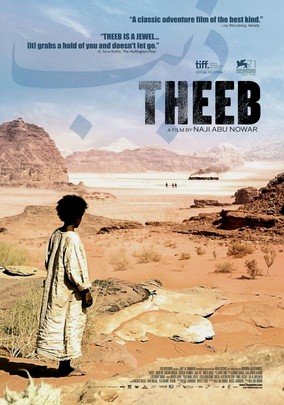
An Arabic-spoken foreign language film that received a 2015 nomination for Best Foreign Language Film, Theeb is an old-world film set in 1916 during the Ottoman Empire.

The event is  World War I as an Englishman battles Arabs and nobody can be trusted.

The film is largely shot in the smoldering Arabian desert (in Jordan) and told from the perspective of a child named Theeb.

Despite the slow pace, the moments of action are even more important. It has a grainy quality to it that makes it somewhat of a bizarre Arabian western.

Theeb lives in a small village run by his father and older brother, Hussein. One night a mysterious Arab man and an Englishman arrive seeking a guide to take them to a Roman well, close to the Ottoman railway.

The mission is feared a dangerous one, as the trail they must take is riddled with bandits, not to mention, the Englishman owns a box containing gold, making him a vulnerable target.

Theeb, left behind because he is so young, follows and joins them, much to the group’s chagrin. Predictably, trouble ensues and Theeb must fend for himself.

What I enjoyed about this film is its unpredictability in what happens after the group faces danger. Sure, when the foursome sets out on a trail led by camels, we know bad stuff will happen.

But, finally left to his own devices, I was intrigued as to how Theeb would face his new challenges, having up until now been protected by his family.

In ways, Theeb reminded me of another adventure film, Life Of Pi (2012), though Theeb is much darker. Both feature a young, non-American male of Indian or Middle Eastern background, forced to survive largely alone.

The John Boorman classic, Deliverance (1972), also came to mind during one dark scene, as Theeb and Hussein cower amongst rocky caves while their devilish pursuers taunt and whistle at them mockingly from below.

The hunter vs. victim component is front and center and it is killed or be killed.

Later, an interesting bond develops between Theeb and one of the raiders (Hassan) as both mistrust each other. Will they forge the bond or will one betray the other?

The answer to this question emerges during the final moments and the buildup is compelling. I became aware of the father and son dynamic mixed in with the friend and enemy.

When Theeb treats Hassan’s wounds there is tenderness on the exterior, but is Theeb fully kind to Hassan?

A slight negative for me existed in that I did not buy that the period was the early Twentieth century, but rather, everyone looked and acted so modern as if they were merely dressed up for their parts….as they were. Perhaps it had to do with the hairstyles or mannerisms.

Shot entirely in Wadi Rum, Jordan, a gorgeous part of the world, the desert and big sky lend much to the ambiance this creates. It was almost like being in the old, wild west and an ode to old Western films, only set in the Arabic world.

The entire cast, save for the Englishman, are non-actors, an amazing achievement, and a measure that creates an obvious level of realism that rehearsed actors cannot always bring to the table.

Originally meant to be a short film only, Theeb emerged as a full-length feature and I am glad it did, as it has enough meat to warrant a longer duration.

The film is a cinematic wonder with a psychological edge.

Oscar Nominations: Best Foreign Language Film

A War-2015

A War-2015

Director Tobias Lindholm

Starring Pilou Asbæk, Tuva Novotny

Scott’s Review #456

80057926

Reviewed July 29, 2016

Grade: B+

A War, a 2015 film, made in Denmark, is a thought-provoking story that one might think is a standard “war film” on the surface, but as the film moves along, it turns into something much deeper and rather cerebral.

A slow mover, but necessary to the nature of the film’s message,  the viewer questions what he or she might do in a similar predicament as the main character faces a moral dilemma.

The action begins in Afghanistan as we meet a company of Danish soldiers assigned to protect civilians from the evil Taliban. They are young, good-looking, and of varying ethnic groups (a nice touch in the film).

One female soldier seems to be thrown in for good measure, though we never see her in combat.

Their leader is Commander Claus Pedersen, a good, decent man, well-liked by his troop. They have all seen death and destruction, and Pedersen frequents the middle of the action on the front lines.

He is one of the guys.

When one of his men is wounded during an attack, Pedersen makes a controversial decision, resulting in the deaths of civilians, and some children.

Pedersen is then charged with a war crime and sent home to Denmark to be tried. His wife and three small children are happy he is home, but distraught and opinionated on how he should testify.

One interesting aspect of A War is how the film shifts gears around the mid-way point.  The camaraderie between the soldiers in the field and their bond with Afghan civilians are mixed with dangerous threats from the Taliban.

I kept waiting for an attack to occur and in these ways, the film is a standard war film.

Mixed in are snippets of “home life” involving Pedersen’s wife. She appears a typical military wife, struggling to raise her three kids, one of whom has recently developed behavioral problems.

They miss Pedersen.

The latter half of the film is set inside a courtroom. Pedersen is interrogated by a female prosecutor and while she sympathizes with his anguish, she is determined to convict.

After all, children were killed because of his actions.

The filmmakers are on Pedersen’s side, but the conflict makes for great analysis. Should he be held accountable for deaths in a war zone? The viewer will ask him or herself- “would I lie to stay out of jail and with my family who needs me”?

Interesting stuff to ponder.

A War, ironic to the title, is calm and subdued, very impressive to me.  To compare, a film of this nature, targeted as a “blockbuster” would likely have technical enhancers, dramatic music undoubtedly would play to cue action in the war zone.

When Pedersen’s verdict is read aloud in the courtroom, it would normally contain some jarring camera shots or an intense musical score.

A War has none of those and that brings a certain reality- this could be everyday life. A decision is made and life quietly goes on.

Some complaints about A War being a tad boring. I see their point, but it is an atypical war film. It is understated and character-driven, rather than a shoot ’em up, overwrought with testosterone action, or laced with artillery or explosions.

A War (2015) is not a mainstream film- much to its credit. Rather it is methodical and fraught with interesting thinking points.

Oscar Nominations: Best Foreign Language Film

5 Broken Cameras-2012

5 Broken Cameras-2012

Director Emad Burnat, Guy Davida

Starring Emad Burnat

Scott’s Review #452

70229917

Reviewed July 22, 2016

Grade: B-

5 Broken Cameras is a 2012 documentary spoken in the Arabic language, which received critical acclaim upon release and heaps of award nominations.

A documentary about a Palestinian farmer, Emad Burnat who recounts Israeli soldiers overtaking his land for several years, it became a Best Documentary Oscar nominee.

Non-political in his life, Emad is threatened as the Israelis build a wall through his land, which he refuses to part with.

As important as the subject matter is, it never really captured my attention and I found it to drag a bit, which pains me to say because I was hoping to be really into it, given the topic.

This could simply be my opinion since it is a critically acclaimed piece.

I would have voted in the far superior Invisible War, from the same year, for Oscar glory.

Oscar Nominations: Best Documentary-Feature