Category Archives: Alexis Arquette

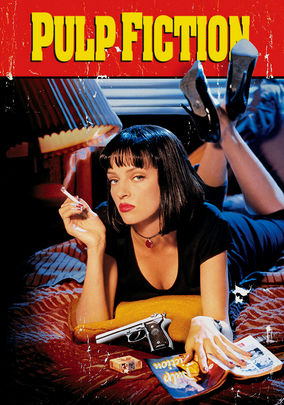
Pulp Fiction-1994

Pulp Fiction-1994

Director Quentin Tarantino

Starring John Travolta, Samuel L. Jackson, Uma Thurman

Top 250 Films #23

Scott’s Review #242
880640

Reviewed May 12, 2015

Grade: A

Pulp Fiction (1994) is one of the most influential films of the 1990s and single-handedly kicked the film industry in the ass. It led an entire generation of filmmakers, who were starved and determined to make more creative work after the largely dull decade of the 1980s.

The success of the film, both creatively and critically, helped ensure that edgier and more meaningful artistic expression would continue to occur.

The leader of the charge, of course, was director Quentin Tarantino.

With Pulp Fiction, a black comedy crime film, Tarantino mixes violence, witty dialogue, and a 1970’s cartoonish feel to achieve a filmmaking masterpiece.

The plot is non-linear, and the story contains three main focuses that intersect —a new style of filmmaking that has become commonplace in modern cinema, but at the time was a novel adventure.

Set in Los Angeles, Samuel L. Jackson and John Travolta portray hitmen named Jules and Vincent, who work for a powerful gangster, Marsellus Wallace, played by Ving Rhames. We get to know them as they interrogate four college-aged youths who double-crossed Marsellus, all the while discussing fast-food hamburgers and adventures in Europe.

On another front, Butch (Bruce Willis) is hired by Marsellus to lose a fight to another boxer. Later, Marcellus instructs Vincent to take his wife Mia (Uma Thurmon), a former unsuccessful television actress, out for dinner and a night on the town.

Finally, we meet Pumpkin and Honey Bunny (Tim Roth and Amanda Plumber), two small-town robbers plotting a heist at a local diner. As the film develops these plots relate to each other in unique ways.

The film is quite stylistic, resembling a 1970s film production in the way it looks, and the use of 1970s style sets- the diner, in particular, looks very of that time, and an automobile where a death occurs, is a 1970s, Chevy Nova.

The film, however, is set in present times.

The dialogue throughout Pulp Fiction is immensely impressive to me. Long dialogues occur between characters, usually sitting over a meal, discussing the meaning of life, religion, fast-food burgers, and other wonderfully real conversations.

I love the many food references- from Butch’s girlfriend salivating over an impending meal of blueberry pancakes to the French version of the Big Mac being discussed, to the price of a shake, these make the conversations between the characters rich and unique and oh so creative.

My favorite sequence is the one between Vincent and Mia, mostly taking place at a trendy 1950s-themed diner named Jack Rabbit Slim’s, where the staff dresses up in costume impersonating their favorite stars of the day, such as Marilyn Monroe.

After winning a dance contest (and a possible homage to Saturday Night Fever) the two go back to Mia’s place where she accidentally overdoses on heroin thought to be cocaine.

The song “Girl, You’ll Be a Woman Soon” by Neil Diamond, is both integral and haunting to the scene.

An intense and shocking scene of male gay rape is extremely violent and the hillbillies involved could be straight out of Deliverance from 1972 despite being in Los Angeles.

This scene is disturbing yet mesmerizing at the same time, and might I say even comedic in a dark way?

Pulp Fiction is not a mainstream affair and has its share of detractors and plain old non-fans, but for film-goers seeking a fun, entertaining, cleverly delicious work of art, influential to Hollywood and Independent filmmakers alike, Pulp Fiction (1994) is a film to watch over and over again and admire its style and creativity.

Oscar Nominations: 1 win-Best Picture, Best Director-Quentin Tarantino, Best Actor-John Travolta, Best Supporting Actor-Samuel L. Jackson, Best Supporting Actress-Uma Thurman, Best Screenplay Written Directly for the Screen (won), Best Film Editing

Independent Spirit Award Nominations: 4 wins-Best Feature (won), Best Director-Quentin Tarantino (won), Best Male Lead-Samuel L. Jackson (won), Best Supporting Male-Eric Stoltz, Best Screenplay (won)
Last Exit to Brooklyn-1989

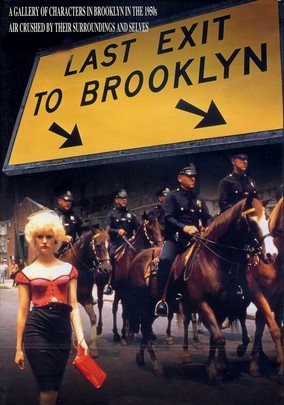
Last Exit to Brooklyn-1989

Director Uli Edel

Starring Stephen Lang, Jennifer Jason Leigh

Top 250 Films #176

Scott’s Review #152

70141619

Reviewed August 13, 2014

Grade: A-

Last Exit to Brooklyn (1989) is a slice-of-life film set in lower-class Brooklyn, NY, in the early 1950s.

It tells the story of a group of struggling neighborhood people- sex workers, union members, drag queens, etc., whose lives intersect. Also in the neighborhood is a military base where soldiers come and go on their way to war-torn Korea.

The central characters, though there are several with small yet interesting stories, are Harry, played by Stephen Lang, a sexually conflicted union worker with a wife and newborn child.

He is in love with a selfish drag queen, and Marilyn Monroe lookalike, Tralala, played superbly by Jennifer Jason Leigh, a prostitute whose best days are behind her, and who will do anything for attention.

The sets and cinematography in the film are very well done- the feeling of despair and hopelessness is accomplished by the dowdy streets, homes, and bars that the cast frequents.

Some of the characters are sympathetic- the aforementioned plus Tralala’s love interest, the Diner boy madly in love with Tralala, and the virginal seeming (but not really) Donna, portrayed by a young Rikki Lake.

Other characters are abhorrent in their violence and hatred.

Last Exit to Brooklyn is quite a dark film and sometimes tough to watch, but it captures a dreary time and atmosphere. The Brooklyn set is excellent in its dreariness.

Jennifer Jason Leigh is the standout as the tough-talking, boozy prostitute who is losing her luster, and the final scene of the film is truly a heartbreaker.

The topics of union, strike, bisexuality, gangs, and drag queens are covered, and unique characters and conflict/loneliness are presented.

This film is an overlooked gem from 1989.

Bride of Chucky-1998

Bride of Chucky-1998

Director Ronny Yu

Starring Jennifer Tilly, Brad Dourif

Scott’s Review #680

Reviewed September 11, 2017

Grade: D+

Bride of Chucky (1998) is the fourth installment in the famed late 1980s Child’s Play hit franchise. The late 1980s was not the best time for the horror genre in general, but the film was quite the highlight in a slew of duds.

By this time in the series, (1998), the child/victim of the doll premise is dropped in favor of dark humor, thus the series immerses itself more into the horror-comedy arena.

A treat is the inclusion of a fantastic hard rock soundtrack led by the Rob Zombie classic, Living Dead Girl, adding some points to the film’s final grade, otherwise have been more dismal.

The film is not great and I find perverse pleasure in reviewing poor films. However, Bride of Chucky does have its place- as a late Saturday night viewing choice amid strong cocktails it contains a certain charm.

Not to be taken seriously, the placement of a love interest for Chucky gives the film macabre romantic humor.

Still, the film suffers from lackluster acting and quickly turns into drivel by the time the credits finally roll.

The action picks up from where Child’s Play 3 leaves off and the appearance of Chucky is now weathered and stitched giving the doll a more gruesome and maniacal look- this works given the elimination of a child lead character.

Left for evidence in a police compound, Chucky is stolen by Tiffany Valentine, played by Jennifer Tilly. The girlfriend of a deceased serial killer, Tiffany is convinced that the spirit of her boyfriend exists within Chucky and she is determined to bring him back to life using a voodoo ritual.

When the act finally works, Chucky and Tiffany reunite, but shortly afterward, Tiffany is also turned into a doll and the duo sets out on a killing spree.

The best aspect of the film is the camaraderie between Tilly and actor Brad Dourif, who voices Chucky. The duo has a light, comic banter that is fun to watch, as well as fantastic chemistry.

Granted the actors only voice the dolls for a small part of the film, but their back-and-forth works well.

This is what makes Bride of Chucky tongue in cheek- let’s face it, with talking dolls as your main characters, director Ronny Yu wisely avoids making the killings too grisly or heavy-handed, but rather, frequently uses quips and one-liners throughout the film.

As Chucky and Tiffany slice and dice their way to Hackensack, New Jersey, their motivations are to embody a neighborhood boy, Jesse, and his girlfriend Jade, played by a young Katherine Heigl.

Along the trek, the foursome is faced with ludicrous obstacles, such as the brief introduction of a con artist couple who meet their doom by flying shards of glass after stealing Jesse’s money.

The side story of Jade’s overprotective police chief Uncle, played by a miscast John Ritter, does not work at all. His schemes to plant marijuana in Jesse’s van are little more than plot-driven machinations to advance the thin plot.

The characters of Jesse and Jade are trivial and secondary and Heigl’s acting is particularly garish to say nothing of the lack of any chemistry between Heigl and actor Nick Stabile.

Heigl seems to wear a pout throughout the entire film. But, not to worry, these characters are as meaningless as all the others.

The gimmick ending, surely meant to “spawn” yet another sequel is as interesting as it is grotesque and a small highlight in a poor film.

Bride of Chucky (1998) provides a nice lineage to the history of the franchise, a killer musical score, and decent chemistry among the leads, but also suffers a similar fate to many horror films, especially sequels- poor acting, a silly tone, and no character development.