Category Archives: Steven Bauer

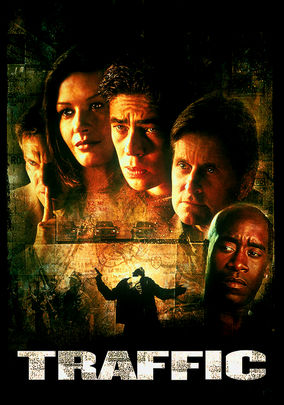
Traffic-2000

Traffic-2000

Director Steven Soderbergh

Starring Michael Douglas, Catherine Zeta-Jones, Benicio del Toro

Top 250 Films #143

Scott’s Review #333
60003243

Reviewed January 8, 2016

Grade: A

Simply put, I adore this film. I loved Traffic when it was first released in 2000 and I still love it in present times.

During an age where the overlapping stories with hefty casts were still in the infancy stage (Crash-2006, and Babel-2006, similar films, would not be released for several years), Traffic was groundbreaking, compelling, thought-provoking, and just a damned good drama!

With drug use still a continuing problem in the United States, the film remains both relevant and important.

Featuring three main, intersecting stories with a central theme of drug trafficking, each is told from various perspectives: users, political figures, law enforcement, and criminal traffickers.

Traffic also wisely shows how the drug problem knows no specific classes- affluent, middle-class, and poor are all represented in the film.

A strong political story is represented- led by conservative Ohio judge Robert Wakefield (Michael Douglas), who is appointed “drug czar” as the President’s Office of National Drug Policy leader, he vows to end all drug trafficking and is the moral center of the film.

However, his prep school daughter, Caroline, (played exceptionally well by Erika Christensen) and her equally affluent friends are dabbling in cocaine, heroin, and other drugs, so much so that their lives are slowly spiraling out of control.

The Mexico story involves the riveting tale of Mexican police office Javier Rodriguez (played convincingly by Benicio del Toro). He becomes heavily involved in a web of deceit, money, and drugs. His partner, Sanchez, makes a deal with the devil and his fate is thereby sealed. Javier has moral questions to ask himself and only wants to do right by some local, neighborhood boys.

Finally, San Diego is the setting for a story of corruption involving the DEA’s investigation of a drug lord, Carl Ayala. After being arrested, his wife Helena (Catherine Zeta-Jones) faces a moral dilemma- either carry on the illegal proceedings or come clean. She,  up until this point unaware of her husband’s business, faces enormous pressure, both financially and through the threat of violence.

My favorite aspect of Traffic is that all of the aforementioned stories are fascinating in their own right- and could make terrific films on their own, but as the film progresses they begin to intersect and keys to the puzzle slowly unlock themselves.

I love how many of the central characters (Helena, Javier, and Wakefield) begin as “good” people only to have their moral intentions challenged, and in some cases, threatened.

They are each conflicted in some way.

The film poses an interesting, crucial question of what can be done about the United States drug trafficking problem. The answer at the end of the film is a disappointing and perhaps even depressing realization.

Drugs will never stop being a problem and Traffic wisely explains how drugs show no barriers when it comes to either wealthy or more financially challenged individuals.

How wonderful to see a stellar cast, even in smaller roles (Dennis Quaid and Amy Irving immediately come to mind) with all of the characters having a purpose in a wonderful example of how a mainstream Hollywood film can achieve a true ensemble effort that works.

Great job Steven Soderbergh!

Oscar Nominations: 4 wins-Best Picture, Best Director-Steven Soderbergh (won), Best Supporting Actor-Benicio del Toro (won), Best Adapted Screenplay (won), Best Film Editing (won)

Body Double-1984

Body Double-1984

Director Brian De Palma

Starring Craig Wasson, Gregg Henry, Melanie Griffith

Scott’s Review #1,475

Reviewed April 5, 2025

Grade: A-

Brian De Palma is one of my favorite directors.

His stylistic body of work in the psychological thriller/horror genre is masterful, with treats such as Carrie (1976) and Dressed to Kill (1980) as my favorite films.

Body Double (1984) allowed De Palma much creative freedom, given the success of these films and the underwhelming yet successful Scarface (1983).

It is a fly-under-the-radar film that pays direct homage to Alfred Hitchcock’s 1950s films, most notably Vertigo (1958) and Rear Window (1954).

I get triple pleasure from watching Body Double. I compare scenes to the above-mentioned Hitchcock films and scenes to De Palma’s own films, especially Dressed to Kill. Plus, it stars Melanie Griffith, the daughter of Hitchcock star Tippi Hedren.

The setting is Los Angeles, with B-movie film sets, posh Hollywood mansions, and hilly views of the vast City of Angels landscape. I am fascinated by the city and its mixture of glitzy glamour and dark subtext, which makes for a perfect setting for watching this film.

While not De Palma’s very best work, it is pretty damned good and somehow isn’t as revered as other films.

Craig Wasson plays Jake Scully, a struggling actor who loses his acting role and his girlfriend, Carol (Barbara Crampton), on the same day. While taking a method-acting class, his friend Sam (Gregg Henry) offers him a gig: house-sitting an ultra-modern home that overlooks mansions.

While peering through the beautiful home’s telescope one night, he spies a gorgeous blonde, Gloria (Deborah Shelton), dancing in her window. Becoming obsessed with her, it leads to a vicious crime and into the world of adult entertainment along with porn star Holly Body (Melanie Griffith).

Fans of De Palma will undoubtedly love Body Double because it feels like a De Palma film. At other times, he veered too far away from his brand for my tastes, but the sultry and glossy voyeurism is fully displayed.

Who won’t instantly think of the museum scene in Dressed to Kill during the mall scene in Body Double?

It’s a titillating cat-and-mouse chase scene with Jake following Gloria through a parking garage, a Fredericks of Hollywood-type store, and ultimately watching her try on panties, which he steals.

The panties serve as a version of the glove in Dressed to Kill, while the final shower scene in Body Double made me think of the steamy shower scene in Dressed to Kill.

I often thought of Rear Window and Vertigo, but De Palma honors them rather than stealing from their treasures. Jake is obsessed with Gloria yet knows nothing of her. Is she who she appears to be? Is she in danger? Is Jake being set up like Scottie was in Vertigo?

The telescope that Jake peers through is a modern version of the one from Rear Window. In both films, a murder is attempted while the protagonist helplessly watches from afar.

Anyone who enjoys acting will be satisfied with a dose of a method acting class being showcased, as well as nifty low-budget sets and set pieces reminiscent of a Hammer Horror set.

Finally, the overarching theme of a ‘body double’ frequently used in films when the ‘star’ is replaced by a stand-in, usually for nude scenes, is cleverly referenced in the final scene when a girl with perfect breasts is used while filming a shower scene.

The trickery of filmmaking is celebrated.

The camera work and musical score are a large part of the appeal. The eroticism smolders while Jake and the audience watch Gloria and Holly dance amid moody, electronic 1980s dance beats. The camera captures the moment perfectly.

The glossy, sensual elements forever link De Palma with Hitchcock, 1980s style.

1980s films are often dismissed as cheesy or mainstream, but Body Double’s look is 1980s in the best possible way.

The expensive cars, the big hair, the cocaine, and the L.A. porn world all mesh together fabulously. Incorporating the monster hit, ‘Relax’, and the band Frankie Goes to Hollywood is a significant win.

With Body Double (1984), De Palma provides slick entertainment and thrilling sensuality, helping launch the career of Melanie Griffith, a star of the 1980s and 1990s.

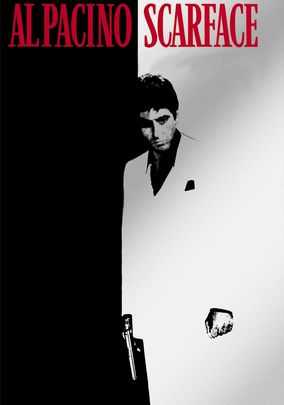
Scarface-1983

Scarface-1983

Director Brian De Palma

Starring Al Pacino

Scott’s Review #191

60029681

Reviewed November 13, 2014

Grade: B

Scarface is a 1983 mob film directed by Brian De Palma and is an atypical film for the acclaimed director of several stylistic thrillers, including Dressed to Kill (1980), Sisters (1973), and Carrie (1976).

The subject matter centers on the mob and the world of drug trafficking, in this case, cocaine, a very popular, powerful drug that ran rampant throughout the 1980s.

Jealousy, greed, and deceit are common themes in Scarface, and the story focuses on a temperamental, cocky, and arrogant Cuban refugee sent to Miami by Fidel Castro a banish criminals from Cuba and ship them to the United States to survive on their own.

Tony Montana, played by Al Pacino, goes from dishwasher to crime lord by selling drugs and building an empire.

He manipulates, tricks, and makes enemies left and right, including stealing his boss’s girlfriend (Michelle Pfeiffer) and eventually falling into a troubled marriage with her.

He loves his financially struggling mother and sister, giving them money and opening a salon for his sister. Still, he also controls them, especially his sister, and is filled with rage whenever she attracts the affection of a potential suitor.

In his mind, nobody is good enough for her, and he is filled with machismo and over-protectiveness. Tony eventually self-destructs due to jealousy, rage, and heavy drug use.

I found the film overall quite compelling, but kept thinking about how much it resembles a lighter version of The Godfather (1972), Part II (1974), and Goodfellas (1990).

I am fully aware that Scarface preceded Goodfellas, but seeing it for the first time in 2014, I had this initial reaction.

I was also kept aware that it must have been influential in the creation of the popular NBC television series Miami Vice, which debuted a year or two after Scarface was released.

Elements such as crime lords, Miami Beach, and drugs mirrored the slick feel of the hit television drama, as well as its look, style, and fashion.

The performance of Al Pacino is problematic- in my view, this is not at all his best work. For starters, his accent keeps going in and out, and I found him slightly unbelievable in the role. A phenomenal actor, something about his performance did not sit well.

The musical score to the film is cheesy- almost shockingly so. Granted, this was 1983, but the silly dance beats that now seem to appear throughout now seem completely dated sporadically.

Parts of Scarface dragged a bit, however, a sudden dramatic scene (the dismembering of Tony’s friend by mobsters and Tony’s meltdown in a fancy restaurant) more than makes up for the occasional lags in drama.

Scarface (1983) is not on the level of other contemporary violent mob films, but fans of the genre will still enjoy it.