Tag Archives: Horror

Saw-2004

Saw-2004

Director James Wan

Starring Cary Elwes, Leigh Whannell

Top 250 Films #222

Top 40 Horror Films #34

Scott’s Review #1,285

Reviewed August 4, 2022

Grade: A

One of the many reasons that I love the horror genre so much is how it changes and develops over time. Many classic horror films are influential to more modern ones and that’s all well and good.

But then sometimes a new idea or style comes along that throws everything topsy turvy and influences other films for years to come.

Saw (2004) is one of those films. It smacked everyone who thought they knew horror films upside the head with a relentless and pulsating gore-fest.

I was fortunate enough to see the film when it premiered and boy was it the ‘water cooler’ film of its day. The clever writing and intricate plot and set pieces were unheard of in a world of maniac-wielding knife setups and redundant endings.

It invented the grisly ‘torture porn’ moniker that became popular with films like Hostel (2005) and many more that would come after it.

The Saw franchise ultimately produced perhaps one too many sequels that left it feeling stale and exhausted, but what an influence the original Saw had, and continues to have.

I still remember the hold the film had over me and how much it resonated in nastiness, butchery, and enough creative killings to last a lifetime.

Needless to say, it’s not for the squeamish or faint of heart, and watching Saw now knowing the surprise twist doesn’t pack quite the same punch that it did in 2004, but I’ll never forget how I felt when first watching this film.

The twist ending is unforgettable.

Events get off to a kick-ass start when two men awake in peril. Photographer Adam Stanheight (Leigh Whannell) and oncologist Lawrence Gordon (Cary Elwes) who do not know one another, regain consciousness while chained to pipes at either end of a filthy bathroom.

As the confused men realize they’ve been trapped by a sadistic serial killer nicknamed “Jigsaw” and must complete his perverse puzzle to live, flashbacks unravel the mystery of other character connections.

Meanwhile, Dr. Gordon’s wife (Monica Potter) and young daughter (Makenzie Vega) are forced to watch his torture via closed-circuit video.

A massive clue to the puzzle that Saw presents is lying right there in the bathroom but of course, the unwitting audience knows none of this. The fun of the film is to sit back and let the filmmakers slowly unpeel the onion and reveal the who’s who of the backstory.

And let the blood drip.

Unlike legacy films like Halloween (1978) and Friday the 13th (1980) or even later efforts like Scream (1996) that brought thousands of rabid horror fans back to movie theaters, nobody is being chased with a knife in Saw.

It’s much more cerebral than that.

Who can ever forget the sound of Jigsaw’s grave voice pouring out of a tape recorder stating “I want to play a game” in a robotic tone? It is still as ominous a sound as one could imagine, and the big reveal still comes as a genuine shock.

Most of the characters have secrets to reveal and most of those secrets are dirty.

Director James Wan and writer Leigh Whannell who also stars in Saw, brilliantly craft a web of deceit amongst their players. The characters who suffer the most have committed a hateful act of deception or schemed their way to benefit based on someone else’s ruin.

In perfect form, all the victims almost deserve their fates like being caught in a shotgun trap, shot in the chest, or being forced to ‘saw’ off their foot to escape death.

The final reveal is downright freaky and will make the audience quickly rewind the events of the film in their heads. The character thought to be the main killer, and wonderfully played by creepy actor Michael Emerson (star of television’s Lost) is merely a pawn of someone more sinister.

Saw (2004) savagely hacked its way into viewers’ heads with a sophisticated, plot-driven experience with a film style enhanced by an independent look.

It’s had its day but it must never be forgotten for the influence left behind.
Mother of Tears-2007

Mother of Tears-2007

Director Dario Argento

Starring Asia Argento, Cristian Solimeno

Top 250 Films #227

Top 40 Horror Films #35

Scott’s Review #1,360

Reviewed May 13, 2023

Grade: B+

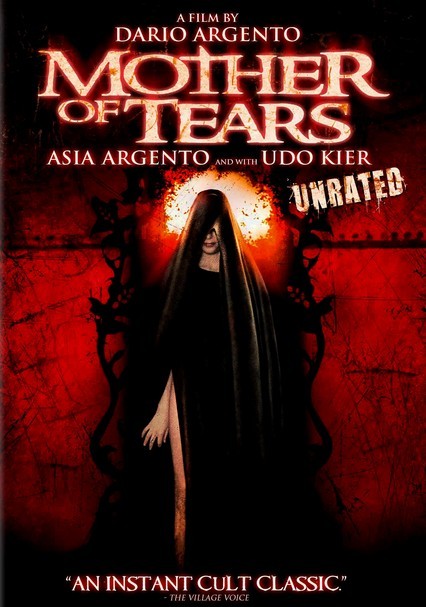
Mother of Tears (2007) is a film I have a great fondness for and I’ll never forget its debut in my life. It is the very first film my husband and I saw in a movie theater together. So, I’m pretty partial to the nostalgic feeling it emotes on a personal level.

Both fans of esteemed horror director Dario Argento, we cohabitated in the dusty art theater one rainy Saturday evening following a delicious Italian dinner on one of our first dates.

The atmosphere was nearly as perfect as an Argento film itself since he is known for operatic, visceral, and visual perfections.

The film is the concluding installment of Argento’s supernatural horror trilogy The Three Mothers, preceded by Suspiria (1977) and Inferno (1980), and depicts the confrontation with the final “Mother” witch, known as Mater Lachrymarum.

Grisly deaths await several unlucky Italian citizens after an American archaeology student named Sarah Mandy (Asia Argento) innocently releases a demonic witch from her ancient prison. A mysterious urn comes into her possession and when attempted to be restored at the Museum of Ancient Art in Rome, all hell breaks loose.

Sarah harbors a personal connection to the witch since her mother was once embroiled in a feud with her.

Making Mother of Tears a family affair and comfort for viewers of Argento’s work, daughter Asia plays the lead character while younger brother Claudio co-produces the picture along with Dario.

Religion is always a fun theme in horror, especially in the oft-targeted Roman Catholic church. Like The Exorcist did in 1973, and many other horror films followed over the years, the religion is mocked in the kindest of ways.

As an ode to previous works involving children, a child is massacred and more than one baby is sacrificed in the name of Mater Lachrymarum so be forewarned if this is a dealbreaker for some.

Who doesn’t enjoy a coven of witches flocking down on Rome screeching at passerby folks and wreaking havoc on the sacred city now overcrowded with demons?

For the bloodthirsty types who crave a healthy dose of bloodletting Mother of Tears lets the floodgates spill wide open. One poor woman is speared through her private area and upwards while another’s mouth and face are expanded until they pop. Several eyes are violently gouged.

You get the idea.

Recommended is to watch Suspiria and Inferno first for chronological ease but this is not a must and a stand-alone viewing will do just fine.

Nothing can match the sheer madness and visual mastery of 1977’s Suspiria and Mother of Tears is the weakest of the three films but this is not a gripe merely a comparison. They work well together and the final confrontation involving Sarah and Mater Lachrymarum’s fight over a red tunic is the highlight.

The dark texture of the filming mixed with glowing lights and red colors are easily noticeable. This aligns nicely with religious or occult characters like a monsignor, cardinal, and various witches.

The film, though American-made, feels Italian and is quite authentic. Further, it naturally sits well with films of Argento’s heyday, the 1970s, and 1980s. Most if not all actors appear to be Italian or European adding flavor and culture to the experience.

If one has traveled to Rome, many exterior shots of the ancient city appear adding to the enjoyment. Sarah ravages the streets and scurries through the vast train station in one powerful sequence. Since trains are the main mode of transportation in Italy viewers can transport themselves back to a previous trip.

To know Dario Argento is to love him. Mother of Tears (2007) may not measure up to his very best works but it is an entertaining and enthralling visit to the macabre world.

It may or may not win over new fans but it will satisfy existing fans of the director.

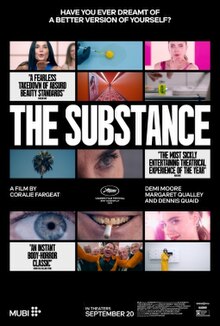
The Substance-2024

The Substance-2024

Director Coralie Fargeat

Starring Demi Moore, Margaret Qualley, Dennis Quaid

Top 250 Films #238

Top 40 Horror Films #36

Scott’s Review #1,461

Reviewed January 18, 2025

Grade: A

Demi Moore takes her languishing career by the reigns in a risky role, leaving any glitz and glamour by the wayside in the wacky horror film The Substance (2024).

She also sheds her mainstream blockbuster image for darker cinematic territory, propelling her into a fresh new image.

Respectability.

The film received widespread critical acclaim, a gaspy crowd reaction, and buzz during awards season, making it the most talked-about film of the season.

Moore portrays a fading celebrity, Elisabeth Sparkle, wired by her producer (Dennis Quaid) on her fiftieth birthday due to her age.

She decides to use a black-market drug that creates a much younger version of herself (Margaret Qualley) with unexpected side effects.

As she drives home after being fired, she is involved in a car accident. At the hospital, she meets a handsome young nurse who casually advertises a new product. He boldly tells her that it changed his life.

It creates a younger, more beautiful, more perfect you. The catch is that you share time, one week for one and one week for the other—an ideal balance of seven days each.

What could go wrong?

The film begins with a weird shot of a camera looking down at the creation of a famous star on Hollywood Boulevard, where anyone who’s anyone has their name in a star on the famous street.

The sequence reveals that Elisabeth was once a big star. Workers sand her name on the sidewalk amid the celebration, and people stop in awe of her name. As the years go by, people comment that she was in some movie they can’t remember, and then someone callously spills garbage on her name, thinking nothing of it.

The story has powerful meaning about the societal pressures on women’s bodies and aging, especially in the media spotlight.

But this isn’t simply about women. Anyone of any gender or humanity can reflect on the insecurities of aging, whether in the corporate world or being cast aside for a younger person in any way.

I found The Substance incredibly relatable.

Besides the story, Coralie Fargeat, a French director I’d like to see more of, directs The Substance very well.

She bravely incorporates snippets of Stanley Kubrick’s work, adding her funky weirdness and creating an insane experience for viewers.

Kubrick famously created long shots of hallways, which Fargeat brilliantly borrows. Elisabeth watches her producer and team rapidly walk towards her and reminds her that ‘pretty girls always smile,’ reinforcing ridiculous stereotypes attractive women are ‘supposed’ to follow.

Fargeat counterbalances the long shots with several close-ups, mainly of Moore staring at herself in the mirror. Seeing every wrinkle and blemish, she becomes increasingly obsessed with the younger version of herself.

The film does so much with very little dialogue, allowing Moore to deliver a performance of a lifetime.

As the film progresses, it becomes wackier and wackier in only the finest of ways as the older version becomes obsessed with her younger self. As she decays, she becomes a bald hunchback, unrecognizable.

At a diner, she runs into the older version of the young nurse, who admits that the process gets worse with each transformation.

The finale, set on New Year’s Eve, when Elisabeth is set to host events for millions to see, becomes horrific as her monster is set loose. A weird combination of human being and lumpy clay emerges on stage as Elisabeth begs the crowd to accept her.

The result is a moment that combines 1931’s Frankenstein with 1976’s Carrie as a horrific and quite bloody witch hunt ensues.

The film also reminds me of 2the 2000sRequiem for a Dream in style and addiction.

Fargeat, who directed, wrote, and produced the film, creates a feminist message that is awe-inspiring.

Combining unique camera angles that infuse a futuristic feel, astounding makeup work, and an exceptional performance by Moore makes The Substance (2024) the year’s surprise hit.

Oscar Nominations: 1 win-Best Picture, Best Director-Coralie Fargeat, Best Actress-Demi Moore, Best Original Screenplay, Best Makeup and Hairstyling (won)

Independent Spirit Award Nominations: Best Feature, Best Lead Performance, Demi Moore

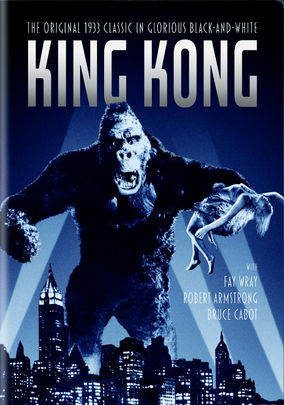
King Kong-1933

King Kong-1933

Director Merian C. Cooper, Ernest B. Schoedsack

Starring Fay Wray, Robert Armstrong

Top 250 Films #240

Top 40 Horror Films #37

Scott’s Review #624

Reviewed March 11, 2017

Grade: A

The original, black-and-white 1933 version of King Kong (a few other remakes or reboots followed) is a masterful achievement in special effects never before done in film. It is also a great horror/adventure film that is timeless in its look and feel, capturing 1930s New York City, especially in majestic fashion.

Some of the dialogue and scenes are now dated or slightly racist, but the film still holds up well as an overall lesson in film exploration and is a treasure to watch again and again.

The film is a take on the classic tale Beauty and the Beast, sans the happy ending.

In the watery harbors of New York City, filmmaker Carl Denham (Robert Armstrong) prepares to embark, via ship, on a journey to film his latest picture.

Known for films about exotic wildlife, he has a film to end all movies in mind and, reluctantly, is talked into casting a female lead in the part. He scours the streets of New York City, finding broke and hungry Ann (Fay Wray)—a struggling actress unable to find work. She agrees to the role and heads off to a destination unknown.

Weeks later, he reveals to the crew that they are headed for Skull Island, a secret island known for pre-historic creatures and a beast only known as “Kong.”

Amid the voyage to the island, Ann and First Mate Jack Driscoll (Bruce Cabot) fall madly in love, giving the film a nice romantic slant along with the male-driven adventure story.

The adventure begins when the crew arrives at Skull Island to find a weird, ancient ritual marriage occurring among the tribal people. All hell breaks loose when the dangerous “King Kong” escapes from captivity and falls in love with Ann.

Mixed in with the story are enormous dinosaurs who destroy everything in their paths, including many of the men from the island and the film crew.

As I watched the film in 2017, not too far from 100 years after its incarnation, I often sat in wonderment, amazed at how the filmmakers achieved the luminous special effects throughout the second half of the film.

Given that the film is in black and white, the contrast between the dark, enormous ape (Kong) and the bright New York City and the majestic Empire State Building is prominently featured in the final, climactic act.

The scenes of a struggling Ann in King Kong’s hand seem flawless and believable. I marvel at how these scenes were shot and the enormous amount of effort it took to make them dramatic and not hokey-looking.

Since the film was made “pre-code”, several shocking scenes exist- when Kong rips off Ann’s clothes as she struggles in his palm and Kong’s stepping on and squashing men are featured sparing no graphic details.

In addition to the great adventure story of King Kong, there is also a tender love story and a bit of melancholy. King Kong is not so much a dangerous creature; instead, he has fallen in love with Ann and serves as her protector.

He is a scared animal, chained and confined, and subsequently shown to a stuffy Broadway crowd as entertainment—he becomes angry. I find Kong to be a sympathetic, misunderstood character. Because the human beings in the story are frightened, he becomes their enemy. He adores Ann and would not harm her in any way, but he is perceived as vicious, which he is not.

It can be argued who the real villain of the story is. Would it not have been filmmaker Carl, intent on exploiting King Kong and gaining profit from it? Is it the tribe people who keep Kong locked up, or is it for their protection?

My favorite scene is the climax of the film. After taking Ann from a hotel room, he scales the Empire State Building and is pursued by four military airplanes.

When he sets Ann down on the rooftop ledge, he battles the planes, only to sadly topple down to the ground- dead. As he swipes at the aircraft and succumbs to gunshot wounds, it is a sad and powerful scene.

King Kong (1933) is a legendary film. Audiences will empathize with the “villain” of the story, be impressed by the technical nuances, and enjoy the conventional and unconventional love stories presented.

One thing is sure: King Kong is one of the most influential films ever made.

Eraserhead-1977

Eraserhead-1977

Director David Lynch

Starring Jack Nance, Charlotte Stewart

Top 250 Films #249

Top 40 Horror Films #38

Scott’s Review #541

Reviewed December 10, 2016

Grade: B+

Eraserhead is one of the oddest films that I have ever seen. The film is an early (1977) David Lynch film, shot entirely in black and white.

It is a surrealist horror film.

Entrancing is the locale of the film- a bleak wasteland, of sorts, in an even bleaker town. The name is unknown.

Factory worker Henry Spencer (Nance) is garish in appearance/with spiky hair and wild eyes; he is peculiar, to say the least.

He trods day after day, to and from his job, meeting interesting, yet grotesque characters. He has an inhuman child with a snake-like face.

Henry meets an odd woman while carrying groceries home, and his apartment is filled with rotting vegetation.

While not one of Lynch’s best works, since the “plot” is incomprehensible to follow or make very much sense of, still, Eraserhead is a blueprint for his later works, with odd visuals and even odder characters. It is to be revered for its imagination alone.

The film is fascinating in its weirdness, but I probably never need to see it again.

It’s a must-see for any David Lynch fan for the warped experience.

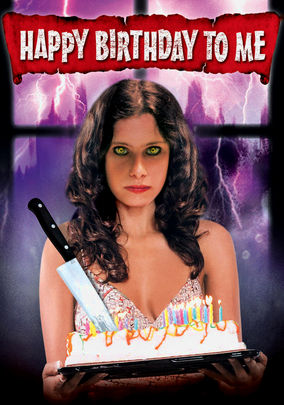
Happy Birthday to Me-1981

Happy Birthday to Me-1981

Director J. Lee Thompson

Starring Melissa Sue Anderson, Glenn Ford

Top 40 Horror Films #39

Scott’s Review #621

Reviewed March 4, 2017

Grade: A-

Happy Birthday to Me is a 1981 slasher film that I fondly remember scaring the shit out of me as a little kid, too young to be watching a film of this nature, but sneaking into my parents’ bedroom with my brother to catch it on HBO.

Certain that the film helped shape my passion for the horror genre, I hold a fondness for it- critics be damned.

My opinion is that the film is a small treasure in the land of 1980s slasher films, containing a neat whodunit and a grotesque ending.

Melissa Sue Anderson, desiring to break out of her nice television persona, thanks to the wholesome Little House on the Prairie, is cast in the lead role.

Happy Birthday to Me also earns merit, as it is directed by acclaimed British director J. Lee Thompson (Cape Fear).

Anderson carries the film quite well in a challenging part, and Glenn Ford co-stars as a Doctor.

Virginia Wainwright is a pretty and popular senior at exclusive Crawford Academy- a school for elite, rich kids. She is part of the “Top Ten”, the most popular and richest kids in the school. The ten friends meet nightly at the local pub.

One night, Bernadette, one of the top ten, is murdered by an assailant on her way to meet her friends.

This murder sets the tone as, one by one, the others are subsequently killed off, sending the school and local townspeople into a frenzy of panic.

To thicken the plot, Virginia was involved in a horrible car accident four years earlier, which killed her mother and caused Virginia to have only sparse memories of the accident.

This piece is key to the film’s mystery.

There are many comparisons I can make to slasher classics that heavily influenced Happy Birthday to Me, but the most prominent must be 1978’s Halloween.

The character of Virginia is very similar to Laurie Strode (Jamie Lee Curtis) in their somewhat virginal, good-girl characters, and both have almost identical hairstyles!

Also, Happy Birthday to Me successfully uses the killer’s point of view, as the camera frequently serves as the perspective of either the killer or someone lurking, spying on others.

The film also “looks” similar to Halloween.

The whodunit aspect is the most effective among the film’s qualities. There are a multitude of likely suspects, and the film does not shy away from this, purposely casting doubt on several characters- could it be the creepy Alfred, who carries around a pet mouse and creates a fake head of the murdered Bernadette?

Or the suave French student, Etienne, who snoops in Virginia’s bedroom and steals a pair of her panties? Finally, could it be Head Mistress, Mrs. Patterson, a harsh, no-nonsense woman harboring resentment for the snobbish elitism that exists at her school?

When the killer is finally revealed, a measure of pure shock and confusion will undoubtedly transpire- how can this be? But by the time the ultimate finale is played out, all will make sense.

The conclusion does disappoint slightly in the implausibility factor, and the original ending is much more logical and compelling than what was actually in the final cut- rumors have run rampant that the screenplay of the film was rewritten numerous times well into the production, never a good thing.

So, the motivations of the actual killer are quite weak, but the buildup is amazing.

Not to be outdone by the whodunit, the kills themselves are superlative: a shish kabob to the throat, falling gym weights, a scarf caught in the spokes of a bike, and the traditional fireplace poker are done in macabre and fantastic fashion.

We always see the killer’s gloved hands, and we are aware that the victim is friendly with the killer, so we continually try to deduce who it could be.

The gruesome “Birthday party” finale is gruesome and gleeful at the same time. Each murder victim is propped up around a dining room table, each with a party hat on and all in various forms of dismemberment or blood-soaked from their murder wounds.

It is a grim and hilarious reveal. The murderer parades out of the kitchen, wielding an enormous birthday cake, cheerily singing “Happy Birthday to Me”.

This is one great finale.

Happy Birthday to Me (1981) is a wonderful trip down memory lane and still holds up as a key, perhaps overlooked part of the slasher genre that should be rediscovered by fans and followers everywhere.

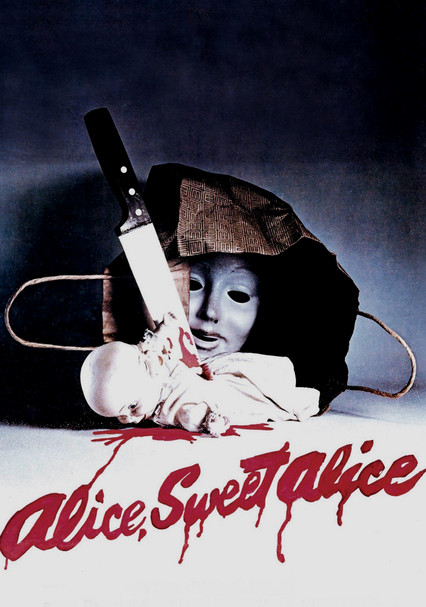
Alice, Sweet Alice-1977

Alice, Sweet Alice-1977

Director Alfred Sole

Starring Paula Sheppard, Linda Miller

Top 40 Horror Films #40

Scott’s Review #1,343

Reviewed February 12, 2023

Grade: A-

Originally titled ‘Communion’ and re-titled and re-released as Alice, Sweet Alice in 1977, the film can proudly tout it as the debut film of star Brooke Shields. Her role, while quite small, is essential to the story.

Any film that challenges, mocks, or showcases Catholicism, especially in the horror genre, has instant appeal to me. There is something so warped yet satisfying to me.

As The Exorcist did in 1973, Alice, Sweet Alice will leave Catholics and the otherwise religious squirming in their seats or scrambling for the ‘stop’ button on their remotes.

Director Alfred Sole, also a well-known production designer, was inspired by Alfred Hitchcock’s films and the 1973 masterpiece, Don’t Look Now. Does it ever show if one looks closely enough?

The story is sometimes muddled and confusing, to say nothing of implausible, but the overall tone and content are fascinating. The camera angles, production design, musical score, and overall style are exceptional, making the film a major success.

On her First Communion day, Karen (Brooke Shields) is viciously strangled and set afire in church after being stuffed in a wooden chest.

Her emotionally unstable and unattractive sister, Alice (Paula Sheppard), is immediately considered a suspect because of her jealousy and her possession of a translucent mask, Karen’s crucifix, and veil.

Alice is no saint, as she enjoys tormenting Karen and the obese landlord who lives in the apartment below her family’s.

Aunt Annie (Jane Lowry), a staunch catholic who hates Alice, is later stabbed on an apartment complex stairway by a childlike figure wearing a translucent mask and a yellow rain slicker. Annie insists her attacker was Alice.

In a subplot, the girls’ mother, Catherine, played by Linda Miller, embarks on a tender romance with her dashing ex-husband, now dating another woman, until he too is brutally murdered.

I was immediately struck and smitten by the haunting musical score, a clear homage to Hitchcock’s 1960 Psycho. The shrill violins and the palpable bass are familiar, bringing fond memories of that legendary masterpiece.

Instead of a direct copy, though, composer Stephen J. Lawrence superbly enhances the effects to fit a more modern-style horror film, and it works.

Mr. Hitchcock’s fascination with stairways is also mirrored many times, and he crafts many effective scenes using only shots of feet walking up or down the stairs.

And anytime a mask is used in a horror film, it’s scary.

In terms of the plot, while the events are compelling, they also don’t make much sense. It would be too predictable and unsatisfying if Alice were the killer (she isn’t). However, the terrific final sequence leaves room for a sequel as Alice maniacally studies a bloodied butcher knife.

However, there is a constant theme of hysterical religious judgment, punishment for sins, and sacrificing someone for the greater good. These align perfectly with the many hypocritical aspects of religion at a time when the catholic church was facing much criticism.

Characters like Aunt Annie and the wacky housekeeper, Mrs. Tredoni (Mildred Clinton), are played as over the top but work surprisingly well.

And it’s likely no accident that Sole cast the adorably handsome Rudolph Willrich as the much-sought-after Father Tom.

In 1977, Alice, Sweet Alice was quite timely and fits nicely with other 1970s horror films with a religious theme.

Paula Sheppard all but carries the film, though the supporting actors are all effective, too. Her facial expressions teeter between soft and angelic, and demonic and cagey. It’s an exceptional part of the film.

Alice, Sweet Alice (1977) is an underappreciated gem that needs to be dusted off and rediscovered by rabid horror fans seeking a superior watch.

Graduation Day-1981

Graduation Day-1981

Director Herb Freed

Starring Christopher George, Patch Mackenzie

Scott’s Review #1,482

Reviewed June 7, 2025

Grade: B

Essentially borrowing from Halloween (1978), Friday the 13th (1980), and other slasher films of the genre’s original heyday, Graduation Day (1981) even adopts the gimmicky holiday/big-event model (prom night, Mother’s Day, etc.) made popular by them.

A whodunit mystery, killer-point-of-view camerawork, and a revenge motive come into play, making the film a standard entry in the slasher catalog.

Released in 1981, the film capitalizes on trends in the horror genre, much like many rock bands did during the grunge and Los Angeles hair metal movements.

There are red herring devices and comical, one-dimensional characters thrown in to soften the film. Making Graduation Day a second-tier slasher film, no more and no less.

Still, the film is fun, with the guessing of the killer’s identity being the most successful and compelling aspect. The murderer carefully marking a red X over each victim post murder is delightful.

A small role by aspiring actress Vanna White, who soon became a television game show legend on Wheel of Fortune, makes Graduation Day a fun relic from another time. Her acting isn’t good, so she lucked out with a continuing career in showbiz. The script does her no favors either.

A suburban high school track team is devastated when their star runner, Laura Ramstead, drops dead following a race, having been pressured relentlessly to win by aggressive coach George Michaels (Christopher George).

Months go by, and Laura’s older sister, Anne (Patch Mackenzie), a U.S. Navy Officer, returns home to attend graduation in Laura’s honor.

Conveniently, she leers at one of Laura’s fellow trackmates and wears an identical grey tracksuit and black gloves to the killer’s. Later, we see that the coach does as well.

Has Anne returned to town to avenge her sister’s death? Or does the coach blame the other track members for Laura’s death? Is Laura’s devastated boyfriend Kevin (E. Danny Murphy) out for revenge?

Herb Freed, a director I’m not familiar with, co-wrote and co-produced the venture, which is a positive. This means he undoubtedly had more creative freedom to make the project his own.

Many scenes take place along a deserted walking path, reportedly on the way to campus. Intended victims traverse the trail while someone watches them from the sidelines. It’s either the killer or someone else. One character laughably states that she is looking for the auditorium (on a trail?) and can’t find her way.

The editing team deserves praise for the opening sequence, a slow-motion ode to Brian De Palma’s Carrie (1976), as Laura crosses the finish line, with adoring students and teachers chanting her name and offering words of encouragement.

Later, a cool roller-skating scene is shown during a performance by the new-wave rock band Felony.

The filler scenes between less critical characters, such as the principal (Michael Pataki) and the ditzy secretary, aptly named Blondie (E.J. Peaker), for example, play well.

What fans watching the film mostly want to see, though, are the kills, which are well done and clever. My favorite is when Tony (Billy Hufsey) is decapitated from behind while taking a leak.

Another track member attempts to pole vault, resulting in death when steel spikes have replaced the pads in the pole vault pit, and he is killed upon impact.

The screenplay is weak, and the killer’s motivations and reasons for the revenge are lightweight. The track members had no intention to or responsibility for Laura’s death, so the conclusion is unsatisfying.

Graduation Day (1981) is an ideal weekend movie, the kind of entertaining, low-budget horror film that will work best for audiences looking to unwind and have fun after a long, busy workweek.

That’s why I watched it, and it’s perfect for fans of the slasher genre who may not have heard of it.

Hell Night-1981

Hell Night-1981

Starring Linda Blair, Peter Barton, Vincent Van Patten

Director Tom DeSimone

Scott’s Review #1,476

Reviewed April 6, 2025

Grade: B

Hell Night (1981) is a slasher/horror film that provides fun late-night entertainment. A creepy, deserted estate where a mass murder event happened amid a night of fraternity hazing offers the appropriate setting for a night of horror.

When four college pledges led by Marti (Linda Blair) are tasked with staying overnight after a costume party as a test of loyalty, what could go wrong?

Director Tom DeSimone knows what ingredients to pepper his film with for the most compelling and effectual result, essentially borrowing from other films. A dark, overnight, attempted pranks, ghosts, screams, good-looking young people, and lots of booze and drug paraphernalia.

He incorporates the standard slasher backstory of a year-old event and a vicious killer still on the loose. This gimmick resembles Friday the 13th (1980) or Halloween (1978).

Folklore tells us that Garth Manor is an abandoned mansion once owned by Raymond Garth, who murdered his wife and three deformed children, Morris, Margaret, and Suzanne.

Garth then hanged himself. While he had a fourth deformed child, Andrew, his body was never found, nor was the body of Morris.

Folklore states that Morris and Andrew still lurk within the mansion, hungrily waiting for prey.

This immediately makes the pledges frightened and happy to get through the six-hour overnight alive. It also builds interest for the audience.

What makes Hell Night particularly unique is its subplot involving social classes. Marti is an intelligent girl from a blue-collar/working-class family who is obviously attending university on a scholarship. At the same time, her love interest, Jeff (Peter Barton), comes from an affluent family.

This makes the audience invest in these characters as they bond with each other. We root for them to find some romance before they are potentially chopped to bits by a maniac.

The other central characters are Denise (Suki Goodwin), a promiscuous party girl from England, and Seth (Vincent Van Patten), a surfer from Southern California. These characters are the film’s comic relief and, indeed, the ones that will ‘get it’.

Van Patten is nice to look at as he frequently parades shirtless, while Denise often forgets his name.

Other stock characters are Peter, May, and Scott, who are responsible for ensuring the pledges don’t escape from the manor and scaring the wits out of them.

Naturally, the fun for the audience lies in knowing that most of the characters will be unceremoniously offed one by one, except for Marti, the film’s hero.

With pleasure, there is a decapitation, a body strung up on the roof, and a horrid scene where a character is hurled out the window.

Reminiscent of Black Christmas (1974), a film that heavily influenced 1980s slasher films, the police are ineffectual and dizzy, believing the pledges’ pleas for help are only part of a fraternity prank and nothing to investigate.

A macabre and terrific scene in which one of the pledges is arranged at a dining room table with the decaying corpses of the Garth family reminds me of Happy Birthday to Me (1981) or The Texas Chain Saw Massacre (1974).

Blair is effective as the ‘final girl’ because she’s smart, sensible, and relatable. With a girl-next-door veneer, she is easy to root for to conquer the fiendish killer (s).

I wanted more explanation of the killers’ motivations. Yes, they were assumed to be abused and mistreated, but why kill helpless college kids? I guess they’d kill anyone who entered the estate, but how would they survive and get food?

There’s also no nudity (male or female) or excessive blood, which gives a softer, tamer feel.

Borrowing heavily from other genre films, Hell Night (1981) is a worthy entry in the slasher genre, mostly because it incorporates an intelligent ‘final girl’ and a bit about social class.

The Monkey-2025

The Monkey-2025

Director Oz Perkins

Starring Theo James, Christian Convery

Scott’s Review #1,471

Reviewed March 14, 2025

Grade: B

The Monkey (2025) is a macabre horror/comedy film based on a 1980 Stephen King short story.

The film is directed by Oz Perkins, son of legendary actor Anthony Perkins, forever famous for portraying Norman Bates in Alfred Hitchcock’s Psycho (1960).

He also wrote the screenplay proving that horror runs in his Hollywood royalty tinged blood.

Partnering with James Wan, who co-created the lethal Saw (2004-present) franchise, which The Monkey mostly resembles, adds experience and credibility to the project.

Deadly set pieces and dangling machinery just waiting to slice and dice willing victims to bits make the film a fun experience.

When twin brothers (Christian Convery/Theo James) find a mysterious wind-up monkey, a series of outrageous deaths tear their family apart, leaving them to live with their kooky aunt and uncle and ultimately estranged.

Twenty-five years later, after lying dormant, the devious monkey begins a new killing spree, forcing the siblings to reunite and confront the cursed toy.

For horror fans, the best part of The Monkey is the gruesome death scenes. Wan, well versed in eye gouging, decapitations, and torn limbs, must have inspired Perkins during the final cut.

Wonderfully wicked kills include a gorgeous bikini-clad female pool goer blown to bits, a busload of cheery cheerleaders decapitated, a shop owner disemboweled with a harpoon gun, a bowling ball decapitating another victim, and an unlikable victim being killed by a swarm of wasps.

The uproarious deaths are applaud-worthy because most of the victims are annoying or unsympathetic in some way. The audience delights in witnessing their endings in such gory fashion.

As the adult Hal/Bill Shelburn, Theo James carries the film as the charismatic, bookworm, Hal and the egotistical Bill. James, ridiculously handsome, looks even more adorable in glasses and shy awkwardness.

Hal attempts to reconnect with his son, Petey (Colin O’Brien), with whom he only spends one week per year. Rather than being an absent father, he strives to protect him from the terrible monkey.

Many supporting characters are played over the top and wacky, making the film a goofy horror/comedy. Elijah Wood appears as Ted Hammerman, Hal’s ex-wife’s new husband, while Adam Scott plays Hal’s and Bill’s absent father, with whom the monkey originated after a trip abroad.

As gory delicious as the blood and guts are, the story isn’t much of a highlight. The brother Bill is written as so much of an asshole that one wonders why Hal is so tolerant towards him.

The ending is predictable, and there is not much closure with the monkey. A half-assed explanation of whomever turns the key in the monkey’s back is immune from being killed or some such explanation didn’t wow me.

The film could be a Twilight Zone or horror series episode over a full-length production, running out of gas towards the end.

Oz Perkins is a rising director who creates a cruelly delightful film that feels like an independent production. Choosing to propel viewers into a gore fest over a scary film, The Monkey (2025) is a modest success.

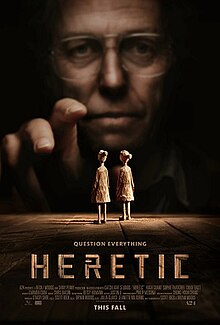
Heretic-2024

Heretic-2024

Director Scott Beck, Bryan Woods

Starring Hugh Grant, Sophie Thatcher, Chloe East

Scott’s Review #1,470

Reviewed March 13, 2025

Grade: B+

Heretic (2024) is a terrifying and thoroughly compelling horror film co-directed and written by Scott Beck and Bryan Woods. The pair most notably wrote the story for and co-wrote A Quiet Place (2018).

The premise of Heretic is rich in scariness, and the screenplay questions and challenges religion and the expected thought process of organized religion, targeting Mormons. It’s a thinking man’s horror film and hardly superfluous, like many genre films over the years.

I was pleasantly surprised at how much meaning the film had in addition to fantastic, traditional horror elements.

Two young missionaries, Sister Barnes (Sophie Thatcher) and Sister Paxton (Chloe East) are forced to prove their faith when they knock on the wrong door and are greeted by an initially kindly but ultimately diabolical Mr. Reed (Hugh Grant).

They become ensnared in his deadly game of cat-and-mouse.

Things get off to a perilous start when the pair embark on their bicycles for their next stop in a small town in the United States. They are mocked by a group of teenage girls while an impending snowstorm hovers in the sky.

What could go wrong when Mr. Reed offers the girls a warm living room and a wonderfully smelling blueberry pie his wife is baking in an unseen kitchen?

We, the audience, of course know that things will turn grim. It’s a question of when.

At first, Mr. Reed seems nice enough. Engaging the missionaries in innocent questions like their favorite fast food restaurants and stories of rock and roll makes the inquiries deeper and deeper, questioning their religious beliefs.

The most intriguing part of this process is that he makes good points. He educates the girls about the incarnation of the board game Monopoly and that religions are just recreations of other religions kept up to date.

Isn’t it all bullshit?

When he challenges them to choose between two luminous cellar doors things go batshit crazy.

I continue to be impressed when I see the ‘A24’ logo cross the screen. The independent production company specializes in high-caliber horror films with merit, and Heretic is no exception.

The winning formula is that the tension builds slowly and carefully. As the girls go deeper and deeper into the vast house, they have less chance to escape.

When Mr. Reed claims the locked front door cannot be unlocked until morning, the girls and the audience feel dread.

Once the poster boy for cute romantic comedies playing the hero, Hugh Grant has reached an age where he is willing to go full-throttle into character actor roles. His quick British charm and wit make Mr. Reed even more terrifying.

Playing against type, his cheery yet chilly demeanor is scarier than going for full-on crazy. His running tangents about theology scare, confuse, and challenge the girls.

Grant’s charm, gleaming blue eyes, and kind smile make him a creepy villain. He exudes trust, and we want to trust him, so seeing him play maniacal is a delight.

Thatcher and East are well cast as the Sisters, though I’m more partial to Thatcher’s character as she is the more non-believing and has more charisma than East. She’s also the stronger character more willing to stand up to Reed.

Like many horror films, the elements make the movie what it is. The first-hour setup is simply brilliant. The storm, the warm blueberry pie, and the intricately structured mouse maze-like house with creaks, dark stairways, and cellars all come into play.

Religious horror is creepy, and an attempted resurrection propels the story.

Like many horror films, the conclusion isn’t as good as the buildup. The logic involved in the more minor character’s motivations isn’t mainly explained or believable.

Beck and Woods, supported by A24, create a simple yet eccentric tale set in essentially one lonely house on one lonely night. They prove that a lavish budget or bells and whistles can’t replace a gripping, well-written story with intelligent dialogue.

Independent Spirit Award Nominations: Best Screenplay

I Saw the TV Glow-2024

I Saw the TV Glow-2024

Director Jane Schoenbrun

Starring Justice Smith, Jack Haven

Scott’s Review #1,467

Reviewed February 17, 2025

Grade: A-

I Saw the TV Glow (2024) is a bizarre independent psychological drama/horror film co-produced by Emma Stone and her husband.

It was produced by their Fruit Tree production company and distributed by A24, a brilliant independent film distributor, immediately giving the film credibility and a broad audience.

Writer/director Jane Schoenbrun perfectly depicts teenage angst via a visually cerebral and creative avenue. They sprinkle pink lettering and a colorful, moody aesthetic that is impressive.

The film is more than mysterious; it is hypnotic, with a dark mood evoking the dark underbelly of life in the suburbs.

Delving deeper after my initial viewing, I realized the film is an allegory for being transgender, which I did not know. Having that knowledge makes perfect sense because the characters feel trapped in their skin and fear being buried alive.

Transgender people often feel like the “egg crack,” a term for the moment in a trans person’s life when they realize their identity does not correspond to their assigned gender.

The film depicts bleak life in the suburbs and transitions between 1996 and 2026 when the main character is a teenager and finally a middle-aged man.

Owen (Justice Smith) is trying to make it through life in the suburbs when his older classmate, Maddy (Jack Haven), introduces him to a mysterious late-night TV show, a vision of a supernatural world beneath their own.

Both are loners and immediately bond over the young adult television show The Pink Opaque, which follows teenagers Isabel and Tara as they use their psychic connection to fight supervillain Mr. Melancholy, who has the power to warp time and reality.

Enthralled, Owen’s view of reality begins to crack.

I Saw the TV Glow is an unusual experience, especially during the 2006 chapter when Maddy returns to town after years away. When she explains that she paid a man to bury her alive, mirroring the finale of The Pink Opaque, the sequence is frightening, macabre, and hard to follow.

I wondered if she was speaking literally or figuratively.

But Maddy is trapped inside her own body, in her case, the wrong gender, and yearns to break out of her coffin. She encourages Owen to do the same, though it’s not clear if he identifies as female, is gay, or is just trapped in suburbia in a dead-end job.

In 2026, we realize that Owen has remained in the small town, mainly at the same job cleaning a movie theater, with his mother and stepfather long dead.

Sadly, he is still trapped inside his own body, aching to come to the surface. He screams out that he is dying and needs help, but nobody ever seems to notice.

He mentions a family, but they are never seen. Are they imagined? Is he living the life of a gay man or a straight man? Owen is mixed race, so what other issues does he face?

I wanted more concrete answers.

Even though the story is focused on a transgender lifestyle, Schoenbrun is never blatant about it.

Growing up in the lonely suburbs, I can relate to the feeling of suffocation at being unable to get out. Many are trapped for decades with the sameness day after day. Young people face this dilemma constantly, so I Saw the TV GLow is an essential film for most.

Debatable is whether I Saw the TV Glow was not overtly marketed as a trans film or even an LGBTQ+ film purposely. At a time in United States history when the trans community is under attack, they need all the support they can get.

The myriad of awards notice and star power (Emma Stone) supporting this film is reaffirming and another reason I love A24 so much.

But I Saw the TV Glow (2024) is a film with many interpretations and meanings.

Independent Spirit Award Nominations: Best Feature, Best Director, Jane Schoenbrun, Best Screenplay, Best Lead Performance-Justice Smith, Best Supporting Performance-Jack Haven

Scream VI-2023

Scream VI-2023

Director Matt Bettinelli-Olpin and Tyler Gillett

Starring Melissa Barrera, Jenna Ortega, Courtney Cox

Scott’s Review #1,465

Reviewed February 14, 2025

Grade: B

When I spontaneously decided to watch Scream VI (2023) one cold winter night while traveling for work, I had forgotten which of the franchise’s previous installments I had seen.

I had seen Scream (2022) and knew enough to know that it was a sequel to that film containing many familiar characters.

It felt like dining on comfort food, which was the perfect fit. I suspect that’s why others will choose to see this film.

While it is not vital to have seen any or all of the previous chapters, it is helpful because Scream VI contains a hefty dose of historical references and character revisitation. This is a joy for fans craving continuity and past character tie-ins.

More than one character comes back from the dead.

The plot follows a new Ghostface killer who targets the survivors of the Woodsboro murders in New York City. Neve Campbell did not reprise her role as Sidney Prescott due to a pay dispute, making this the only Scream film not to feature her.

I was very impressed with the first and last sequences, as a trio of killers is unmasked in the bloody and wild conclusion. The writing is clever, crisp, and filled with twists and turns.

The mid-section has issues, though.

Fans of the franchise need no explanation, but new viewers should know that the revealed killer or killers always have a motivation based on revenge.

Usually, someone had an affair with someone else, resulting in death or the drive to create a slasher film based on real-life events surrounding the drama.

Other key elements are sinister telephone games, cat-and-mouse puzzles, and knowledge of horror films, which, with a right or wrong answer, could either keep one alive or seal their deadly fate.

The pleasure in watching Scream films is the whodunit, as the killer always wears the Ghostface costume when killing off characters and toying with them first.

Yes, a pattern is followed, but the nods to slasher films of the 1970s and 1980s made the 1996 Scream debut such a masterpiece that the 2023 Scream honors.

Two characters banter about which installment of Friday the 13th and Nightmare on Elm Street is the best and why.

Now, over twenty-five years later, Scream has its history to delve into, which it does. Our main character, Sam Carpenter (Melissa Barrera), is the illegitimate daughter of the original killer, Billy Loomis (Skeet Ulrich), who makes a cameo.

The killers’ hideout is filled with photos, masks, knives, and other memorabilia from previous films, which is beautifully captured and a pure delight for legacy fans.

As the 1996 film did so well, the incredible opening sequence features a film professor (Samara Weaving) of slasher films receiving a mysterious call and being lured into peril. In a neat twist, the killer is then killed by another Ghostface.

A terrific ladder scene in the middle portion of Scream VI is also superior, as a pleading victim attempts to cross from building to building before Ghostface catches them.

Filmmakers showcase not one but two LGBTQ+ couples (one male and one female) and enough diversity (Asian, black, Hispanic) to be noticed, so it feels pretty inclusive.

Otherwise, the intro and finale are the most notable high points.

The film is bogged down terribly by its over two-hour running time, which made me tune out now and then. The filler is unnecessary and makes the film feel too hefty as it veers off course in redundancy.

Suspension of disbelief is at max capacity, especially during a laughable scene when a character is stabbed on a busy subway, unbeknownst to other subway riders.

Scream VI (2023) is a pleasant vehicle that wins by incorporating more horror history than ever, increased blood and violence, and following a successful pattern that it knows well.

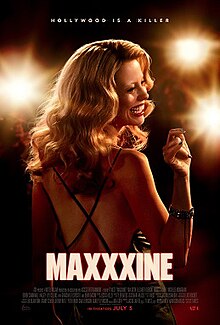
MaXXXine-2024

MaXXXine-2024

Director Ti West

Starring Mia Goth

Scott’s Review 1,463

Reviewed February 4, 2025

Grade: B+

MaXXXine (2024) is a slasher horror film lover’s dream. With its 1980s-style filming, peroxide hairdos, and video cassette recorders (remember them?), it’s a sheer delight for genre fans.

Adding tight-washed blue jeans, a 1985 musical soundtrack, and the sunny setting of Los Angeles, California, you’ve got a throwback 80’s film in the best ways.

It is the third installment in Ti West’s X film series and a direct sequel to X (2022). The first chapter was called Pearl (2022). Although seeing the others before seeing MaXXXine is unnecessary, it is also fun.

West writes, produces, directs, and edits the vehicle, so the project is his creation. His muse, Mia Goth, who has starred in all three films, makes a return appearance and is co-producing.

Rumor has it there may be a fourth.

In the film, Maxine sets out for fame and success in 1980s Hollywood and is targeted by a mysterious killer, who is assumed to be the aptly nicknamed real-life Night Stalker.

But is this a red herring? Maxine’s friends are systematically eliminated, leaving the poor girl and the detectives to wonder if she could be the next target.

Could it be someone from her past? Or is someone jealous of her impending film success?

The film gets off to an intriguing start when a videotape shows a young Maxine dancing for her father, who appears to be coaching her and determinedly telling her never to settle.

Adult Maxine brilliantly auditions for a new horror film called Puritan II despite her only credits being in adult films. She shows she has raw talent and emotion and is unafraid to prance around topless.

She speeds away in her sports car with vanity plates reading ‘MaXXXine’.

We quickly learn that Maxine is not to be messed with. When she is accosted at knifepoint, she channels her inner Aileen Wuornos and pulls a gun on her attacker, makes him strip, puts the gun in his mouth, and forces him to perform fellatio on it before stomping on and crushing his testicles with her boot.

She snickers and walks away.

West wants MaXXXine to be entertaining, and he largely succeeds. It’s a fun film not to be taken seriously, but the female-empowering message impressed me.

The Puritan II’s director, wonderfully played by Elizabeth Debicki (The Crown’s Princess Diana), warns Maxine of the sharks and predators in La La Land, and an early quote by legendary actress Bette Davis states, ‘You’re not a star until you’re viewed as a monster.’

In MaXXXine, one is allowed to be a badass bitch and take no prisoners.

The final act is uneven, with a hokey explanation for the killer’s motivations for wanting Maxine dead amid the palatial Hollywood hills. The showdown is a generic extravaganza where the killer’s circle of henchmen is taken down conveniently to let him and Maxine square off.

Earlier, there are real-life clips of Christian wackos accusing heavy metal artists of devil worship and protesters foolishly carrying around signs objecting to the Puritan II, which is a significant clue to the whodunit.

Bobby Cannavale and Michelle Monaghan play detectives who lack great dialogue and are the film’s comic relief, and Kevin Bacon goes over the top as a private investigator.

However, a delightful cameo by Lily Collins (TV’s Emily in Paris) is a big win.

I suppose one could approach MaXXXine (2024) as dissecting the artificiality of Hollywood or the overindulgence of the 1980s excess (cocaine use is prevalent in the film). Still, I took the film as celebrating 1980s horror magnificently.

And I was a happy participant.

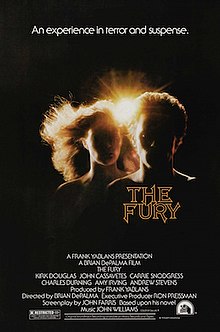
The Fury-1978

The Fury-1978

Director Brian De Palma

Starring Kirk Douglas, Amy Irving, John Cassavetes

Scott’s Review #1,446

Reviewed October 15, 2024

Grade: A-

The Fury (1978) is one of Brian De Palma’s films that flies under the radar and is underappreciated. It features many of his trademark effects, such as slow-motion camerawork, and includes actors who appear in more than one of his psychological thriller films.

The story might be more complicated than it needs to be, and while legendary actor Kirk Douglas gets top billing, he disappears for a good part of the film before returning towards the end. He hands the reins to Amy Irving, who capably carries the rest of the film.

This is a small gripe for a film that ranks pretty close to classics like Dressed to Kill (1980), Carrie (1976), and Blow Out (1981).

I’m as guilty as anyone else for underappreciating The Fury since it’s only my second time viewing it.

The all-star cast features John Cassavetes as the villain, Carrie Snodgress, Charles Durning, Douglas, and Irving. That’s enough to make cinema fans want to see it. There are also unique actors in small roles who flesh out the quirky cast in a major win.

The screenplay by John Farris was based on his 1976 novel of the same name, which feels a lot like a popular Stephen King novel.

The Fury utilizes the talents of esteemed John Williams, who scored such greats as Fiddler on the Roof (1971), The Poseidon Adventure (1972), and Jaws (1975), to name a few. The highly lauded composer aptly uses the music to enhance the overall product.

Events start in Israel when a plot separates CIA agent Peter Sandza (Douglas) from his son, Robin (Andrew Stevens), but the distraught father manages to see through the ruse.

He realizes that Robin is being held at an institute by Ben Childress (Cassavetes) because the teenager possesses supernatural powers that Ben intends to weaponize.

Meanwhile, Gillian (Amy Irving), a teen with telekinesis, forms a psychic connection to Robin and teams up with Peter to find and rescue him. They are forced to endure villains intent on destroying them for their own gain.

I am amazed how well the film, made in 1978, holds up tremendously decades later, considering the characters play dated video games and the automobiles are very 1970s. The overindulgence of 1970s ‘stuff’ is what holds the most appeal.

Appealing is the glimpse at hundreds of extras appearing in the many exterior Chicago scenes. While Gillian and her friend La Rue (Melody Thomas Scott) stroll down the boardwalk, they pass teams of regular people harkening back to a time long ago.

The unwieldy American sedans popular in the mid-1970s pepper the streets of Chicago. At the same time, the sofa and carpet styles of the time are prominently featured at the Paragon Institute, evoking a nostalgic hug of authenticity.

When the character Gillian is introduced during a high school sequence that parallels Carrie, the similarities are immediately apparent.

Carrie and Gillian are both high school students with psychic powers, including telekinesis, that harm people who physically touch or provoke them.

The kicker is that Irving also appeared in Carrie, but not as the title character.

The best scenes are when Hester (Snodgress) is struck and killed by a car propelling her bloody body through the windshield or when Institute employee, Dr. Susan Charles (Fiona Lewis) is tortured and spun to death over a lavish dinner table setting.

The food references are plentiful, mouthwatering, and fun to track. Hester and Gillian chat and giggle over heaping hot fudge sundaes, while scrambled eggs and dinner are mentioned during other scenes.

Some plot holes or inexplicable story points, like Robin’s turn into a psycho and turning on his father because another psychic will replace him, aren’t as compelling as other points of the film.

During one scene, Gillian has Robin’s powers transfer to her, causing her body to writhe and contort in an unconvincing way, and Irving looks plain silly.

Being a huge De Palma fan, I’m glad I dusted The Fury (1978) off the shelf because it’s a terrific watch with an exceptional cast. It contains many of De Palma’s trademarks, making it fantastic, especially for his fans.

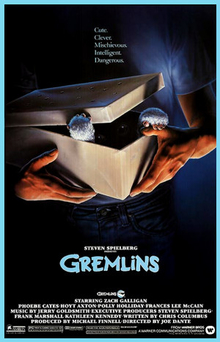
Gremlins-1984

Gremlins-1984

Director Joe Dante

Starring Zach Galligan, Phoebe Cates

Scott’s Review #1,443

Reviewed September 28, 2024

Grade: B+

A mishmash of film genres such as black comedy, horror, and Christmas, Gremlins (1984) is one of the films responsible for the introduction of the new Motion Picture Association of America (MPAA) PG-13 rating in the mid-1980s.

Too soft for an adult R rating, but too scary for a PG rating, many films fit better in the PG-13 category.

The film features a cute, E.T. the Extra-Terrestrial (1982)- inspired creature named Gizmo. Since Steven Spielberg executive-produced Gremlins, there have been comparisons to the successful mega-box-office film.

But Gremlins is darker than E.T., especially when the spawn of Gizmo emerges in a fierce, aggressive manner and one dons a mohawk-style haircut. Many of the gremlins die, and a few humans are killed by the gremlins, giving it a scarier vibe.

This is thanks to director Joe Dante, who gives the film a 1950s B-movie look with a dark, campy tone.

A gadget salesman, Randall Peltzer (Hoyt Axton), is looking for a special Christmas gift for his son, Billy (Zach Galligan), and finds one at a store in Chinatown. The shopkeeper is reluctant to sell him the “mogwai” but does, and warns him never to expose him to bright light or water, or to feed him after midnight.

Naturally, when Randall returns to his home in the United States, all of this happens, and the result is a gang of gremlins that decide to tear up the town on Christmas Eve.

There are a couple of ways to view this film. The ‘message’ is a statement about the consumer culture that ran rampant in the 1980s. Wanting everything but not appreciating what you have is highlighted in the final scene.

The Chinese shopkeeper repossesses the “mogwai”, scolds the family for their negligence, and criticizes Western society for its carelessness with nature.

In a touching scene, Gizmo, having bonded with Billy, bids him goodbye. The touched shopkeeper concedes that Billy may be ready one day and, until then, Gizmo will be waiting.

Anyone with a pet will get a teary eye or two.

One can also view Gremlins as an entertaining popcorn flick with superior special effects and a fun story. The visual effects and the art direction are worth a pause. Impressive are the sequences in the town where the stores and homes are perfectly dressed for the holidays.

The Christmas lights, trees, snow, and other trimmings provide feelings of warmth and spirit.

Galligan and Phoebe Cates, who plays his love interest, Kate, have wonderful chemistry as a teen romance blossoms. This makes the audience more invested in their peril as they try to save the townspeople from doom.

Axton and Frances Mee McCain, who plays Billy’s mother, Lynn, are also rootable. They are believable as a lovely suburban couple who have a wacky side.

Corey Feldman and Judge Reinhold appear in small roles as a friend and Billy’s obnoxious boss, respectively. Neither role is developed or necessary, but familiar faces are always nice to see in the cinema.

Polly Holliday nearly steals the show as the dog-hating Ruby Deagle. In a clear nod to Mrs. Gulch in The Wizard of Oz (1939), she sneers and snickers in an ill-fated attempt to have Billy’s dog destroyed.

Delightfully, she gets a death scene where the gremlins terrorize her to death when her stair chair goes wonky and throws her out a window. Holliday is a hoot and must have had a ball playing the villain.

Other stock characters, like the disbelieving police force, are clichéd and only serve to hinder the main characters’ actions.

Gremlins (1984) is a darling film that holds up well. It’s mischievous without going full horror and can be enjoyed by the entire family on Christmas Eve. The quirky comedy elements and cool visuals make the film fun and impressive.

The First Omen-2024

The First Omen-2024

Director Arkasha Stevenson

Starring Nell Tiger Free, Ralph Ineson, Bill Nighy

Scott’s Review #1,441

Reviewed September 26, 2024

Grade: B

Having six and a half hours to kill on a late-night international flight to Europe, I eagerly desired some good horror to pass the time. What better way to while away the minutes than some religious treachery?

In truth, I accidentally thought The First Omen (2024) selection was the recent The Exorcist: Believer from 2023. Further, I thought the film was a solid ninety minutes, but I was wrong again. The running time is an unwieldy one hundred and nineteen minutes, a lifetime for a horror film.

So, The First Omen had much going against it before I was even ten seconds into the film.

While not a great film, primarily due to a corny and far-fetched story, The First Omen is memorable for its moments and the stylistic approach to camerawork. 

I love watching films by first-time directors partly because they may become the next Quentin Tarantino, Alfred Hitchcock, or Greta Gerwig. Sometimes a blueprint is served up for what’s to follow in said directors career.

Arkasha Stevenson must have studied films by Italian horror director Dario Argento, the devilish late 1960s horror classic Rosemary’s Baby, or both.

The film has a gothic look, and it was shot on location in Rome, providing authenticity. What better backdrop than the city the Roman Catholic Church is most associated with?

The costumes are excellent, specifically the clothes worn by the nuns. They represent the 1940s or the 1950s even though the film is set during the 1970s, and somehow this works.

For fans of the classic The Omen from 1976, The First Omen serves as a prequel with a couple of satisfying tie-ins to that great film. I can think of two examples incorporated simply because the filmmakers wanted to please moviegoers watching this film because of the original. 

There were sequels made in 1978, 1980, 1982, and 1985, but those must be forgotten entirely.

When a young American woman named Margaret (Nell Tiger Free) is sent to Rome to work at an orphanage before she begins a life of service to the church, she encounters a darkness that causes her to question her faith.

Along with the kindly Father Brennan (Ralph Ineson), she uncovers a terrifying conspiracy that hopes to bring about the birth of evil incarnate.

You see, Brennan explains that radicals within the church, desperate to regain power against the rise of secularism, seek to bring about the Antichrist to create fear and drive people back to the church, with a young orphan named Carlita (Nicole Sorace) intended to be his mother.

There is little need not to reveal that the Antichrist is Damien, the little boy adopted in The Omen (1976) who wreaks havoc.

The standout moments are pretty good. One day, Margaret spots Carlita showing a nun named Anjelica a drawing of a pregnant woman being restrained; moments later, Anjelica self-immolates and hangs herself after she proclaims, ‘It’s all for you.’

This moment is a fantastic ode to a similar scene in The Omen, and I nearly got goosebumps recalling that epic, frightening sequence.

There’s another where Margaret runs into Paolo, a man she may or may not have slept with, who tells her to “look for the mark” before being struck and cut in half by an oncoming truck.

The final climax, which mostly resembles Rosemary’s Baby, is so convoluted that I stopped trying to make sense of the story and instead appreciated the incredible visceral birthing scenes, which were controversial.

The film looks authentically like it’s from the 1970s, which is another win for Stevenson. It could easily be watched right before watching The Omen.

I’m intrigued by Stevenson’s direction and wonder what else she’ll do in the future.

The First Omen (2024) is a quality religious horror film sure to scare religious zealots and somewhat please fans. It’s not great, but it has enough going for it to deserve a watch.

A Quiet Place: Day One-2024

A Quiet Place: Day One-2024

Director Michael Sarnoski

Starring Lupita Nyong’o, Joseph Quinn, Djimon Hounsou

Scott’s Review #1,440

Reviewed September 24, 2024

Grade: B+

I was skeptical about watching A Quiet Place: Day One (2024) since the John Krasinski and Emily Blunt team do not appear (on screen anyway). And let’s be honest, the third in a horror film series is not usually a revelation and is more often than not a money grab.

Be that as it may, I thoroughly enjoyed the film, and Krasinski does serve as a producer who invests in quality over convention.

It’s a prequel to the surprise hit A Quiet Place (2018), which once again brought the horror genre credibility, so it more or less sets the stage for what’s to come later in the events.

The setting of New York City is great. The loud and bustling city complements the hearing-infused theme and counterbalances the necessity for quiet, as viewers already know.

Oscar winner Lupita Nyong’o, who is having excellent success in the horror genre after appearing in Jordan Peele’s Us (2019), stars alongside an adorable cat who is a hell of an actor.

Nyong’o plays a terminally ill cancer patient named Sam, living out her days in a hospice facility. Depressed, she yearns for a trip to the Big Apple to live again, remembering how she would accompany her pianist father for pizza and a concert as a child.

When she goes on a field trip to see a puppet show in Manhattan with her primary nurse, the shit hits the fan. Frightening creatures appear out of nowhere to attack and terrorize the city.

Casting Nyong’o is a wise move for credibility. She’s an Oscar-winning actor and a great talent. Since the film requires silence, the actors must use facial expressions and body language to reveal emotions, which Nyong’o does well.

Sam experiences shock, horror, and wonderment as she glimpses the monsters and realizes the wrath of terror they are on. Nyong’o is up to the task.

She pairs well with actor Joseph Quinn as Eric, whom we know little about except that he is kind. The pair slinks around the city, doing their best to avoid death by a monster, and their relationship is tender but not predictable.

In a standard film, they would escape and conquer their foes, or a tepid romance might be added, but Sam is dying and intends to save Eric and her darling cat by any means necessary.

As a cat lover, I was immediately captured by Frodo’s incorporation. Not only does it make sense for a terminally ill cancer patient to cling to a furry friend, but the scenes of Sam losing Frodo and finding him again had me in tears.

How many horror films have that effect?

Suspension of disbelief is required in certain scenes. There is no way a cat would passively agree to be cradled by its owner underwater, especially in a sewer or the Hudson River. But it’s fun to pretend.

Despite being a good movie, A Quiet Place: Day One has few surprises from a story perspective, and A Quiet Place (2018) is the best of the trio of films.

However, this film sets up the events in the others and has a better story angle than merely continuing where Part II left off.

In a nice nod, Djimon Hounsou reprises his role from Part II, so we know where the character originates, but he has little to do. Perhaps if there is another installment, it may center around him. 

The visual and special effects marvel and provide jumps and frights in the right places. Thunderous outbursts of mayhem balance the ‘quiet’ moments.

For a third installment, A Quiet Place: Day One (2024) keeps the story character-driven as we follow a day in Sam’s life and her journey. This is the key to the success of these John Krasinski-created films.

Die! Die! My Darling!-1965

Die! Die! My Darling! -1965

Director Silvio Narizzano

Starring Tallulah Bankhead, Stefanie Powers, Peter Vaughn

Scott’s Review #1,437

Reviewed September 2, 2024

Grade: B

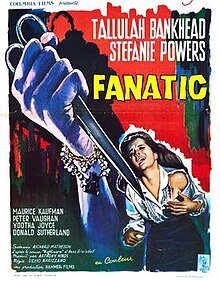
Die! Die! My Darling! (1965) is a British horror film released under this name in the United States, but it was initially titled Fanatic in the United Kingdom. This was frequently done for marketing purposes.

The film follows a young woman, played by Stefanie Powers, who wanders into the clutches of an old wacko, played by legendary actress Tallulah Bankhead. The once-sultry actress is unrecognizable as an elderly, hobbling old crone who is a religious freak.

She blends nicely into the 1960s trend of a once sexy and acclaimed actress going the horror route sans glamour or makeup. Bette Davis did the same thing, most notably in 1962’s What Ever Happened to Baby Jane? who Bankhead’s character is similar to.

One could argue that Davis led the pack with heavyweights like Joan Crawford, Joan Fontaine, and Veronica Lake.

Patricia Carroll (Powers) plays an American woman who travels to London to marry her boyfriend, Alan (Maurice Kaufmann). While there, Patricia decides to visit Mrs. Trefoile (Bankhead), the mother of her deceased ex-fiancé, to pay her respects and chat with the woman before marrying Alan.

Upon arriving, however, Patricia discovers that Mrs. Trefoile’s grief over her son has transformed her into a lunatic, and the woman plans to ‘save’ Patricia by holding her prisoner and helping her see God’s light.

Mrs. Trefoile’s staff—the housekeeper, Anna (Yootha Joyce), the groundsman, Harry (Peter Vaughn), and the mentally challenged, Joseph (Donald Sutherland)—are along for the ride.

The film is a perfect late-night watch and should not be taken too seriously. Once Patricia is locked in the upstairs bedroom of the quaint English cottage, it’s no surprise that she will eventually escape.

The fun is watching her many attempts at freedom and the inevitable conclusion.

Director Silvio Narizzano provides genuine thrills and peril that would make Hitchcock proud. When Patricia crafts a makeshift rope by tying bed linens together to climb down the side of the house, I hold my breath, hoping she will make it as she carefully scales past two characters chatting near a window.

The comical element is how she cannot physically overpower the older woman or Anna. She is younger, more muscular than either, and has the will to survive.

But Die! Die! My Darling! It isn’t meant to be analyzed but merely enjoyed. Narizzano fulfills that request with a nice set design of the cottage interiors, superior acting by Bankhead and Powers mainly, and real moments of peril the audience can enjoy.

As a viewer, I felt emotionally invested in the characters and couldn’t wait for Patricia to escape and Mrs. Trefoile to give her desserts.

I mostly enjoyed Patricia’s determination and battle with the wicked older woman. Some characters might have cowered to her demands, but Patricia remained strong in what was undoubtedly an effort to provide for 1960s feminism.

This counterbalances nicely with Mrs. Trefoile’s old-fashioned religious fanatism. It’s the old versus the new, especially when Patricia admits she’s not into religion.

Bankhead is the highlight, and I could only imagine Davis playing the role instead. Bankhead plays the part magnificently, and accurate glamour shots of Bankhead appear to have been used to show a younger Mrs. Trefoile, an actress.

The film is a cat-and-mouse affair and begins with a quick graphic of a cat chasing a mouse. Fans familiar with Hammer Horror Productions can rest assured that the cheap but effective sets are fully displayed.

A creak here and there and battered couches and walls only enhance the experience.

Die! Die! My Darling! (1965) is recommended for horror fans or Bankhead fans who want to see her stripped down, only three years before she died at age sixty-six.

Sting-2024

Sting-2024

Director Kiah Roache-Turner

Starring Alyla Browne, Ryan Corr

Scott’s Review #1,436

Reviewed August 18, 2024

Grade: B-

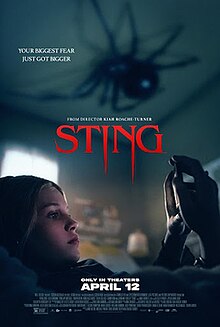
Sting (2024) is a lightweight but suspenseful late-night horror flick. It takes a bit to get going, and at only one hour and thirty minutes, it’s too long for it to take off and have a satisfying effect.

The set designs are the best part as the wintery Brooklyn, New York atmosphere pairs well with the dingy and stuffy walk-up apartment complex where the action occurs, and a family lives.

The dusty rooms, creaking floors, and walls are well-done thanks to dim lighting and a secluded vibe. I bought it because the family lives this way, but it feels cozy, thanks to these trimmings.

As with most modern horror films, the plot makes little sense and is not plausible.

To compare Sting to other films, it plays like Arachnophobia (1990) with a dash of Alien (1979) thrown in, but it is inferior to those films because it lacks either the campy humor or the wonderful special effects.

The film is not scary but, at most, thrilling.

Sting reintroduces a spider as the protagonist with marginal success. The spider starts innocently but grows into a sinister carnivore with human beings as its desired menu item.

Events surround twelve-year-old Charlotte (Alyla Browne), who obtains a pet spider who becomes her pride and joy and whom she names Sting. Once she realizes that Sting plans to eat her entire family, Charlotte goes into protector mode and must fight for their survival.

Directed by Kiah Roache-Turner, an Australian director unknown to me, she uses Australian actors primarily.

Sting starts well with a scene involving an elderly tenant named Helga. She begins to hear noises in the walls and assumes they are rats, so she calls a local exterminator.

Helga has dementia, and the audience quickly realizes she has already called an exterminator but has forgotten. The investigating exterminator is snatched by an unknown force and dragged into the wall canals of the old building.

Then Roache-Turner takes us back to four days prior.

This point immediately made me invested in the film, especially when other characters are introduced, and we learn about Helga’s connection.

What’s going to happen in the next four days?

Unfortunately, Sting loses steam from this point, introducing marginally exciting characters. Charlotte, her overworked stepfather, Ethan (Ryan Corr), her clueless and frazzled mother, Heather (Penelope Mitchell), and her creepy German Aunt Gunter (Robyn Nevin).

Stock characters like a boozy Spanish neighbor, the weird Asian kid upstairs, and the comical black exterminator are included.

Hey, at least diversity was added.

The only likable character is Ethan. He struggles to connect with the bratty Charlotte through graphic novels and the demands put upon him by Heather’s family, who do not like him for some reason.

The poor guy serves as the building superintendent, works a day job, attempts to do creative work by night, and is a surrogate father. Sounds like a hero to me.

The family drama’s point only adds filler to the already slow-paced film and has nothing to do with the main event of Sting eating the family.

Charlotte is quite unlikeable, and I rooted for Sting to turn on her and make her its next victim. She mostly pouts and broods and has a sense of entitlement. I’m not sure why Roache-Turner made the character this way; she should have softened her.

Events do pick up towards the end, when a character is finally killed, and the others are accosted and put into webs, presumably to be dined on later.

This was anticlimactic since Charlotte is the character we are supposed to root for, and I hated her.

Predictably but also clever is how a perfect sequel setup occurs at the end. I’m not sure Sting is good enough to warrant a sequel, but box office receipts will determine this.

Sting (2024) is entertaining and fun, but it’s not much more. I’ve already started to forget about it.

The House That Dripped Blood-1971

The House That Dripped Blood-1971

Director Peter Duffell

Starring Christopher Lee, Peter Cushing

Scott’s Review #1,408

Reviewed October 31, 2023

Grade: B+

Any horror project featuring Christopher Lee and Peter Cushing is worth a watch, and The House That Dripped Blood (1971) includes both actors, though, sadly, not in any scenes together.

The British horror anthology is spooky and perfect for the Halloween season. The action surrounds a hulking house where bad events occur regardless of who inhabits it.

The film is divided into four short stories explaining the circumstances surrounding the individual inhabitants.

The production is low budget, which is perfect for a film like this, but the title makes it seem bloodier and gorier than it is.

All of the stories were initially written and later adapted into scripts by Robert Bloch.

Below is a summary, review, and rating of each vignette.

Framework: B+

Shortly after renting an old country house, a well-known film star, Paul Henderson, mysteriously disappears, and a local Sergeant calls Inspector Holloway (John Bennett) from Scotland Yard to investigate.

When he inquires at the local police station, he is told some of the house’s history.

He soon learns how four tenants met macabre fates.

The ‘Framework’ sequence sits between the vignettes and provides good context, but it’s largely just the interplay between Inspector and Sergeant.

This serves as an introduction to each chapter and ties the events together.

Method for Murder: A-

Charles Hillyer (Denholm Elliott) is a struggling writer who specializes in horror stories. He and his wife Alice (Joanna Dunham), move into the house thinking it will serve as inspiration. Charles creates a devious character named ‘Dominic’ after he ‘imagines’ seeing him outside a window.

Charles soon starts to see Dominic, who begins stalking and tormenting him.

My second favorite of the four chapters, I all but guessed the ‘twist’ from the get-go, but I was surprised by the ‘twist on top of a twist,’ which pleased me.

It’s great when a villain thinks they’ve gotten away with murder, only to be murdered themselves.

Waxworks: B+

Retired stockbroker Philip Grayson (Cushing) moves into the house with plans to read, garden, and relax. Though initially he occupies himself with his hobbies, he quickly becomes lonely. One day, while wandering around town, he happens upon a wax museum.

Grayson explores the museum and finds a sculpture of a dead woman he had loved. The museum’s proprietor explains that he based the likeness of the sculpture on his late wife, who had been executed after murdering his best friend.

Despite featuring Cushing, it’s a moderately good story but lacks the compelling nature of a couple of the other vignettes.

It’s less about the house itself and more about the wax museum and obsession as the subject matter.

While decent, Waxworks didn’t blow me away either.

Sweets to the Sweet: A

Widower John Reid (Lee) moves into the house next door along with his odd young daughter Jane (Chloe Franks). John hires former teacher Ann Norton (Nyree Dawn Porter) to tutor Jane. Ann bonds with Jane and helps her overcome a fear of fire.

Ann suspects John of abusing Jane, but is there more to the story? Why doesn’t he let Jane play with other children or with toys, and why does he do his best to keep her isolated?

Is there something wrong with Jane?

This is the best installment and has a resemblance to The Innocents (1961), featuring a governess and a spooky child. Viewers will find themselves switching allegiances to the characters as the story moves quickly.

The Cloak: B+

Finally, horror film actor Paul Henderson (Jon Pertwee) moves into the house while starring in a vampire film being shot nearby.

Irritated by the cast and crew’s lack of maturity or talent, he decides to buy a realistic cloak for his character (who happens to be a vampire). The shop he makes his purchase from is run by the enigmatic Theo von Hartmann (Geoffrey Bayldon), who eerily offers him a black cloak.

This one plays like a Hammer Horror Dracula installment and is good but not great. Less happens within the confines of the house than I’d like, and Paul is an unlikable character.

The action on the movie set and in the shop are the best parts.

The Satanic Rites of Dracula-1973

The Satanic Rites of Dracula-1973

Director Alan Gibson

Starring Christopher Lee, Peter Cushing, Joanna Lumley

Scott’s Review #1,405

Reviewed October 16, 2023

Grade: B+

The Satanic Rites of Dracula (1973) is the eighth film in the Hammer Horror Dracula series, and the seventh and final one to feature Christopher Lee in the starring role. It also unites legendary horror actor Peter Cushing with Lee for the third time.

So, the territory and storyline are hardly uncharted, and a film like this is for a targeted audience.

For those unclear, Hammer Horror films are a series of low-budget British films produced by the London-based company, featuring gothic and fantasy themes.

Their heyday was from the mid-1950s until the 1970s.

The Satanic Rites of Dracula comes at the end of the horror genre reign of terror, but is enjoyable nonetheless. It’s redundant in a way because I’ve seen so many of them by now that there’s little intrigue anymore.

It’s no longer a surprise what’s going to happen in the film.

I love these films mostly because of their low budget and the creative, sophisticated sets and art design. But the main selling point is the Lee/Cushing pairing.

After a Secret Service agent barely escapes an English country estate where satanic rituals are being held and later dies, Van Helsing (Cushing) is asked to investigate.

He seeks the seven-hundred-year-old count (Lee), who is dead and living in London with his vampire bride and a breed of other undead women dressed in red robes.

Van Helsing’s granddaughter, Jessica, played by Joanna Lumley, is introduced, as is another Secret Service agent, Murray (Michael Coles).

The team naturally winds up at the English estate, where they discover shenanigans led by a female Chinese vampire (Barbara Yu Ling). They grapple with fire and brimstone as they determinedly attempt to take down Dracula once and for all (yeah, right!).

The film is silly but in the best of ways. I enjoyed the very beginning and ending most of all. When the Secret Service agent runs down the vast estate driveway in the darkness, the mysterious motorcycle-riding men add intrigue, and the plot is hatched.

As fans know, the finale will result in a fiery showdown between good and evil, and the benevolent Van Helsing drives a stake through the heart of the villainous Dracula.

This technique is used a few times during The Satanic Rites of Dracula, and comically, a stake and hammer always seem to be at the ready.

But the fun is good, besting evil after all, and delightful is seeing a vampire’s fangs come into view as the unsuspecting victim gasps in shock or shrieks in terror.

By 1973, Cushing and Lee could probably deliver their dialogue in their sleep, and the motivation doesn’t seem to be there. Lee barely appears until the final act.

The introduction of Lumley, well-known to Absolutely Fabulous fans, is wise and breathes new life into the familiar characters. She brings a Nancy Drew-type appeal, especially as she sneaks into the estate’s basement to investigate peculiar noises.

A hoot for Hammer Horror fans or fans of British horror, but it’s not one of the best in the series. Enjoyable mostly for additional tidbits like howling wind, creepy noises, and lavish drapes, furniture, and various set pieces.

The Satanic Rites of Dracula (1973) is a nice watch in October around Halloween.

The Devils-1971

The Devils-1971

Director Ken Russell

Starring Oliver Reed, Vanessa Redgrave

Scott’s Review #1,403

Reviewed October 4, 2023

Grade: A

Ken Russell, best known for directing the outstanding Women in Love (1970) and The Who’s Tommy (1975), creates a disturbing opus about perversion and scandal within the Roman Catholic Church in medieval times.

The film’s graphic portrayal of violence, sexuality, and religious blasphemy ignited shocked reactions from censors, and it initially received an X rating in both the United Kingdom and the United States.

It was banned in several countries and heavily edited for exhibition in others. This alone will pique the interest of open-minded, curious viewers.

It sure did mine.

The film is ironically entitled The Devils (1971) and stars Russell regular Oliver Reed, who also appeared in the aforementioned films.

Reed leads the charge as a sexy, rugged man who beds many women and is the center of a convent full of nuns’ nasty and naughty thoughts.

Vanessa Redgrave also appears as a lustful and evil nun with a hunchback.

During the period of seventeenth-century France, Father Grandier (Reed) was a priest whose unorthodox views on sex and religion influenced a passionate following of nuns, including the sexually obsessed Sister Jeanne (Redgrave).

When the power-hungry Cardinal Richelieu (Christopher Logue) realizes he must eliminate Grandier to gain control of France, Richelieu vows to destroy the man. He portrays Grandier as a Satanist and spearheads a public outcry to destroy the once-loved priest’s reputation.

The Devils is outrageous and bizarre in the best possible way. Who doesn’t love a healthy dose of nun orgies and simulating fellatio on a large candlestick?

One nun violently masturbates as another looks on, giggling sadistically.

The camera loves Reed and Redgrave, who, interestingly, are not a couple in the film. These British actors were at the height of their careers in 1971, and both portrayed roles that must have been tremendously challenging.

Despite being set in France, the film opens in a naughty way with a nearly nude dance performed by skinny Louis XIII (played with wacky delight by Graham Armitage). Rumored to be gay, the king traipses around in colorful costumes and later shoots protestants dressed as gorillas for sport.

There are themes of exorcising and burning at the stake, and mentions of the warring Catholics and Protestants, so there is a seriousness amid the antics and shenanigans.

It took me a little while to become fully immersed in the chaotic land of Loudon, a town in western France where the film is set. In truth, a second viewing really helped me settle in and have a sense of what was going on.

The best films really are like fine wines.

Russell’s attempts to irritate and incite the overly religious are quite satisfying in a wicked way. As much as he mocks religion by making the traditionally sexually conservative filled with lust and animalistic sexual prowess, there is much more going on.

Beneath the surface, he challenges the ridiculousness of religion, which cinema lovers will embrace and delight in. There are history lessons to be had, though, and the film provides exceptional details of the political upheavals and tyranny that occurred.

The thunderous musical score by Peter Maxwell Davies is fabulous, especially during The Devil’s final act, when a central character endures a broiling on a wooden stake.

Those who own the wonderful Blu-Ray version of the film can enjoy various outtakes, cast interviews, and behind-the-scenes information.

An added delight for knowledgeable film fans is the inclusion of character actor Murray Melvin, famous for playing Reverend Runt in the classic Barry Lyndon (1975). He plays Father Pierre Barre.

The Devils (1971) is a perverse and operatic extravaganza of lunacy. It’s caked with sex and nudity and blasphemy that I loved every bit of.

The dangerous tone can be studied and thought about long after the film ends.

Children of the Corn-1984

Children of the Corn-1984

Director Fritz Kiersch

Starring Peter Horton, Linda Hamilton

Scott’s Review #1,385

Reviewed August 2, 2023

Grade: B

I liken the 1980s slasher film genre to the 1980s hard rock, ‘hair metal’ scene. Both contain standard, tried-and-true elements necessary to categorize them as such within said genre.

They both tended to be derided by critics as superfluous and commercially accessible to mass consumption.

I could write an entire dissertation on the subject. Still, my focus will remain on the slasher genre and Children of the Corn, a 1984 release billed as a straightforward slasher film but with supernatural elements that set it apart from some contemporaries.

The cover art (pictured above) and promotion conjure up ideas of a knife-wielding maniac wearing overalls, stalking small-town victims in corn fields in the Midwest USA.

The film is based on a 1977 short story by horror author and brilliant storyteller Stephen King.

Set in the fictitious rural town of Gatlin, Nebraska, the film tells the story of a malevolent entity known as “He Who Walks Behind the Rows,” which entices the town’s children to murder all the town’s adults ritually. This is under the guise of ensuring a successful corn harvest.

A well-to-do city couple, Burt and Vicky, played by Peter Horton and Linda Hamilton, drive cross-country to Seattle to begin a fantastic opportunity. Burt is a physician.

When they accidentally strike a child on a desolate stretch of highway, they realize he was already dead and attempt to find help in Gatlin, only to become the child residents’ next sacrifice.

Suffice it to say that the premise and the short story are way better than the finished film product, though there is just enough to keep one entertained for an hour and a half.

Director Fritz Kiersch does a good job of providing a quality atmosphere. The loneliness of Gatlin and the foreboding corn fields where something deadly lurks amid the stalks made me feel uneasy from the get-go.

There is something about an uninhabited town in the middle of nowhere that is innately scary. Kiersch patterns the setting after the brutal Texas Chainsaw Massacre (1974), though with a much softer touch. The small farmhouses and the streets mirror that film.

I also enjoy the surprising chemistry between Horton and Hamilton. Scenes where the pair are driving, chatting, or listening to tunes are pleasant and do not merely serve as filler to get to the killings.

The yellow early-1980s Buick or Oldsmobile is shown so often that it becomes a character in its own right. For fans of large American cars of yesteryear (me!), the inclusion of the car is a treat.

Finally, the blatant questioning and disparaging of the ridiculousness of organized religion is showcased when Burt (who believes in science) scolds the children for interpreting the Bible to suit their needs.

This may go over the audience’s heads, but to me, it resonates, and I cheered wildly when the dumb-faced kids realized the idiocy of their beliefs.

The film dissipates towards the end when the supernatural aspects take center stage. Tepid and very lowbrow, they quickly take away any moments of peril and shift the momentum to comedy and cheapness.

In 1984, this may not have been noticeable, but in 2023, the special effects are at a low point.

The attempted sacrifice of Vicky doesn’t feel frightening, especially when compared to a superior film, The Wicker Man (1973), which uses the same setup but more effectively.

Children of the Corn (1984) has its moments, but by the time the film ends, I wished I had been treated to that knife-wielding, overall-wearing maniac over a silly blood ritual in the name of the ‘holy bible’.

The Monster Club-1981

The Monster Club-1981

Director Roy Ward Baker

Starring Vincent Price, Donald Pleasence, John Carradine

Scott’s Review #1,378

Reviewed July 16, 2023

Grade: B

Any horror feast, including Vincent Price and Donald Pleasence, is worth a watch, and The Monster Club (1981) features both actors, though not in any scenes together.

The British horror anthology is uneven and a tad too silly, with only two of the three chapters recommended. They are based on the works of the British horror author R. Chetwynd-Hayes.

The graphics and art direction are surprisingly superior for such a low-budget production.

In between chapters, there is a jarring and unnecessary musical performance by one of the creatures. While sort of fun, it takes away from continuity and feels like it’s been thrown in rather than serving any real purpose.

Below is a summary, review, and rating of each vignette.

Prologue: B

Author R. Chetwynd-Hayes (John Carradine) is approached on a city street by a strange man (Vincent Price) who turns out to be a starving vampire named Eramus.

He bites the writer and takes the confused man to an odd club. It’s a haven for supernatural creatures as they dance, drink, and carry on together.

Eramus introduces three stories about his fellow creatures of the night.

This chapter is relevant to tie the chapters together, and any scene involving Price is good in my book. It also serves as a learning experience to explain the different types of creatures, but little more than that.

The Shadmock: A-

Angela (Barbara Kellerman) is a financially struggling woman who takes a job at a secluded mansion owned by Raven (James Laurenson), a creature called a Shadmock.

Along with her greedy boyfriend (Simon Ward), they hatch a plot to steal Raven’s great wealth after he proposes to Angela. When she is caught unlocking Raven’s safe, his demonic whistle comes into play at the expense of Angela and her boyfriend.

This chapter has a great setup and an unrequited love vibe. With a Beauty and the Beast comparison, the audience sympathizes with Raven. All he wants is love, and the ultimate climax is heartbreaking with the knowledge that he is being duped.

I longed for Angela to come to her senses, dump her boyfriend, and be carried away by Raven, but it’s horror after all, and not romance.

Starting slowly, the grotesquely exquisite gothic mansion and the fine luxuries contained are fun to feast one’s eyes on, and the sinister conclusion is not to be missed.

The Vampires: B-

A shy young boy (Warren Saire) from a kind family of vampires leads a lonely life, bullied at school, while his father (Richard Johnson) spends little time with him.

The father is hunted by a team of vampire killers led by Pickering (Donald Pleasance), who attempt to drive a stake through the father and kill him. But the tables are soon turned.

This chapter is cute but uninspired, adding more humor than horror. Pleasance isn’t given a great role, and neither is former ‘Bond girl’ Britt Eklund as the supportive mother.

It pales sharply against ‘The Shadmock’ and ‘The Ghouls.

The Ghouls: A

A movie director (Stuart Whitman) scouting locations for his next film pays a visit to an isolated village, Loughville, where the sinister residents refuse to let him leave.

While imprisoned by the ghouls, he meets Luna (Lesley Dunlop), the daughter of a ghoul father (Patrick Magee), who agrees to help him escape. But can Luna or the resident police be trusted?

The Ghouls is my favorite because it feels the most unpredictable, and I love the early shots of a movie production studio. The ghostly-looking creatures are appealing because there is an ambiguity about their motives and the secrets held in the village.

It’s also fun balancing the sophisticated style of the movie producer against the drudgery of the villagers. Also, the inclusion of actor Magee from A Clockwork Orange (1971) is a win.

Epilogue: B 

At the end of the film, Eramus cheerfully tells the other club members about all the imaginative ways humans are horrible to each other and declares that humans are the most despicable monsters of all.

Thus, Chetwynd-Hayes is made an honorary monster and member of the club.

The quick chapter is a clever wrap-up to the story and culminates as a bit of a ‘message’ about kindness and humanity.