Tag Archives: Crime Thriller

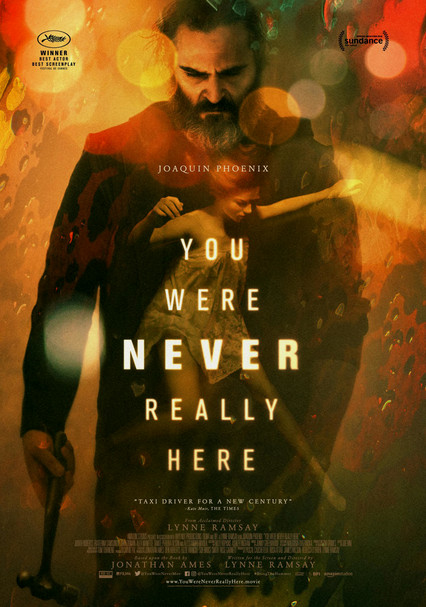
You Were Never Really Here-2018

You Were Never Really Here-2018

Director Lynne Ramsay

Starring Joaquin Phoenix

Scott’s Review #932

Reviewed August 19, 2019

Grade: A-

You Were Never Really Here (2018) is an independent psychological thriller that is most reminiscent in tone and texture of the legendary Scorsese film Taxi Driver (1976).

The main characters are worlds apart, but the classic influences the plot and trimmings amid a different period (the present).

A terrific and brooding performance by star Joaquin Phoenix leads the charge, as does the fantastic direction by Lynne Ramsay and the editing team. The dark film is an unusual and impressive choice for a female director.

Snippets of cinematic genius exist during a film that, with a more complete package, might have been a masterpiece.

We first meet Joe (Phoenix) somewhere in Ohio, as we learn he is a hired gun sent to rescue underage girls from sex trafficking rings. He is brutal in his methods of rescue, resorting to gruesome murders to complete his assignments, and is paid handsomely.

In New York City, he cares for his elderly mother, whom he adores, and is contacted to rescue Nina, the daughter of a New York State Senator, Albert Votto, for an enormous sum.

When Joe rescues Nina and waits for Votto, events quickly spin out of control, revealing a sinister web of deception.

When you look at the story that You Were Never Really There tells, it has been told many times before, typically in slick Hollywood conventional standards.

An angry ex-military man unleashes brutality on devious criminals, rescues the girl, and returns her safely to the open arms of her awaiting parents.

Fortunately, the film is more thoughtful than that, adding complexity to the Joe and Nina relationship and a stylistic, poetic quality featuring Joe’s relationship with his mother.

The plot is paced very well so that the events occur over only a day or two, and the film is highly unconventional and dark.

Frequent flashbacks give the film mystique as we see both Joe and his mother abused by Joe’s father, as a young Joe hides in a closet and hyperventilates. Now an adult, Joe is suicidal, frequently fantasizing or practicing his death until he is interrupted.

As grisly as the film can be, beautiful and tender moments are laden throughout as Ramsay provides gorgeous style and humanity. a homoerotic moment occurs when Joe lies next to the man who has killed his mother.

As the man is close to death at the hands of Joe, they hold hands as Joe provides comfort to the man in death. Joe then buries his mother in a pond in upstate New York, providing her with a peaceful final resting place. These are unique scenes that feel almost like an art film.

The conclusion is open-ended, leaving lots of questions. Joe and Nina appear to ride off into the sunset together, but what will they do? What is to become of them? Surely, no romantic element can be found, but where will they go from here?

Both characters appear to have nothing left to hang on to other than each other, but is this sustainable?

The film is not the type that is poised for a sequel, but I would be very curious about what Ramsay has planned for her characters.

Joe is not portrayed as wicked; he is too complex for that. Phoenix, a tremendous actor, perfectly infuses the character with brutality, anger, tenderness, and warmth.

The similarities between You Were Never Really Here and Taxi Driver—the grizzled New York portrayals, the political backdrop, and the main characters saving a woeful young girl from the depths of despair—make the two films comparable.

However, Joe and Travis Bickle are opposites, the latter having frenetic humor that the former lacks.

Ramsay has been around for a while, with We Need to Talk About Kevin (2011) being her most prominent film. She is successful at telling stories about deeply troubled individuals who are good people given awful circumstances.

With a tremendous actor like Phoenix on board, she crafts a solid work that has garnered accolades, at least among the indie critics, for You Were Never Really Here (2018). Ramsay seems poised to break out in a big way and shake up the film industry with future works.

Independent Spirit Award Nominations: 1 win- Best Feature, Best Director- Lynne Ramsay, Best Male Lead- Joaquin Phoenix, Best Editing (won)

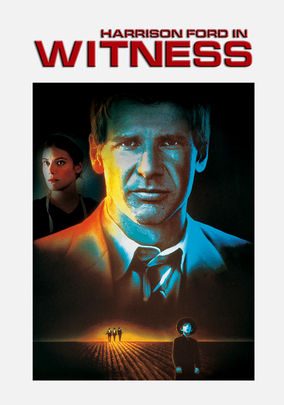
Witness-1985

Witness-1985

Director Peter Weir

Starring Harrison Ford, Kelly McGillis

Scott’s Review #754

Reviewed May 7, 2018

Grade: A-

Witness (1985) is a slick crime thriller that may at first glance seem like a by-the-numbers genre film but instead is well above average.

As the plot unfolds there are key nail-biting and edge-of-your-seat scenes that build the tension in a way that the suspense master himself, Alfred Hitchcock would be proud of.

Decades later it is tough to watch the film and not notice a slightly dated quality, but at the time it was well-regarded and terrifically paced.

Charismatic Harrison Ford and novice child actor Lukas Haas make the film more than it could have been.

The setting of the film is twofold and presents two different cultures- rural Pennsylvania’s Amish country and the bustling metropolitan Philadelphia.

The death of her husband leads Amish woman Rachel (Kelly McGillis) and her son Samuel (Haas) to the big city to see her sister. While transferring trains Samuel witnesses a brutal murder in the men’s room- unbeknownst to the killers.

This riveting scene (explained more below) triggers the rest of the story.

When Detective John Book (Ford) is assigned to the case and questions Samuel, he is unable to determine who the assailants are. After Samuel’s fingers, an unthinkable suspect, events escalate and John uncovers a mighty corruption circuit within the police force.

John, now targeted, must assimilate into the Amish culture as he strives to protect both Samuel and Rachel (as well as keep himself alive) while embarking on a relationship with Rachel.

The story wisely focuses on the differing lifestyles of the principal characters.

What I enjoy most about Witness is the nice mix between both types of people and different cultures and how they can learn from one another. John is so used to and desensitized by being in the midst of the rat race that he often forgets the nicer things in life- peace or even love.

Rachel and Samuel, of course, are highly sheltered, living in a bubble, and are fish out of water amid the bustling streets of Philadelphia. The counter-cultures offer a nice balance in this masculine film with female sensibilities.

Not to be usurped by pure romance, Witness is at its core, a fleshy, male-driven crime thriller. Adding some softer edges, Weir pleases both male and female audience members and appeals to the masses.

John’s precinct, filled with detectives, police officers, and criminals, gives the film appropriate “guy elements”.

So director Peter Weir offers a good balance here.

I like how Weir chooses to portray the Amish- not caricatures, stereotypes, or to be made fun of, they are sweet, stoic, and intelligent, accepting of John in their lives.

As John learns more about the Amish culture and becomes one of them, this is even more prevalent as an immersion of different cultures- a good lesson to even apply to other differences between peoples.

The acting is a strong component of Witness. Charismatic and handsome, Ford is believable as a fast-paced, busy detective. To add further substance, Ford transforms his character (written as one-note in typical films of this nature) into a sympathetic and inspiring man as he slowly becomes a father figure to wide-eyed youngster Samuel and falls in love with Rachel.

Ford is the standout, but the film would not work with fewer supporting actors. Both innocent and gentle characters, McGillis and Haas add layers to their roles with pronounced toughness and resilience- saving John as much as he saves them.

Two scenes are pure standouts and successfully elicit tension and dramatic effect.

As Samuel witnesses the murder in the bathroom, he is seen in a stall peeking through a crack with only one eye exposed. When he makes a slight noise the assailant violently goes through each stall intent on shooting whatever he finds.

Samuel must think quickly to avoid being caught. The camera goes back and forth between Samuel’s looks of panic and the assailant getting closer and closer to catching him.

Viewer’s hearts will pound during this scene.

Later, as Samuel sees a newspaper clipping framed among a case of awards, he recognizes one man as the assailant. Weir shoots it in slow motion so that the reactions of John and Samuel’s characters are palpable and effective.

The scene is tremendously done and cements the bond and trust between these characters.

Thanks to a wonderful performance by Ford and the cast surrounding him, Witness (1985) successfully widens the traditionally one-dimensional masculine crime thriller into something deeper.

Providing slick entertainment with a great story and substance, the film crosses genres and offers a substantial cinematic experience woefully needed in the mid-1980s.

Oscar Nominations: 2 wins-Best Picture, Best Director-Peter Weir, Best Actor-Harrison Ford, Best Screenplay Written Directly for the Screen (won), Best Original Score, Best Art Direction, Best Cinematography, Best Film Editing (won)

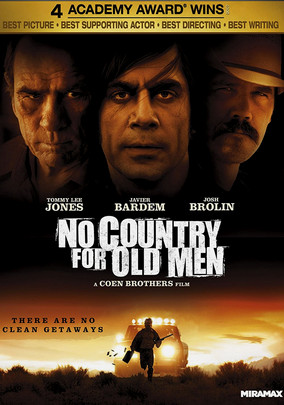
No Country for Old Men-2007

No Country for Old Men-2007

Director Ethan Coen, Joel Coen

Starring Tommy Lee Jones, Javier Bardem, Josh Brolin

Scott’s Review #745

Reviewed April 19, 2018

Grade: A

No Country for Old Men, made in 2007,  is arguably Joel and Ethan Coen’s greatest work save for the amazing Fargo (1996).

Achieving the Best Picture Academy Award and appearing on numerous Top Ten lists for its year of release, the film is one of their most celebrated.

Containing dark humor, offbeat characters, and fantastic storytelling, adding in some of the most gorgeous cinematography in film history, No Country for Old Men is one of the decade’s great films.

The time is 1980 and set in western Texas as we follow dangerous hitman, Anton Chigurh, played wonderfully by Javier Bardem.

He escapes jail by strangling a deputy and is subsequently hired to find Llewelyn Moss (Josh Brolin), a hunter who has accidentally stumbled onto two million dollars in a suitcase that Mexican smugglers are desperate to find.

In the mix is Sheriff Tom Bell (Tommy Lee Jones), who is pursuing both men. Moss’s wife, Carla Jean (Kelly Macdonald) in turn becomes an important character as she is instrumental in the web of deceit the chain of events creates.

The film subsequently turns into an exciting cat-and-mouse chase with a dramatic climax.

The crux of the story and its plethora of possibilities is what makes the events so exciting to watch. As characters are in constant pursuit of each other the viewer wonders who will catch up to whom and when.

One quality that makes the film unique with an identity all its own is that the three principal characters (Moss, Bell, and Chigurh) seldom appear in the same scene adding a layer of mystery and intrigue.

The hero and most well-liked of all the characters is, of course, Sheriff Bell- a proponent of honesty and truth while the other two characters are less than savory types, especially the despicable Chigurh.

My favorite character in the story is Chigurh as he is the most interesting and Bardem plays him to the hilt with a calm malevolence- anger just bubbling under the surface.

One wonders when he will strike next or if he will spare a life- as he intimidates his prey by offering to play a game of chance- the toss of a coin to determine life or death- he is one of cinema’s most vicious villains. With his bob-cut hairstyle and his sunken brown eyes, he is a force to be reckoned with by looks alone.

True to many other Ethan and Joel Coen films the supporting or even the glorified extras are perfectly cast and filled with interesting quirkiness.

Examples of this are the kindly gas station owner who successfully guesses a coin toss correctly and is spared his life. My favorite is the matter-of-fact woman at the hotel front desk, with her permed hair, she gives as good as she gets, and her monotone voice is great.

It is these smaller intricacies that truly make No Country for Old Men shine and are a staple of Coen Brother films in general.

Many similarities abound between Fargo and No Country for Old Men, not the least of which is the main protagonist being an older and wiser police chief (Marge Gunderson and Tom Bell, respectively).

Add to this a series of brutal murders and the protagonist being from elsewhere and stumbling upon a small, bleak town. Of course, the extreme violence depicted in both must be mentioned as comparable.

Having shamefully only seen this epic thriller two times, No Country for Old Men (2007) is a dynamic film, reminiscent of the best of Sam Peckinpah classics such as The Getaway (1972) or The Wild Bunch (1967).

The Coen brothers cross film genres to include thriller, western, and suspense that would rival the greatest in Hitchcock films.

I cannot wait to see it again.

Oscar Nominations: 4 wins-Best Picture (won), Best Director-Joel and Ethan Coen (won), Best Supporting Actor-Javier Bardem (won), Best Adapted Screenplay (won), Best Sound Editing, Best Sound Mixing, Best Cinematography, Best Film Editing

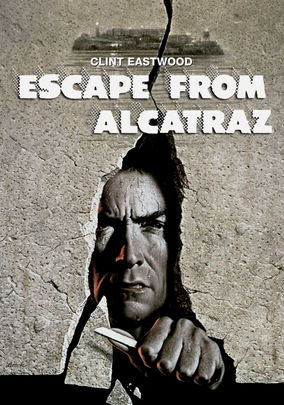
Escape from Alcatraz-1979

Escape from Alcatraz-1979

Director Don Siegel

Starring Clint Eastwood

Scott’s Review #656

Reviewed July 2, 2017

Grade: B+

Made during the heyday (the 1970s and the early 1980s) of a slew of action and thriller-type films to star popular actor, Clint Eastwood, Escape from Alcatraz is a gritty, guy-focused film with not one single female character insight.

The film is directed by Don Siegel, who also directed Eastwood in several previous films, most notably, Dirty Harry in 1971, and contains a grittiness frequently used in this genre of film during the period.

Reminiscent in style of 1975’s One Flew Over the Cuckoo’s Nest in its authority repressing and taking advantage of the victimized common man, the film itself is also a good historical account of one of the most famous prison escapes ever achieved, in 1962.

Having recently visited the long since shut down Alcatraz prison near San Francisco, California, the film was wonderful to watch at this time as much of it was shot inside and around the actual prison grounds.

We immediately meet Frank Morris (Eastwood) as he is unceremoniously led to the infamous Alcatraz prison on a stormy, chilly night in foggy San Francisco. The dark, harsh weather perfectly sets the tone for the dreary prison experience he will face.

Morris is stripped, searched, intimidated by the warden and the guards, and paraded around naked, finally taken to his tiny cell, where he will presumably spend the rest of his life.

The film does not reveal what crimes Morris has committed to warrant his tenure in Alcatraz this way the character is more sympathetic.

Slowly, Morris befriends other inmates and formulates an idea to escape the impossible prison by digging through the cement walls with spoons and escaping through pipes.

The other inmates featured in the film are the Anglin brothers, in for robbery, a kindly older man named Doc, who fervently paints the time away, nervous Charlie Butts, and English, an intelligent black man serving two life sentences for killing two white men in self-defense.

All of these men in some way aid Morris in his escape from the torturous Alcatraz.

A side story involves a bully named Wolf, who has designs on Morris from day one. Whether Wolf is actually gay or merely a menace is unknown and not explored. Throughout the film, Wolf and Morris fight and spend time in solitary confinement and their rivalry is an interesting sub-plot.

The film wants the viewer to be on the side of the prisoners and I am not sure if in real life the prisoners would be as sympathetic as portrayed in the film. Most of them seem to be confined to Alcatraz for robberies or crimes they did not commit or circumstances deeming the crimes inevitable in some way.

Furthering a liberal slant to the film is the friendship between Morris and English. An interracial friendship between the men reveals that our hero Morris is progressive-thinking and a “good guy”.

Conversely, most of the guards and certainly the Warden (Patrick McGoohan) are written as terrible, unsympathetic people. When an inmate drops dead of a heart attack, the warden coldly remarks “Some men are destined never to leave Alcatraz alive”.

The Warden is the foil of the film and in the final scene, the Warden gets a bit of comeuppance when a mocking souvenir is left for him.

To further compare Escape from Alcatraz to One Flew Over the Cuckoo’s Nest, the Warden is a similar character to the infamous Nurse Ratched in their mutual, diabolical sadism.

I am unsure if in “real life” the distinctions between the prisoners and the authority figures were so black and white, but it sure makes for good film drama. It is “the heroes versus the villains” but in reverse.

The inevitable escape sequence is predictable but highly compelling as Morris and Company enact their escape plot during an overnight.

The usage of papier-mache dolls to fool the guards is heavily dramatic and compelling.

Escape from Alcatraz (1979) is not high art but works as a historical account of a real-life incident in one of the most discussed prisons in United States history.

The film is also a perfect starring vehicle for Eastwood as he is well cast in the gritty, yet likable role of prisoner Morris.

The film is a good, solid, late 1970s thriller.

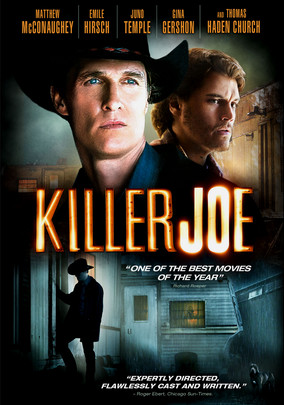
Killer Joe-2011

Killer Joe-2011

Director William Friedkin

Starring Matthew McConaughey, Emile Hirsch

Scott’s Review #450

70209632

Reviewed July 14, 2016

Grade: A-

Killer Joe (2011) is a must-see for any fan of director Quentin Tarantino because this small, independent, gem of a feature is worth checking out.

Tarantino’s films influence the film in style, characters, and violence. The violence mixed with humor, wit, and great writing is stamped on the film.

Surprisingly, given the influence of another director, Killer Joe is directed by William Friedkin, who is a very acclaimed filmmaker in his own right. Classics such as The Exorcist (1973) and The French Connection (1971) were created by this talent.

Matthew McConaughey owns Killer Joe and he has thankfully graduated from silly, fluffy, romantic comedies to smart, delicious roles in independent films of late. He has come to be a respected Hollywood actor.

His lengthy nude scene is daring for such an A-list actor.

The film is satirical, without being too campy, and the setting of a suffocating, trailer-trash, Texas town is extremely well done.

I loved the violent and gruesome fried chicken dinner table scene the best.

I especially liked the overall food references throughout the film which adds even more macabre comedy to this dark (on the surface) film.

Independent Spirit Award Nominations: Best Male Lead-Matthew McConaughey

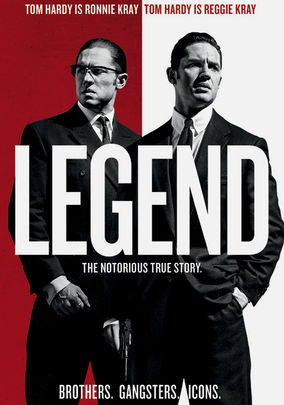
Legend-2015

Legend-2015

Director Brian Helgeland

Starring Tom Hardy

Scott’s Review #405

80057599

Reviewed May 24, 2016

Grade: B+

Tom Hardy is one of my favorite modern film actors (he should have won the 2015 Oscar for his riveting performance in The Revenant, in my humble opinion) and in Legend (2015) fans are treated to a dual role by the handsome Brit.

Hardy portrays Reggie and Ronald Kray, two of London’s most feared and brutal gangsters.

The film belongs to Hardy in every way, shape, and form, the locales of London are fantastic, and more than one scene is jaw-dropping violent, but the film meanders quite a bit and the vocals of Ron Kray are quite difficult to understand.

Still, impressive effort as a whole.

The time is late 1950s London. Reggie Kray, the more mainstream of the Kray brothers, is a feared member of the organized crime community.  He is coddled by his mother and can do no wrong in her eyes. This makes any relationships difficult as his mum disapproves of his mates.

He falls in love with Frances Shea, a young woman who narrates most of the film, so it is told from an outsider’s perspective. Reggie’s brother Ron has recently been released from a mental hospital and if off of his medications, is certifiably crazy, and very volatile.

He is gay and makes no bones about it.

Ron and Reggie have a love/hate relationship, and this dynamic is the most interesting aspect.

Thanks to Hardy, as the writing is not Legend’s strongest suit, we see two very different characters, even though they look alike. In the myriad of scenes shared between the brothers, it appears that two actors are playing the roles which is to Hardy’s credit.

An important scene emphasizes the relationship between the two. When a rival dares to mention Reggie’s wife’s name disparagingly, he points a gun and fires at the man’s head.

Fortunately, the gun is not loaded, so the audience breathes a sigh of relief. Yet, a worse fate awaits the victim. After the deed is done, Reggie whispers in Ron’s ear that he killed the man “because I can’t kill you”.

This means Reggie would kill Ron if he could- shocking since they are brothers. To add to this, it is implied that he would kill his brother with the same savageness as his victim.

This makes the audience ponder.

Impressive is Ron’s sexuality, especially since he is not written stereotypically. He is brutal, masculine, and hardcore. The fact that Ron Kray was a real figure is important to note. His entourage of boyfriends follows him around in dedication.

Who can blame them as his charisma oozes- think of an unstable James Bond.

The twin’s relationship is the best part of the film, but as a mob film, Legend meanders quite a bit, so much so that it becomes tough to identify what the point is, if not for Hardy.

Save for Frances, none of the supporting characters are written with interest and are all rather forgettable.

The wonderful Chazz Palminteri is wasted in the role of Angelo Bruno, head of a Philadelphia crime family and friend of the Krays. There is little meaning or interest in his role.

A mediocre story, but with leading characters with depth, makes Legend (2015) an interesting film that flies under the radar and receives little notice.

Hopefully, if nothing else, it continues the success that Tom Hardy is currently achieving in modern film.

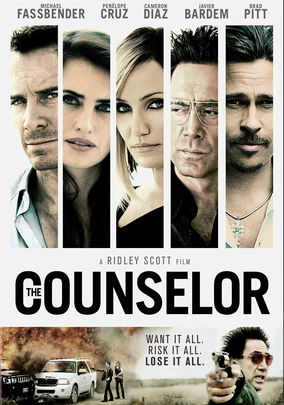
The Counselor-2013

The Counselor-2013

Director Ridley Scott

Starring Michael Fassbender, Brad Pitt

Scott’s Review #18

70276713

Reviewed June 17, 2014

Grade: A-

The Counselor (2013) is a star-studded, unique, drug trafficking thriller set in Mexico and Texas.

The film has met with some debate as viewers either loved or hated it. There appears to be a case made that those who hated it did not understand the movie.

It is not a “by the numbers” or “predictable” popcorn film. It’s much better than that. It’s a thinking man’s movie.

I saw shades of Quentin Tarantino’s influence and parts were reminiscent of the wonderful TV series Breaking Bad (2008-2013).

There are intersecting stories and heavy acting talent (Fassbender and Diaz are the standouts). This is Cameron Diaz’s best role and wish she would go edgy more often.

There are three brilliantly well-done scenes (motorcycle, Brad Pitt on the street, and landfill scene) that are as disturbing as they are artistic.

There are some plot holes, that can be overlooked.

It’s not simply an action film, but a character-driven one.

The viewing of The Counselor (2013) is a unique experience.