Nocturnal Animals-2016

Nocturnal Animals-2016

Director Tom Ford

Starring Amy Adams, Jake Gyllenhaal, Michael Shannon

Scott’s Review #640
Reviewed April 30, 2017

Grade: A-

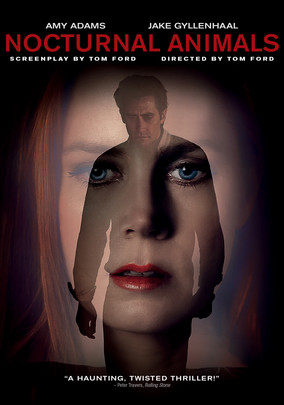
Nocturnal Animals (2016) blurs the lines between fantasy and reality in a revenge-themed thriller directed by Tom Ford, in only his second directorial effort- 2009’s A Single Man was his first.

While not constantly hitting the mark and, at times, very difficult to follow, the film is unusual, mesmerizing, and lovely to look at from a visual perspective. Some scenes blur together splendidly, so they seem interposed—a brilliant touch.

David Lynch influences the film in tone and style.

Events are divided between “The Real World” and “The Novel”.

The film begins strangely as a bevy of nude, obese women prance and dance on video screens during an art exhibit opening.

The gallery is owned by Susan Morrow (Amy Adams), a successful woman living a glossy life in Los Angeles. We quickly learn that Susan is involved in a loveless marriage with hunky Hutton (Armie Hammer), a business person who is inattentive towards Susan.

Before Hutton, Susan was briefly married to Edward (Jake Gyllenhaal), a novelist who dedicates his latest manuscript to Susan, received via mail. As Susan reads the manuscript, she is transported down a dark path of memories and fantasies concerning Edward and their past.

The film’s locales are mainly between Los Angeles (the real world) and western Texas (where the novel occurs). This compelling aspect of the film separates the two worlds.

Los Angeles is featured mainly at nighttime as Susan, presumed to be suffering from insomnia, is compelled by her reading. She also rubs shoulders with sophisticated artist types and colleagues at her studio.

Conversely, western Texas is worlds apart from the Los Angeles setting—like night and day. In Texas, we are introduced to the protagonist of the story Susan reads.

Tony, traveling through Texas with his wife, Laura, and their daughter, India, are accosted and terrorized, bypassing local motorists.

Clearly from out of town, the family is stranded in the middle of nowhere and kept at bay by the rednecks- the story has a tragic ending. The stories intersect interestingly as we see the differing worlds.

The scenes in western Texas were frightening and tense—so much so that my heart beat quickly. I pictured myself as Tony in a situation of peril and danger.

As the family attempts to reason with the thugs, they get deeper and deeper into trouble. The feeling of being vulnerable and unsafe with no help around is tremendous in the film.

The acting in Nocturnal Animals is excellent overall, which is no surprise given the tremendous cast. Adams and Gyllenhaal are especially worthy of mention. Through flashbacks, we see their scenes and find them both sympathetic and vulnerable (at first— he is a sensitive writer, and she is a college girl with aspirations of love and family life.

As the plot thickens, both characters become more nuanced and complex- the subject of betrayal and revenge certainly comes into play, and both characters, now older and more pessimistic, intersect again as mature adults.

Michael Shannon, though believable as Detective Bobby Andes, assigned to Tony’s case and suffering from stage four lung cancer, is not the standout for me. I disagree with his Oscar nomination for Best Supporting Actor.

Indeed, it is an acceptable performance. I would have much rather Gyllenhaal or Aaron Taylor-Johnson (as one of the rednecks) be awarded the nomination.

I was reminded of David Lynch’s masterpiece, Mulholland Drive (2001), mainly during the Los Angeles scenes. The slick night air and the trials and tribulations of the wealthy mirrored each other quite readily.

The sequences contain a gothic, haunting, moody vibe.

The central theme of revenge is present in both worlds. Tony and Bobby seek revenge on the criminals in western Texas, while revenge also focuses on Los Angeles, though much more subtly.

A hint is given several times in Susan’s art gallery, where a large ” Revenge ” exhibit is a focal point. However, what the Los Angeles revenge is is not revealed until the very last scene.

One thing is sure about Nocturnal Animals- the film is dreamy, complex, and worthy of conversation.

Tom Ford is an up-and-coming director with visual sensibilities and a dream-like vision. I hope we see more from this fascinating director.

Oscar Nominations: Best Supporting Actor-Michael Shannon
You Only Live Twice-1967

You Only Live Twice-1967

Director Lewis Gilbert

Starring Sean Connery, Akiko Wakabayashi

Scott’s Review #636

Reviewed April 23, 2017

Grade: B+

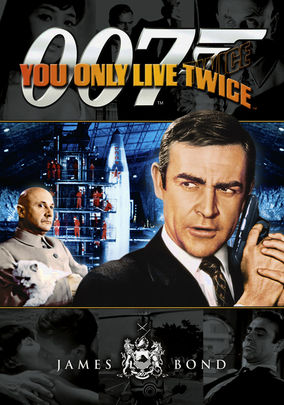
You Only Live Twice (1967) is the fifth in the James Bond film franchise and the fifth to star iconic Bond, Sean Connery, in the lead role.

Reportedly growing bored with the role and eager to move on to meatier acting challenges, Sean Connery is not quite as mesmerizing in the role this time around, but is still indisputably charismatic and sexy with his delivery of one-liners and various affairs with women.

You Only Live Twice is the last to feature Connery until he is coaxed back into the role four years later with 1971’s Diamonds Are Forever.

The film is not among my favorite Bond films of all time, nor is it even in the top ten, for that matter, but it is still quite an enjoyable watch, and the Japanese locales are undoubtedly the highlight.

The film as a whole suffers from a silly story, dated special effects, and a completely lackluster villain, but it does have Connery to rescue it and a nice little romance between Bond and the main girl, Aki, played by Japanese actress Akiko Wakabayashi- that is, until she is unceremoniously poisoned.

The plot involves the hijacking of an American NASA spacecraft by another mysterious spacecraft. The Americans suspect the Russians of the action, and the British suspect the Japanese since the aircraft landed in the Sea of Japan.

MI6 (Bond) fakes his death in Hong Kong and subsequently begins to investigate who is responsible. His search brings him to Tokyo, where he investigates Osato Chemicals and stumbles upon evidence.

He is aided by both Aki and Tiger Tanaka, leaders of the Japanese Secret Service. Soon, it is revealed that the mastermind is SPECTRE villain Ernst Stavro Blofeld, in this installment played by Donald Pleasence.

Mr. Bond must destroy his enemy and inevitably save the world from a global nuclear war.

Though a timely storyline since 1967 was in the midst of the Cold War, the plot seems somewhat forced and a bit uninteresting. The countries blame each other for the hijacked ship, but this comes across as extremely plot-driven and secondary.

The “swallowing” of the aircraft seems cheesy and preposterous, even given the year the film was made, and the writing is not as rich as in some of the preceding Bond films, like From Russia With Love or Thunderball.

The film also has an overall “cheap” look. However, the film does have plenty of positives worth mentioning.

The gadgets that James Bond fixture, Q (the MI6 technical wizard) creates are state-of-the-art and fun. The mini-flying helicopter Bond uses is creative and offers even more views.

Bond faking his death in the opening sequence is a treat (albeit having been done before), and ceremoniously being cast off into the sea in a coffin, only to be wearing a suit and an oxygen mask inside the casket, is clever and light.

Donald Pleasence, a storied, fantastic actor, is not well cast as the main villain, Stavros, and I am not entirely sure why. The fact that his face is not shown until the last act is not helpful, and the character (though seen in other Bond films) is not compelling and is underutilized.

I would have liked the character to be a bit more visible, though surprisingly, the character was highly influential in the 1990s spoof Austin Powers films. Adorable yet creepy is Stavros, only being seen clutching and stroking a gorgeous white cat.

As for the Bond women, the Aki mentioned above is the best of the bunch. Gone too soon in the story, she is replaced by Kissy Suzuki, who is rather unappealing. Mostly clad in a skimpy white bikini and heels, and wearing a black wig, the character is forgettable and serves no purpose.

Conversely, villainous Helga Brandt, SPECTRE assassin, is very well cast and shares good chemistry with Connery. After an unsuccessful attempt to kill Bond, she is fated with a date with killer Piranhas as payment for her failure.

You Only Live Twice (1967) has a myriad of ups and downs, but it is worth watching for fans of the franchise, and specifically, fans of the classic Bond films featuring Sean Connery.

Some will argue that the film feels dated and chauvinistic, and to some degree, they are correct, but it is also a large part of a treasured franchise and a fun experience.

The Lobster-2016

The Lobster-2016

Director Yorgos Lanthimos

Starring Colin Farrell, Rachel Weisz

Scott’s Review #635

Reviewed April 20, 2017

Grade: A-

One thing is sure about the puzzling 2016 film The Lobster: It is a film worthy of discussion long after the end credits roll and will leave the viewer pondering its many facets—a great movie to dissect.

This in itself is worth recognition and praise for the power of the film- so many questions abound.

I was immediately struck by how heavily The Lobster contains primary subject matter influences from “message novels” (and films) such as Brave New World, 1984, and A Clockwork Orange, as well as creative, stylistic recent film influences from The Grand Budapest Hotel (2014) and the Moonrise Kingdom (2012).

The story begins outside of Dublin, where David (Colin Farrell) has recently been dumped by his wife in favor of another man.

Now single, he is whisked away by authorities to a luxurious hotel in the woods, where he (and the other guests) are given forty-five days to find a suitable romantic partner, or else they will be turned into an animal of their choice.

David is accompanied by his brother, now a dog, and has decided that he should be turned and that he will become a lobster because he loves the sea, and they tend to live to be over one hundred years old.

The hotel management adheres to strict rules- no masturbation, mandatory temptations by hotel employees, and a strange outdoor hunting game where the guests hunt other guests to win extra days extended to their stays.

As David befriends fellow hotel guests, he is conflicted and desperate to find a mate. Events take a surprising turn when circumstances allow the rules to change for him, and he becomes involved with a short-sighted woman (Weisz).

The film’s plot is strange beyond belief yet incredibly creative and thought-provoking. The subject matter is pure dystopian- a facility, presumably controlled by the government, with a rebel group intent on ruining the “status quo.”

Suddenly, an odd little secret romance between David and Shortsighted Woman appears, beginning only during the film’s final act.

One aspect of the film that I found interesting was the odd monotone dialogue the characters used. They were almost matter-of-fact in whatever they said, even while expressing anger.

This peculiarity perplexed me, but the more I think about it, the more this decision makes the film dark-humored and dry with wry wit.

Another interesting nuance to the film is the multitude of quirky characters, many of whom are mainly referred to by their nicknames. Lisping Man, Limping Man, and Nosebleed Woman, to name a few.

And what viewer would not spend the film’s duration imagining which animal he or she would desire to be turned into and why?

My favorite aspect of the film is the offbeat performance by Colin Farrell- typically a rugged sex symbol, he goes against the grain and plays a pudgy, socially awkward, insecure man, but all the while instilling the character with enough warmth and likability to make the character work- and his chemistry with Rachel Weisz is fantastic.

This turns the strange dark comedy into a peculiar romantic drama.

A beautiful forest becomes the backdrop for a large part of the film, as does the city of Dublin itself, contrasting the film in nuanced ways. Combined with the lavish hotel, the film achieves several different settings for the action, each meaningful in its own right.

Without giving anything away, the conclusion of the film- the final scene in particular- is gruesome in what goes through the viewer’s mind, and the resolution is unclear.

Does David do it, or doesn’t he? Much of the film is open to one’s interpretation and imagination.

Black humor and cynicism are significant components of The Lobster, a thinking man’s movie. I continue to think of this film as I write this review.

The film is filled with originality and thought, which is a tremendous positive. Confusing and mind-blowing? For sure. A run-of-the-mill film? Not.

The Lobster (2016) is a film that gives no answers and is not an easy watch but an achievement in film creativity- something sorely needed.

Oscar Nominations: Best Original Screenplay

Beauty and the Beast-2017

Beauty and the Beast-2017

Director Bill Condon

Starring Emma Watson, Dan Stevens

Scott’s Review #634

Reviewed April 18, 2017

Grade: A-

When I went to see the live-action version of the Disney animated classic Beauty and the Beast, which was released in the spring of 2017, I was unsure what to expect.

Would it be a cheesy or amateurish retread of the 1991 animated smash only with human beings? Why the lackluster March release date? Indeed, this is telling; otherwise, why not release the film in the coveted fourth quarter with potential Oscar buzz?

I do not have the answers to all these questions, but this version of Beauty and the Beast is enchanting, romantic, and lovely- a spring treat for the entire family to enjoy.

Our protagonist, Belle (producers wisely casting Harry Potter legend Emma Watson), is a kindly farm girl living with her father, Maurice (Kevin Kline),  in a quaint village outside of Paris.

Considered a bit odd by her village mates because she loves to read, she rebuffs the advances of the dashing soldier, Gaston (Luke Evans), because he is arrogant- the other village ladies (as well as Gaston’s gay companion, LeFou) flaunt over Gaston’s good looks.

When Maurice ventures into unknown parts and stumbles upon a dilapidated castle, he is locked up by a vicious beast. Having once been a handsome prince, he has since been cursed by a beggar woman.

The only way the beast can return to his former self is to find true love before a wilted rose loses all of its petals—enter Belle to the rescue. Belle convinces the Beast to let her stay in prison and release her father.

Will Beast and Belle fall madly in love?

Of course they will. The fated romance is part of what makes the film heartwarming and lovely.

The now-legendary classic fairy tale feels fresh and energized with the Disney-produced project. Director Bill Condon carefully and successfully crafts an honest effort, making sure that while providing a fairy tale happy ending, not to make the film seem contrived, overblown, or overdramatized.

I fell for the film hook, line, and sinker. It is an uplifting experience. The song and dance numbers abound with gusto and good costumes—my personal favorites are the rousing “Be Our Guest” and the sentimental “Beauty and the Beast.”

The crucial romance between Watson’s Belle and the Beast, earnestly played by Dan Stevens (of Downton Abbey fame), works in spades. Their chemistry feels authentic and passionate. As Belle is at first held captive by the misunderstood bad boy instead of Maurice, the pair at first loathe each other, but this is done with innocence and no malice.

Condon wonderfully exudes the right amount of slow build to make the pair beloved by audiences with the correct pacing.

The CGI in Beauty and the Beast is heavy, as expected. However, the Beast’s distraction is a bit confusing. Was the Beast a complete CGI creation save for the close-ups, or was Watson dancing with Stevens when filming commenced in certain scenes?

I am unsure.

The controversial “gay storyline”, which helped the film be banned in the southern United States and Russia, as well as other countries, is pure and utter rubbish.

The subject is explored extremely superficially and not worthy of all the fuss.

Worthier of mention is the tremendous diversity that is featured in the film, most notably in the opening sequence. Interracial couples appear in the form of Madame de Garderobe (Audra McDonald), the opera singer turned wardrobe, and Maestro Cadenza (Stanley Tucci), turned harpsichord.

On the gay issue, it is sweet that the implied gay character of LeFlou finds love with another man at the end of the film.

A minor complaint is the scattered authentic French accents of many of the household staff and village people, but Belle and Maurice speak in the British tongue. Being a fairy tale, liberties must be taken, and suspending disbelief is necessary, but this was noticed.

Beauty and the Beast (2017) is a lovely experience that combines fantastic musical numbers with romance, with a side of diversity thrown in for good measure.

Since the film will undoubtedly be seen by many youngsters and teens, this is a wonderful aspect of the film and, hopefully, a shining, positive example in filmmaking.

Oscar Nominations: Best Production Design, Best Costume Design

99 Homes-2015

99 Homes-2015

Director Ramin Bahrani

Starring Andrew Garfield, Michael Shannon

Scott’s Review #633

Reviewed April 13, 2017

Grade: B+

99 Homes is a 2015 independent film containing an underlying theme of morality as its central message, bubbling to the surface throughout the run.

Our main hero is faced with a major dilemma.

Set in 2010 amid the dark economic housing crisis where thousands of families lost their homes to foreclosure, the film is depressing but turns uplifting towards the end.

Reminiscent of The Big Short (2015) and Inside Job (2010) in subject matter, we witness a wonderful performance by Andrew Garfield in the lead role, with a worthy supporting turn by Michael Shannon as an opportunist.

Director Ramin Bahrani immediately creates tension with a taut musical score that bombards the screen. We see a poor victim of foreclosure, having shot himself to avoid the humiliation of being evicted from his home, followed by the introduction of a powerful real-estate mogul, Rick Carver.

Carver has wisely capitalized on the slew of Florida working-class families, living well beyond their means and novice homeowners, booted from their homes thanks to adjustable mortgages that they cannot afford to pay.

Andrew Garfield plays Dennis Nash, a struggling construction worker, raising his young son and presumably supporting his mother (Laura Dern).

They are fated to be evicted even though they have tried to win an extension with the court- months behind in their mortgage payments. They feel victimized and are forced to move to a seedy motel that houses many others in the same circumstances.

Desperate for work, Dennis ironically ends up working for Rick and becomes encased in the dishonest world of real estate scheming- manipulating banking and government rules at the expense of homeowners down on their luck.

The main point is the exploitation of the “working man” at the expense of “the man” and Rick is an example of this beast. Dennis represents the goodness of humanity as he wrestles with the moral repercussions of evicting families since he has met with similar circumstances.

Is the money worth the pain and the hardship he causes people? How is it Rick has no morals, but Dennis does? Will Dennis choose money and lose himself in the process? What would the viewer do?

Despite the morality questions, the film does play like a slick thriller, with a few slight contrivances and the “wrapped up in a neat bow” style ending.

This slightly makes the film lose its luster at times. It is implied that it ends happily for Dennis and that Rick gets his “just desserts”, but what about the characters kicked out of their homes?

Sadly, as in real life, they are largely forgotten by the end and play as footnotes in a larger story. Some follow-up as to what happens to them might have been nice.

99 Homes is a thinking man’s film and will undoubtedly leave the viewer asking what he or she would do in many situations that Dennis faces.

The emotions ooze from the face of Andrew Garfield as Bahrani uses many close-ups and enough cannot be said for Garfield’s bravura performance.

In one heart-wrenching scene, he is forced to evict a man and his wife and children from their home, the man is reduced to tears, comforted by his wife-Dennis is pained.

In another, an elderly man with nowhere to go is evicted, and defeated by the side of the road.

These scenes may have played as overwrought, but Garfield convincingly brings honesty and raw emotion to the work.

Laura Dern is good in her role as a young mother, Lynn,  to Garfield’s Dennis and I am perplexed why she was cast- she barely seems old enough to play convincingly as his Mom, but she does pull it off.

However, I could not help but desire more meat from this Oscar-nominated Actress- sure there is one great scene when Lynn realizes the extent of Dennis’s involvement with Rick, but I wanted more.

Still, the acting all around in this film is superb.

What left me so bothered by 99 Homes (2015) is that situations just like the ones that played out in the film are examples of countless real-life occurrences people experienced due to greed, dishonesty, and uncaring fellow human beings and that is a sad realization.

Director, Bharani, surrounded by a stellar cast, brings this realism to the big screen in raw, honest, storytelling.

Independent Spirit Award Nominations: Best Supporting Male-Michael Shannon

Hush…Hush, Sweet Charlotte-1964

Hush…Hush, Sweet Charlotte-1964

Director Robert Aldrich

Starring Bette Davis, Olivia de Havilland

Scott’s Review #632

Reviewed April 8, 2017

Grade: B+

The follow-up film, but not a direct sequel, to the surprise 1962 hit, What Ever Happened To Baby Jane? Hush…Hush, Sweet Charlotte (1964) is a psychological thriller directed by Robert Aldrich.

The film was intended to reunite Aldrich with stars Bette Davis and Joan Crawford. Crawford filmed several scenes, but the tension between the stars proved too much, and Crawford dropped out.

Olivia de Havilland took her place, and reportedly, the filmmakers scrambled to re-shoot the film nearly from scratch.

Shot in black and white, just like What Ever Happened To Baby Jane?, the film is very similar in style and tone, and, rather than Los Angeles as the setting, the setting is now the sprawling southern landscape of the deep south- Louisiana to be exact, a vast estate with a lavish mansion is the featured ominous setting.

The action begins in 1927 at a grand party at the well-to-do Hollis family mansion.

The night is fraught with tension, and secrets are harbored- most notably, southern belle Charlotte (Davis) and her married beau, John (Bruce Dern), plan to elope and steal away into the night together.

When John is threatened by Charlotte’s father, Sam (Victor Buono), he regrettably breaks up with Charlotte, destroying her. Later, John is decapitated and his hand severed, leaving all of the guests only to assume that Charlotte was murdered after she appears wearing a blood-soaked dress.

Due to a lack of evidence, Charlotte is set free.

The remainder of the film takes place during present times (1964) and in the same mansion, now slated to be demolished by the town in favor of a highway.

Charlotte is old and haggard, having lived a life of seclusion. Her father is long dead, and her only company is her dedicated and faithful housekeeper, Velma (Agnes Moorehead).

Frantic at the thought of leaving the safety of her estate, Charlotte asks her cousin Miriam (de Havilland) to visit. Events then become stranger and stranger as past secrets and jealousies are revealed.

Taking nothing away from the talents of Olivia de Havilland, I cannot help but imagine how much better Hush…Hush, Sweet Charlotte would have been if Joan Crawford had settled into the role of cousin Miriam.

The real-life rivalry between Crawford and Davis made What Ever Happened to Baby Jane? It is a compelling work, and the angry emotions are fresh and authentic.

Interestingly, the characters are reversed in this film—Davis plays the victimized Charlotte, while Crawford would have played the villainous Miriam, and the results would have been delicious.

The plot is decent, but nothing spectacular, and not nearly as splendid as What Ever Happened To Baby Jane? , although certain similarities abound between the two films: a giant mansion, black and white cinematography, a mentally unstable (or assumed to be) character, a character being either drugged or victimized, and two female characters who are related.

To compare the two films, which is impossible not to, What Ever Happened To Baby Jane? Wins in spades. It is the more compelling of the two films.

What sets Hush…Hush, Sweet Charlotte, well above mediocrity (with fewer actors, it may have been), is the casting of one of the greatest actresses to grace the big screen.

Bette Davis’s portrayal of the victimized Charlotte is fantastic. She encompasses vulnerability, anger, fear, and energy. Her facial expressions and those passionate eyes give so much to Charlotte.

The clever resolution to the film and the plot twist after the film is pretty well-written and surprising, given that the characters assumed to be involved in the murder are not as guilty as one might think, or at least not in the way one might think, and by the time the credits roll, the story has a satisfying, hopeful ending.

Another success of the film is its use of two gruesome scenes, which is surprising since the film predates the lifting of the film censorship rules.

When a severed head comes tumbling down the grand staircase of the mansion, it frightens and is not in the least campy or over-the-top. As John is hacked to death in the opening sequence, his hand is severed from his arm, and it dramatically tumbles to the floor.

The scenes resonate because they were rarely done in mainstream film as early as 1964.

Hush…Hush, Sweet Charlotte is a fantastic companion piece to the superior What Ever Happened To Baby Jane?

Watching back-to-back is a fantastic late-night viewing.

Successful to the film are top-notch talents such as de Havilland, Victor Buono, Bruce Dern, Agnes Moorehead, and the superior film queen, Bette Davis, which makes any film worth watching.

Oscar Nominations: Best Supporting Actress-Agnes Moorehead, Best Song-“Hush, Hush, Sweet Charlotte,” Best Music Score-Substantially Original, Best Art Direction, Black-and-White, Best Cinematography, Black-and-White, Best Costume Design, Black and White, Best Film Editing

Sleeper-1973

Sleeper-1973

Director Woody Allen

Starring Woody Allen, Diane Keaton

Scott’s Review #631

Reviewed April 5, 2017

Grade: B

One of the earliest of Woody Allen’s enormous list of films that he both directed and starred in, 1973’s Sleeper is a comedic, science-fiction film, and a blueprint for future Allen masterpieces, such as Manhattan (1979) and Annie Hall (1977).

While this film has moments of intelligence and clever dialogue, it too often teeters into straight-up slapstick and silliness to be held in the same esteem as the aforementioned richer films.

Rather it is a juvenile effort as compared to masterpieces to follow, but admittedly with some laughs and creative moments. Sleeper is the first of several to pair Allen with longtime co-star, Diane Keaton.

Allen portrays Miles Monroe, a nerdy jazz musician, and owner of the “Happy Carrot” health-food store in Greenwich Village, New York City sometime in the then present time of the 1970s.

In the hospital for routine surgery, he is cryogenically frozen for two hundred years, waking up in an otherworldly police state and frazzled beyond belief.

The scientists who revive him are part of a rebellion and beg Miles to assist them as they are taken into police custody, pleading with him to search for a secret plan known only as the “Aries Project”.

Miles then poses as a robotic butler and goes to work for Luna (Keaton), a spoiled, bitchy, socialite. The duo ultimately bonded together and spent the rest of the film outrunning and outsmarting their pursuers.

Sleeper succeeds as a novel story, one filled with unique and interesting gadgets from a futuristic world, with clever, witty, crisp dialogue and odes to the past world, now deemed irrelevant.

Amusing are scenes when scientists explain that natural foods and products, at one time thought to be healthy and natural, are not so much.

This makes the world that Miles is used to seem silly and superfluous in their minds.

I also enjoyed the physical humor that the film contains, as when Miles (as his robotic persona) serves dinner to a sophisticated group of Luna’s friends, accidentally destroying their expensive outerwear in a garbage incinerator as well as botching dinner.

As all of the attendees are high on hallucinogenic drugs (including Miles), they fail to realize that he is a human being- they dance with glee and stumble around in a haze, largely unaware of their surroundings.

This is one of the best scenes in the film.

The plot itself is fairly predictable though and almost forced. Miles and Luna are the couples we root for in the film, the introduction of a handsome rebel leader, Erno Windt (John Beck) doesn’t stand a chance and is somewhat of a foil for them.

Much of the time, the pair are on the run and sparring with each other. The actors involved have wonderful chemistry with each other, but the central story is not the strongest suit- rather, the weird and unique gadgets and intricacies of the film, are.

Albeit, an introduction for anyone intrigued by the comic genius that is Woody Allen, other polished Allen gems are a better start than this early offering, but that is not to say Sleeper (1973) is not a good, entertaining film, with imagination, merely that it lacks all of the elements to rank it among other Woody Allen greats.

The Visitor-2011

The Visitor-2011

Director Tor Iben

Starring Sinan Hancili, Engin Cert

Scott’s Review #630

Reviewed April 4, 2017

Grade: B-

The Visitor is a 2011 LGBT-centered film that is set in Berlin, Germany but features mainly Turkish characters.

While the film tells a nice story and features some cool shots of the metropolitan city, it is rather amateurish in style.

The pieces of the film do not always come together or fit very well and there is no character development to speak of, but still, the film does have good intentions with a nice message and theme that deserves at least a few props.

The story involves a young male and female couple, Cibrial and Christine, who are dating. Cibrail works as a policeman and the pair seem to be in a happy relationship, enjoying walks and dinners together.

One day, when Christine’s gay cousin, Stefan, comes to town, the relationship between Cibrail and Christine sours. The cousin is openly gay and comfortable with his sexuality, while Cibrail secretly harbors feelings for the same sex, which he dares not tell Christine about, though she eventually catches on dramatically.

Stefan is looking for action, cruising the city and parks for sex and companionship, while Cibrail is both lustful and jealous of Stefan.

Many scenes involve Cibrail looking longingly at Stefan and fantasizing about him. In that regard, the film teeters on being quite steamy and features more than one nude shower scene- this smoldering element helps the film avoid complete doldrums.

Specifically, Cibrail showers alone during one scene, washing and presumably daydreaming about Stefan. But too many other scenes show a character jogging or walking around the park- too much like filler material.

The climax of the film is highly predictable as the two men find their way into each other’s arms, though the passion is not exactly evident to the audience.

The lack of buildup is a negative aspect of the film because there is very little rooting value and too many questions.

Is the film a love story? Is it supposed to be about Cibrail coming to terms with his sexuality? Why do we not see more of a blowup scene between Cibrail and Christine?

He simply moves out once she catches him in bed with Stefan and before we know it, Stefan and Cibrail passionately embrace and the film closes in celebration.

A side story involving a dead body found in the park- a park known for gay shenanigans- is included as Cibrail investigates the crime with his police partner, but this seems to have nothing to do with the main plot unless we are to suspect one of the two men as the killer, but this is hardly focused on.

Another shot of a gay pride parade in Berlin is included, but is this to make it known that The Visitor is a gay film?

Additionally, a statue of two men is shown in several scenes for seemingly no other reason than to reinforce that the film is gay-themed.

The Visitor is a simple story of two men finding each other, which is a nice message, but the film’s run time is a brief seventy minutes, hardly enough time for character development.

A muted, videotaped look does not help the film seem very professional, and seems downright amateurish as an entire film, so much so that I would not be surprised if a film student might have made The Visitor (2011).