Tag Archives: British

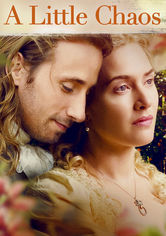
A Little Chaos-2014

A Little Chaos-2014

Director Alan Rickman

Starring Kate Winslet, Matthias Schoenaerts

Scott’s Review #269

80017099

Reviewed August 22, 2015

Grade: B-

A Little Chaos (2014) is a difficult film to review. The film does not kick into high gear, or much of gear until the final thirty minutes or so as the drama hits a crescendo and past events are suddenly explained.

At this point, it becomes a very entertaining film.

Until then, it is largely a bore and slow-paced.

Starring Kate Winslet and Alan Rickman, who also directs the film, A Little Chaos is a good film with beautiful period piece costumes to marvel over, and feels great, but misses the mark with a lack of balancing the momentum throughout the length of the film.

It is also largely fictionalized, making the viewing less enjoyable.

A period drama set at the gorgeous Versailles in France, the period in the late 1600s when King Louis XIV of France is in power and lives on the illustrious estate.

Landscaper, Andre Le Notre, hires unconventional gardener Sabine (Winslet) to create one of the gardens.

Sabine is progressive and does not live in the past. Rather, she has ideas for creating a unique pattern. Sabine is instructed to incorporate a wonderful fountain within the garden. She faces hostility from staff members for simply being a woman and they refuse to work for her.

Others admire her creativity.

As the plot unfolds, Sabine has romantic feelings for Andre, a man trapped in a loveless marriage with Francoise, and they begin a tender courtship.

Sabine is haunted by the past and frequently hears cries in her dreams. The audience does not know what her past life was, only that she is widowed.

The final act of the film brings everything together nicely. We learn about Sabine’s past and her suggested dalliance with Andre comes to fruition.

After the film, I was left thinking how exceptional it was, but then remembered the majority of it had dragged.

The themes of A Little Chaos are class systems, feminism, and societal views. At first, snubbed by some for being a commoner, Sabine slowly is accepted by the royal figures, including the King himself, whom Sabrine humorously mistakes for the gardener at one point.

Ideally, it would have been lovely if a woman had been hired to create the garden.

Sadly, events do not happen this way but is someone’s fantasy.

A Little Chaos (2014) has great potential and looks beautiful- my main complaint is for most of the film nothing happens.

Also disappointing is that the film was not filmed at the historical Versailles, nor was it even shot in France. Every exterior scene was filmed in England.

This is not a deal-breaker, but some genuineness would have been nice. Another major detraction is that Sabine De Barra is not even a real-life figure, but rather is fictionalized- sort of how the past should have been but wasn’t really.

Having been a real person would have made the film more interesting. What is the investment?

From an acting standpoint, the film succeeds. Winslet, a highly talented actress, is well cast and the chemistry between her and Matthias Schoenaerts is palpable. Both actors are believable in their roles.

Stanley Tucci, typically great in whatever he appears in, plays Phillippe, a silly, slightly effeminate Duke who does more to annoy than to amuse and is a trivial character.

Throughout my viewing of the film, I kept thinking of it as the type of film that should be liked because it looks great, but something was missing.

The royal drama, sexual dalliances, and antics were fun, but I felt like the film could have been much more than it ended up being.

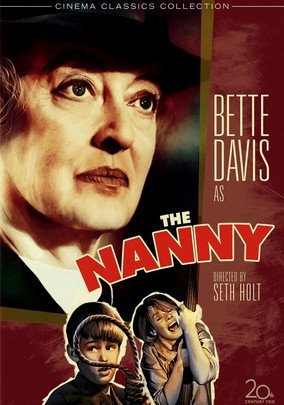
The Nanny-1965

The Nanny-1965

Director Seth Holt

Starring Bette Davis

Scott’s Review #256

70089620

Reviewed July 11, 2015

Grade: B

The Nanny is a 1965 Hammer productions thriller starring legendary film icon Bette Davis as a mysterious nanny caring for a ten-year-old boy named Joey.

Joey has recently been released from a mental institution and returned home to resume everyday life, but has he been “cured”?

There is obvious tension between Joey and Nanny, but the audience doesn’t know what that tension is precisely. Why do they dislike each other? Why is Joey afraid of her?

As the plot unfolds, the suspense and tensions thicken as various events occur and Joey’s parents and Aunt Pen are further fleshed out. Past events are revisited, and the story becomes thrilling.

At one point, long before Joey’s return home, his younger sister has drowned, and the circumstances are vague. It has devastated the family, including Nanny. Joey has been blamed for her death, though he insists that Nanny is the culprit.

Nobody except the neighbor girl believes Joey, and the audience wonders who to believe and who to root for: Joey or Nanny. Davis, like Nanny, brings a warmness to her character, but is she sincere? Is it an act? Is Joey a sweet boy or maniacal?

These questions race through the audience’s minds as the film progresses. When Virginia, the mother, eats tainted food, the obvious conclusion is that the Nanny poisoned it since she prepared it. But why? Did she do this?

As the plot is slowly explained, there are a few chills, though the ending is not too surprising.

Any film starring Bette Davis is a treasure, though admittedly, it is not her finest work. Still, her finest work is challenging to match.

The Nanny is a good film, though not great. It is shot in black and white, which is a nice touch for a thriller.

The main reason to watch Davis’s performance is that it is always mesmerizing. Traditionally playing gruff, mean, or bitchy parts (especially in her later years), The Nanny allows Davis to play a sympathetic role.

She is seemingly sweet, proper, well-organized, and a perfect nanny on paper.

The role of Virginia, played by Wendy Craig, is a bit too neurotic and slightly over-acted. She is rather one-note as the fretting mother worried about her son. The character of the father is also a bit one-dimensional.

The Nanny is more of a classic thriller from the 1960s that is often lumped together with some of Bette Davis’s other films around the same period (Dead Ringer-1964, Hush, Hush, Sweet Charlotte-1964, and Whatever Happened to Baby Jane? -1966), and are in large part superior to The Nanny. As a stand-alone, it is a decent film.

Madhouse-1974

Madhouse-1974

Director Jim Clark

Starring Vincent Price, Peter Cushing

Scott’s Review #233

220px-Madhouseposter[1]

Reviewed April 3, 2015

Grade: B-

Madhouse, a 1974 British horror film, stars horror icon Vincent Price who portrays a sympathetic Hollywood actor who is unsure of his sanity after the grisly murder of his trophy fiancé whom he may or may not have been responsible for murdering.

Mainly set in London, Madhouse also stars famed British actors in the latter stages of their careers, such as Peter Cushing, and is a treat for classic British horror fans.

The look of the film is stylistic and effective in the mood- the story, while silly, is also fun.

Paul Toombes (Price) is a famed actor notorious for his character of Dr. Death in a successful film franchise. He seemingly has it all and is the envy of his contemporaries- wealth, notoriety, and a glamorous blonde fiancé named Ellen.

After Ellen is murdered by someone dressed as Dr. Death, Paul is unable to remember the circumstances or his whereabouts during the murder.

After spending years in a mental institution in a confused state he is summoned to London to mount an acting comeback of sorts, reprising his Dr. Death alter-ego.

As the bodies begin to pile up, a whodunit commences- is Paul Toombes the killer, or is someone impersonating him?

The film itself is quite pleasing to a horror fan like me. The deaths, while silly, are fun and campy.

Mostly all female victims, a comical aspect is how the victims, when cornered by the killer, simply scream and stand there waiting to be sliced.

Wouldn’t they fight back in real life?

This film is certainly not realism at its finest but is a fun horror film. It is a bit exaggerated and over-the-top in a campy way but is also true to the 1970s style with the point of view scenes from the killer’s perspective.

A wonderful aspect of this film is real clips of old Vincent Price films (The Raven, The Pit and the Pendulum, and House of Usher) to name a few, featuring deceased horror god Boris Karloff and Basil Rathbone.

Since the plot involves Price’s character being a former horror actor this is a wonderful opportunity to showcase long-ago classic horror films and it works perfectly.

I enjoyed the television scenes within the film plot as Paul revives his career and shoots a series for the BBC- the film chooses interesting, haunting sets and Cushing’s character of Herbert Flay and his zany wife reside in a spooky, vast mansion with eerie spiders that the wife is obsessed with.

The set pieces are great and very Halloween-like. And the spider-eating-flesh scene is excellent!

The tag team of Price and Cushing is fun to watch- both horror stalwarts connect well and both actors play off of each other successfully.

They had a ball while making this film.

Towards the end of the film, the plot becomes confusing and the big reveal as to the killer’s identity and the motivations surrounding is a disappointment.

The conclusion to the film is silly and makes little sense, although that is secondary to a film of this genre that borders on camp.

Madhouse (1974) is an enjoyable midnight flick starring two of the top classic horror icons.

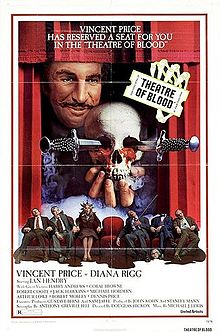
Theatre of Blood-1973

Theatre of Blood-1973

Director Douglas Hickox

Starring Vincent Price, Diana Rigg

Scott’s Review #230

220px-Theatreofbloodposter

Reviewed March 23, 2015

Grade: B

Theatre of Blood (1973) stars Vincent Price, a long-time fixture in the classic/campy horror scene, as a demented Shakespearean theatre actor who enacts revenge on the critics who fail to recognize him with a coveted award that he cherishes.

Price, as always frighteningly good, delivers a campy, but not ridiculous, turn as the crazed actor.

Price’s appearance alone- tall, wiry, with sinister facial expressions, poises him perfectly to believability in any dastardly role he portrayed in his heyday and the performance he gives as Edward Lionheart is no exception.

Not solely a campy, melodramatic horror film, Theatre of Blood rises above that categorization with humorous tributes to Shakespeare and a unique chronicle of the Shakespearean works used to systematically off the critics one by one about the Shakespearean story- quite frankly in a comical and witty way.

Price eerily dresses in many different elaborate costumes to commit the murders- a wine-tasting expert, and a television host, among other interesting characters, and oftentimes, taunts his victims before permanently dispensing them.

The film is quite British in tone and humor and done in a tongue-in-cheek manner so that the murders are not to be taken at all too seriously.

The critics themselves- seven or eight of them- are deliciously fun. One is a loud boisterous fat man who always has his beloved poodles at his side.

What happens to him and the dogs is better left unsaid.

Another is an uptight, sophisticated woman (played by Price’s real-life wife Coral Browne). Several of the critics are created as comic villains so their demises are not all too devastating for the audience as they are rather unlikeable characters, to begin with.

I found myself rooting for Lionheart and looking forward to the next murder!

One criticism involves Diana Rigg, who plays Price’s daughter Edwina, accomplice to his dirty deeds. Well known for her starring role in On Her Majesty’s Secret Service and the 1960s Avengers series, Rigg has little substance to do in Theatre of Blood.

Perhaps by 1973, her film career was on the downturn and she was not winning the coveted roles any longer. I would have loved to see her sink her teeth into a meatier role.

A side-kick, Edwina could have done much more.

The film belongs to Price and the unique storytelling of Shakespearean works made only possible by this great actor.

Not overly serious and played for some laughs, Theatre of Blood (1973) is successful in its telling of an interesting British horror story.

It’s a nice late-night treat for fans of the British horror genre especially.

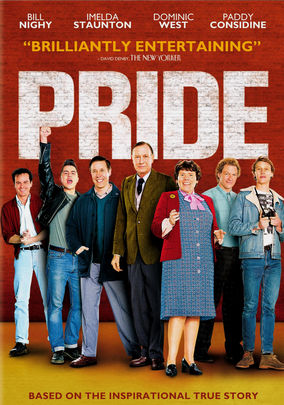
Pride-2014

Pride-2014

Director Matthew Warchus

Starring Bill Nighy, Imelda Staunton

Scott’s Review #215

80013480

Reviewed January 17, 2015

Grade: B-

Pride (2014), based on a true story, deserves props for delivering a nice message about inclusion and groups of vastly different people coming together as human beings.

While it’s a nice film, the filmmakers play it a bit too safe and it has a definite formulaic feel to it.

Surely, the real story of Pride was not as simplistic as this film felt at times.

The setting is 1984 England. A group of British miners goes on strike over wages. A group named Lesbians and Gays Support the Miners made up of gay men and women developed an interest in the strike and decided to help the miners and families.

Why they decided to take on this cause is not fully explained. The National Union of Mineworkers is hesitant to accept funds as they worry about the publicity caused by a group thought to be perverts.

The film is riddled with clichés- the macho miners resist the help from the gays, many of whom are portrayed as effeminate. The characters who are lesbians look as though the filmmakers wanted to “butch them up”, thereby overdoing the stereotype.

There is a subplot of one gay young man who has not come out to his parents, a well-to-do, pretentious couple. When inevitably the truth is revealed, the parents are angry and turn their backs on the teen.

He leaves home to join the gays and lesbians who accept him into their lives with open arms.

The female head of the committee is homophobic and vows to do everything in her power to make sure the gay and lesbian group does not succeed in aligning with the miners.

These clichés seemed way too overdone to make the film more dramatic. Some of the characters, therefore, come across as one-dimensional.

Even the story revolving around a character with AIDS seems watered down and soft.

On the plus side, casting the brilliant Imelda Staunton as the sympathetic, maternal, Hefina is a plus.

A huge supporter of gays and lesbians she comically befriends all of them and is curious about their lifestyles. Bill Nighy is also excellent as Cliff, the older miner who turns out to be gay.

Margaret Thatcher, Prime Minister at the time, is presented as greedy and selfish with little regard or use for the miners or labor unions.

Pride (2014) is an earnest, sentimental, feel-good film that deserves adoration for the coming together of different communities.

I would have liked to see more risks taken by the film.

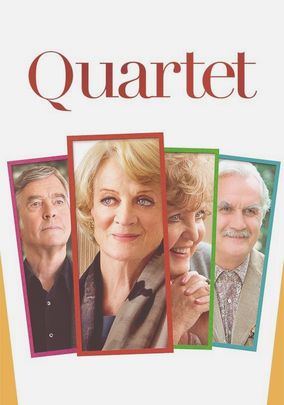
Quartet- 2012

Quartet-2012

Director Dustin Hoffman

Starring Maggie Smith, Tom Courtenay

Scott’s Review #122

70243583

Reviewed July 20, 2014

Grade: B+

Quartet (2012) is a fantastic little British film, directed by Dustin Hoffman, and starring the always wonderful Maggie Smith, whom one might argue could be watched in anything.

I certainly could.

Smith stars as a stubborn retired opera singer who begrudgingly settles in at Beecham House, a luxurious senior retirement home for former musicians in their final years.

There she reunites with colleagues from years past who attempt to reunite for a concert for the public to save the home from foreclosure.

The cast of senior citizens in Quartet is quite likable in one of the few smart films handling aging gracefully.

There is comedy and drama mixed in as the intelligent characters are treated as such in their final years with a hint of soap opera to the film as some of them were intimate with others in years past and the current hijinks are hysterical.

The subject of aging is treated with respect and dignity and not played for laughs, which is one aspect of the film that I adore.

A talent-filled cast of British theater actors, along with some real-life musicians make this film a treat.

It is terrific to see Pauline Collins (Upstairs/Downstairs) in a large role.

And Then There Were None-1945

And Then There Were None-1945

Director René Clair

Starring Barry Fitzgerald, Judith Anderson

Scott’s Review #66

255772

Reviewed June 24, 2014

Grade: C+

And Then There Were None (1945) is adapted from a famous Agatha Christie novel of the same name from the 1930s, the first of 3 film adaptations over the years.

A group of 10 individuals from all walks of life is summoned for a weekend of merriment at a secluded mansion on a lonely island.

The premise is perfectly set up for a fascinating whodunit as the characters are knocked off one by one in sometimes bizarre fashion- the bee sting death is great.

There is a wide range of characters- the rich movie star, the spinster, the doctor, the house servant, and his wife). I was very disappointed with the DVD quality (no Blu-Ray is available for this film).

The picture and sound are abhorrent. The quality is quite grainy and faded making watching an unpleasant experience. However, a great film might withstand those issues.

The film has some appeal that the novel had- an interesting whodunit. The character histories are similar to the ones in the book and, to be fair, the film is well-acted, and the wonderful Judith Anderson (Rebecca) is always a treat to watch.

But the most disappointing aspect is the blatantly changed and completely upbeat, romantic comedy ending, vastly different from the dark novel ending, and lost major points with me for the adjustment.

The Anniversary-1968

The Anniversary-1968

Director Roy Ward Baker

Starring Bette Davis

Scott’s Review #52

70047116

Reviewed June 21, 2014

Grade: B+

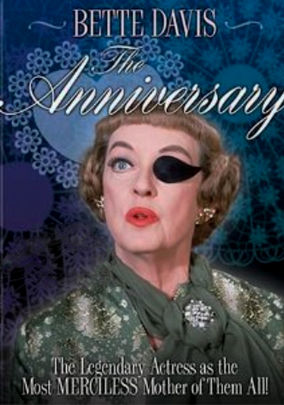
The Anniversary (1968) is a British film based on a play of the same name.

The story centers on the Taggert family reunion, celebrating the anniversary of the matriarch (Bette Davis) and the deceased patriarch.

The film is set like a play, and most of the action takes place inside the Taggert family mansion.

The film is all Davis, and she gives a deliciously over-the-top performance as a vicious mother intent on controlling her son’s life and terrorizing their wives or significant others with cutting remarks and insults.

Davis must have had fun with this role, as her storied career was clearly on the downturn, and this role allowed her to let loose.

One must wonder if Davis chewed up the actors in the cast as much as the characters- rumor has it she was pretty intimidating to her fellow actors and a terror to work with, which adds to the macabre enjoyment.

Her physical appearance, with an eye patch, wig, cigarette, and bright red lipstick, all work in her favor. Her maniacal laugh is incredibly campy and wonderful to watch.

Bette Davis is one of the greats, and The Anniversary (1968) serves as a late-career romp that is fun to watch.

Girly-1970

Girly-1970

Director Freddie Francis

Starring Vanessa Howard, Michael Bryant

Scott’s Review #11

70132676

Reviewed June 14, 2014

Grade: B-

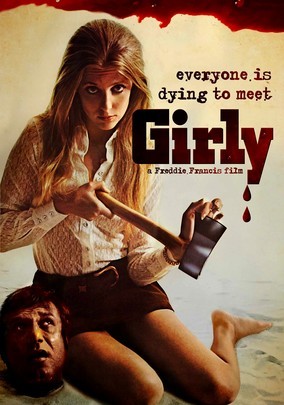
Girly (1970) is an unusual British horror film about an affluent, bored family, clearly deranged, who kidnaps victims and forces them to become “members” of the family by participating in game-playing escapades for their delight.

The premise of the film is appealing and intriguing as to how it will play out. The family members (Mumsy, Nanny, Girly, and Sonny) are played with gusto by the cast but are never over the top.

My favorite is “Mumsy”, wickedly played by British actress Ursula Howells.

The film itself has a fairy tale quality to it with the sets of the house they share. The main victim (a male gigolo) is a miscast (too old, not sexy enough) and begins a cat-and-mouse game of trickery, plotting the family against one another until the inevitable bodies pile up.

The film loses steam midway through and the ending is not satisfying.

Why the victims are not able to escape the vast property is weak (a 7-foot tall flimsy fence??).

“Curious” film that becomes a tad boring towards the conclusion.