Category Archives: Romantic Comedy

Hope Springs-2012

Hope Springs-2012

Director David Frankel

Starring Meryl Streep, Tommy Lee Jones

Scott’s Review #434

70230548

Reviewed June 30, 2016

Grade: B

Hope Springs (2012) is a cute, lighthearted romantic comedy-drama with enormous talent (it is tough to go wrong with heavyweights like Meryl Streep and Tommy Lee Jones).

The story tells of a middle-aged, married couple who reach the point of boredom in their long marriage. They decide to go away on a retreat to repair their marriage and add some spark.

That’s the movie in a nutshell.

There are no surprises to speak of and I expected a bit more from this film given the talent involved. It has safely written all over it, and while nice, it could have been much more.

What’s the reason for the conflict? They suddenly reach a point of boredom for no reason.

Props to Steve Carell for an against-type performance.

Hope Springs (2012) has great acting all around, but too safe of a story.

Celeste and Jesse Forever-2012

Celeste and Jesse Forever-2012

Director Lee Toland Krieger

Starring Rashida Jones, Andy Samberg

Scott’s Review #421

70227647

Reviewed June 19, 2016

Grade: D

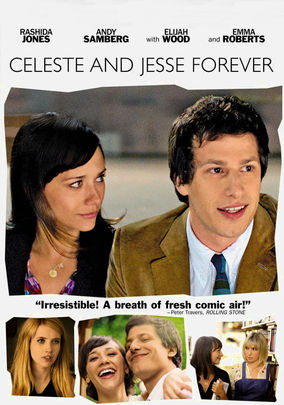
Celeste and Jesse Forever (2012) was a major dud for me.

I am not a fan of romantic comedies, but since the film received a nomination for an Independent Spirit Award for Best First Screenplay, I decided to watch it.

Why this film was nominated for that award I cannot understand. Perhaps someone knows someone who knows someone?

There is nothing impressive about the writing whatsoever. It’s a tried and true romantic comedy formula: couple together, the couple splits, the couple reunites, throw in some misunderstandings for good measure and that is pretty much the film.

The central characters and supporting characters are either dull, annoying, or both.

To be fair, there is nothing loathsome about the movie, but rather, it’s your standard-by-the-numbers romantic comedy that warrants no award nominations.

Bland.

Independent Spirit Award Nominations: Best First Screenplay

Bus Stop-1956

Bus Stop-1956

Director Joshua Logan

Starring Marilyn Monroe, Don Murray

Scott’s Review #400

60004539

Reviewed April 30, 2016

Grade: C

Bus Stop is a 1956 film starring Marilyn Monroe that, while surprisingly ranking as one of her best roles, is one of her worst films in my opinion and, at present times, feels dated, chauvinistic, and diminishing to women.

Perhaps perceived as romantic and cute in 1956, times have changed, and the film no longer has the charm it undoubtedly must have had decades ago.

The film is based on a play by William Inge and, remarkably, is Monroe’s first full-fledged dramatic performance. She plays a nightclub performer named Cherie or mispronounced “cherry” by her love interest, Beau, an immature, naïve, socially inept cowboy, unfamiliar with women, and looking for his “angel”.

He is accompanied by his friend and father figure, Virgil.

Together, they travel by bus for a rodeo from Montana to Phoenix, Arizona. Once Beau meets Cherie, he conquers and marries her despite her resistance to his pursuits.

As a fan of Monroe’s more familiar works- Gentlemen Prefer Blondes (1953) and How To Marry A Millionaire (1953), it is nice to see her in a dramatic role, giving her some nice range and meatier material to tackle.

In 1956, she still looked marvelous, and the sexy nightclub outfit she wore while prancing around in the film worked well.

While Monroe will never be accused of being the most excellent actress in the world, her performance in this film is to be praised. She expresses some lovely emotions. Unfortunately, the character is poorly written, but Monroe gives it the old college try.

Another positive aspect of the film is that of the supporting cast.

Bus stop owner Grace (Betty Field), who has a suggested affair with the bus driver (Robert Bray), is a delight and nearly steals the show! I found their limited screen time and limited romance more interesting and fraught with more potential than the main couple (Beau and Cherie).

Eileen Heckert is acceptable as Vera, Cherie’s waitress and confidante, though she is given little to do.

My favorite scene is at Grace’s Bus Stop as the group is stranded during a sudden winter storm. Beau and the bus driver engage in a bare-knuckles fight outdoors in the driving snow while the rest look on. The bus driver is tired of Beau’s obnoxiousness and intends to teach him a lesson.

Despite being on a sound stage, the scene is authentic, and the snow and gusts add to the animal-like, masculine scene.

Otherwise, the film is not kind to women and, in some parts, is downright sexist. When Cherie, clearly rebuffing Beau’s advances, attempts to board a bus out of town (and alone), Beau decides to lasso her to prevent her from leaving.

In the next scene, Cherie obediently sits beside Beau on another bus to Phoenix to marry him.  It is suggested that she finally gives in, temporarily, to his advances.

This film would never be made today.

The character of Beau is not well crafted. Dumb, lower class, and bordering on abusive to Cherie, I am perplexed as to why the audience should root for this character to obtain Cherie and ride off happily into the sunset- I certainly did not.

I would have preferred a pairing of Cherie and Virgil, who are older, sensible, and kind.

Dated, sexist, and poorly written characters, Bus Stop (1956) is not Monroe’s best film, but it allows an audience to see her in a dramatic role that is worth a viewing.

Oscar Nominations: Best Supporting Actor-Don Murray

Hello, My Name Is Doris-2016

Hello, My Name Is Doris-2016

Director Michael Showalter

Starring Sally Field, Max Greenfield

Scott’s Review #390

80050896

Reviewed April 1, 2016

Grade: B

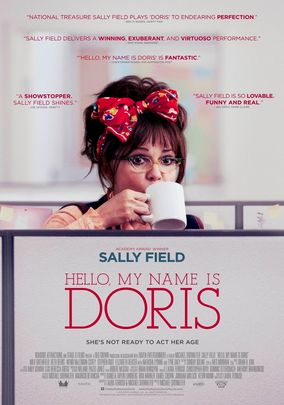
Sally Field shines in Hello, My Name Is Doris (2016), a sweet-natured indie romantic comedy that tells of a lonely Staten Island woman and her mostly fantasy-laden relationship with her colleague, a much younger, hunky man (Max Greenfield).

The film is somewhat predictable but sweet and honest and works well. It hardly reinvents the wheel, but it is a lovely character-oriented story about a woman’s reawakening from a dull life.

This is refreshing in a world of retreads and superhero flicks.

Doris Miller meanders through life at her crappy data entry job at an Advertising Agency in mid-town Manhattan. Having worked in the same role for decades, she is overlooked and more or less invisible to colleagues.

She is the “weird old lady” or the “wallflower” who goes unnoticed. Her personal life is a dud. She lives with her recently deceased mother, who is a hoarder and severely marginalized. She has no dating possibilities.

One day, on the elevator heading to the office, a kind young man named John Fremont innocently pays attention to her, and she becomes enamored with him.

Later, she is stunned to realize that John is the new Art Director at her job.

Her crush escalates as she and John become friends, and a series of misunderstandings ensue, with the added conflict of her friends thinking she is living in a fantasy world, worried she will wind up hurt.

Sally Field carries this film in every way. It is nice to see her in a lead role again, which, sadly, is a rarity these days for a seventy-year-old actress.

She convincingly plays quirky, shy, and awkward and has one melt-down scene that is a powerful testament to her continued acting ability.

The character of Doris slowly blossoms and becomes rich with zest. We discover she is much more than meets the eye, and these moments in the film are wonderful to experience, thanks to Field’s charisma.

My favorite scenes involve the lovely bond between Doris and the thirteen-year-old granddaughter of her best pal, Roz, played by Tyne Daly.

Despite the age difference, the granddaughter views her as a peer, giving daring dating advice to the inept Doris. This leads to a nice portion of the plot and some funny moments.

One unique aspect of Hello, My Name Is Doris is that it is not a film about a May-December romance between a man and a woman—at least, I did not see it that way. Instead, it is about a woman who finally decides to live regardless of age.

I felt her stifled and smothered by her brother and sister-in-law, who clearly did not understand that she hoarded “stuff” in her home to cope with her loneliness, and to be surrounded by things that gave her comfort helped her deal.

Granted, Doris clinging to one broken wooden ski from the Dark Ages was amusing in its cuteness.

Tyne Daly, who can recite the phone book, is worth a considerable note from an acting standpoint. I’d be happy to do that. She is one of those natural, confident, engaging, real actresses, and her scenes with Field glistened with raw talent and emotion.

Perhaps a female buddy movie with Field and Daly?

The remainder of the supporting characters are capable but not spectacular. They are somewhat clichéd and one-note.

For example, Doris’s colleagues view her as invisible with the classic office jokes, especially the female boss thrown into the film- possessing a hard-as-nails personality and coldness.

I have seen these characters time after time in comedy films.

Supporting actors from Orange is the New Black (2013-2019) and Mad Men (2007-2015) are featured as a couple of the colleagues.

Indie, fun, and with a freshness made in large part by Sally Field, Hello, My Name Is Doris (2016) is an innocent comedy with a romantic edge and some nice laughs.

It is far from a masterpiece but a good-natured escape, which is refreshing, especially for the middle-aged or senior crowd craving a non-stereotypical female character.

Independent Spirit Award Nominations: 1 win-Piaget Producers Award (won)

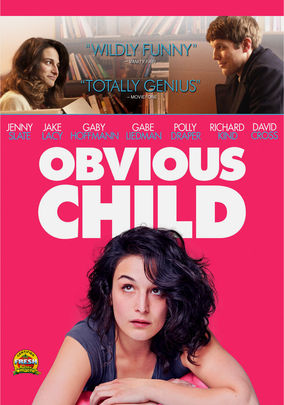
Obvious Child-2014

Obvious Child-2014

Director Gillian Robespierre

Starring Jenny Slate

Scott’s Review #387

70301275

Reviewed March 22, 2016

Grade: C+

Obvious Child is a 2014 independent comedy/drama nominated for a couple of independent spirit awards, that has mixed results.

It works on some levels but has an irritating underbelly and some unneeded components that ultimately give it a thumbs down.

The major success is star Jenny Slate, a real-life Brooklyn stand-up comic with immeasurable comic timing, who will hopefully become a rising star.

Slate starred in a 2009 short film of the same name before said film graduated to a full-length feature.

Slate stars as a twenty-eight-year-old Brooklyn-ite, who moonlights as a stand-up comic in a dingy bar while working in a desolate bookstore that is soon closing.

Conversely, her parents are successful- her mother is a famed professor. When she is unceremoniously dumped by her steady, she takes up with a handsome young man for a one-night stand filled with fun.

Predictably, she winds up pregnant and forges ahead with a plan to abort their child.

The abortion story is quite interesting since there is never a doubt about what will happen. Unlike films that make abortion the main focus of conflict, Obvious Child wisely does not- every character supports, and even encourages her to have the procedure, including her mother and best friend.

Having been written and directed by women, this is intentional and a way of empowering women, which is one of the high points. If one is on the fence about the topic of abortion or is a pro-life stance, this film may be very tough to watch as its slant is made crystal clear.

Slate is the other high point of the film.

She exudes confidence and comic range. Jewish and slightly awkward looking, she is not the leading-lady type and this arguably makes her wit and sarcastic language all the more comical. She is a natural in the comedy department and hope she will go far.

Two slight props for me worth mentioning are the wonderful mention of the classic film Gone with the Wind (1939) and the setting of Brooklyn. This was a great nod to film history and the setting gave Obvious Child an authentic New York City feel.

On the other hand, an utter annoyance about Obvious Child is the shameless and constant use of blatant and off-putting bathroom humor- not just once or twice, but numerous times.

How is this necessary to the plot? I can’t say, but surmise that it was deemed necessary by the filmmakers to show that females can give as good as males can.

Almost saying, “men can make poop jokes, why can’t women”? Why this is necessary for any film is beyond me and it gives Obvious Child a crass, ugly feel.

The film also has an unrealistic quality to it. Max is portrayed as prince charming. He can do no wrong, supports Donna in any decision she makes, is enamored by her sole being, and loves her unconditionally after only a one-night stand.

This would not happen in real life.

The fact that Donna is Jewish and quirky and Max is Christian and straight-laced is not explored. What conflicts would they undoubtedly face? Why were his parents not featured?

Highly uneven, with a great premise and an interesting slant on a still-controversial social issue, Obvious Child (2014) succeeds in the story department but fails in its uncalled-for use of potty humor to elicit cheap laughs.

Independent Spirit Award Nominations: Best Female Lead-Jenny Slate, Best First Feature

An Affair to Remember-1957

An Affair to Remember-1957

Director Leo McCarey

Starring Cary Grant, Deborah Kerr

Scott’s Review #105

232349

Reviewed July 12, 2014

Grade: B

An Affair to Remember (1957) is an excellent example of how romantic comedies have changed.

‘rom-com’ is not my genre of choice as typically they are clichéd and predictable. The romantic comedies in years past were vastly different, containing a glamorous innocence lacking in today’s generic rom-com.

In An Affair to Remember, the charisma of Cary Grant and Deborah Kerr makes the movie. They portray two strangers who take a luxury cruise and inexplicably fall madly in love despite having significant others at home.

The couple wine and dine with each other, revel in merriment for a week and make a pact that if they don’t forget each other in a year, they will meet at the top of the Empire State Building on a specified day and time.

It does not get much more romantic than that.

The extravagance of the gorgeous sets on the cruise ship makes the film a visually satisfying experience. In my book, any movie set in New York City, as the second half does, is a plus.

An Affair to Remember is not a cutting-edge film, though for 1957, adultery may have raised a few eyebrows, but rather a pleasant, warm romantic comedy of the past.

It’s meant to sit back and escape with a sappy, sweet, fun romance.

Oscar Nominations: Best Scoring, Best Song, “An Affair to Remember”, Best Costume Design, Best Cinematography

Easy to Love-1953

Easy to Love-1953

Director Charles Walters

Starring Esther Williams, Van Johnson

Scott’s Review #86

70123585

Reviewed July 2, 2014

Grade: D

Easy to Love (1953) is a romantic comedy from 1953 starring competitive swimmer turned actress Esther Williams.

Williams plays a (surprise!) swimmer in love with her boss, who does not return her affections. She also has two other suitors madly in love with her, so it’s a love triangle film with Williams having a side-kick, played by Edna Skinner.

They go from Florida to New York on a job adventure.

The main problem with this film is the silly script. It’s a romantic comedy of its day, with Williams scampering from one beau to the next. By the end, she has three suitors all vying for her affection, but the viewer hardly cares whom she chooses or which one was meant to be the hero.

The endless scenes of Williams swimming around were necessary since she was known for it, but the film is a dud on almost every level.

Williams, hardly known for her acting ability, spends much of the film jet-skiing and prancing around in swimwear while men lust after her.

That pretty much sums up Easy to Love (1953).

Williams is not a terrible actress, though she is hardly Katharine Hepburn. The movie is lackluster, relatively trivial, and not too much fun.

Amelie-2001

Amelie-2001

Director Jean-Pierre Jeunet

Starring Audrey Tatou

Scott’s Review #74

60022048

Reviewed June 27, 2014

Grade: C+

Amelie (2001) was a major disappointment for me. Critically acclaimed and admired, I did not get this movie at all.

First the positives: this film is French, which gives it an edge for the beautiful language and the setting of France.

The cinematography, art direction, and set design are inventive and unique. The movie has a magical, whimsical feel to it which is appealing.

The story, however, is an enormous drawback.

The central character, a waif-like, sweet, waitress is lonely and feels unloved, yet avoids meeting the man of her dreams by playing a cat-and-mouse game of leaving silly notes and sending him on wild goose chases because she is afraid of happiness, yet she does everything she can to ensure others find happiness.

The story did not work for me at all, but I admire the creativity of the film itself.

Perhaps I should allow myself a second viewing as this film received much fanfare.

Oscar Nominations: Best Screenplay Written Directly for the Screen/Original Screenplay, Best Foreign Language Film, Best Sound, Best Art Direction, Best Cinematography

Independent Spirit Award Nominations: 1 win-Best Foreign Film (won)

Don Jon-2013

Don Jon-2013

Director Joseph Gordon-Levitt

Starring Joseph Gordon-Levitt, Julianne Moore

Scott’s Review #27

70267239

Reviewed June 17, 2014

Grade: B+

 I did not expect Don Jon (2013) to be as good as it is.

Frankly, I was expecting a by-the-numbers romantic comedy.

Written, directed by, and starring Joseph Gordon-Levitt, it tells the story of a twenty-something New Jersey bartender who is addicted to porn despite receiving all the female attention he can imagine.

Scarlett Johansson and Julianne Moore play two completely different women in his life.

The film contains stereotypical, though hilarious and spot-on, New Jersey trademarks. Tony Danza is effective as the brash father.

In the last thirty minutes, the film turns into a wonderful, yet hardly sappy or traditional, love story that makes Don Jon (2013) a positive experience.

Gordon-Levitt is a breath of fresh air and a young Hollywood talent getting his due.

Independent Spirit Award Nominations: Best First Screenplay

The Apartment-1960

The Apartment-1960

Director Billy Wilder

Starring Jack Lemmon, Shirley MacLaine

Scott’s Review #7

60011007

Reviewed June 17, 2014

Grade: A-

The Apartment (1960) is another gem by Billy Wilder (Sunset Boulevard, The Lost Weekend). This one is set in 1959 New York City, a setting and period I adore.

The black-and-white images effectively portray the loneliness and bleakness of the characters, who are all friendless, sad, and starved for love.

It questions social morality and getting ahead in the corporate world but goes from drama to romantic comedy with no sappiness.

Quite the contrary, as the film has dark moments of despair and angst.

The film influenced the television series “Mad Men”. As with most Billy Wilder films, there is a darkness of humanity, which is fascinating to watch.

Jack Lemmon and Shirley MacLaine are terrific, but their chemistry is lacking. Despite this, the film is still excellent.

The Apartment (1960) won the Best Picture Oscar.

Oscar Nominations: 5 wins-Best Motion Picture (won), Best Director-Billy Wilder (won), Best Actor-Jack Lemmon, Best Actress-Shirley MacLaine, Best Supporting Actor-Jack Kruschen, Best Story and Screenplay Written Directly for the Screen (won), Best Sound, Best Art Direction, Black-and-White (won), Best Cinematography, Black-and-White, Best Film Editing (won)