The Square-2017

The Square-2017

Director Ruben Östlund

Starring Claes Bang, Elisabeth Moss

Scott’s Review #814
Reviewed September 28, 2018

Grade: B+

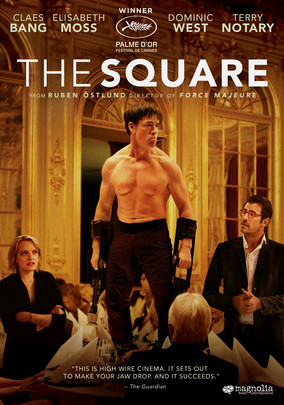
The Square (2017) is an eccentric, highly interpretive Swedish-language film that does not always make perfect sense, as a more mainstream film would.

This is both a positive and a negative, as the film’s ultimate message is admirable, though some parts are perplexing and downright bizarre.

The film was undoubtedly commended for its bravery and cutting-edge approach and received an Oscar nomination for Best Foreign Language Film—subsequently, it lost to A Fantastic Woman (2017).

The film’s primary setting is the X-Royal Art Museum in Stockholm, Sweden. The action centers mainly around the museum’s new creative director, Christian (Claes Bang), attempting to introduce a new installation called “The Square.”

A misunderstanding with a youthful public relations firm hired to make the exhibit as accessible as possible leads to controversy.

The film also interjects various subplots that are generally interesting but do not always make logical sense.

Bang is quite compelling in the lead role and the film’s best part for me. He is charismatic and a good father to his two daughters. He helps people experiencing homelessness- even going so far as to help a young woman when nobody else will, only to find his wallet stolen- an unfortunate victim of a scam.

Furthermore, Christian’s desire to create “The Square” is humane and admirable- a safe zone for trust and compassion. The character is a good guy but is also concerned with his status.

Common themes of satire and human beings’ natural hypocritical nature abound. For example, in one scene, Christian, proud to drive his flashy Tesla car and give money to the homeless, is afraid to be seen in a run-down apartment house.

Later, a man with Tourettes syndrome disrupts an interview at the museum and is looked down on by “open-minded people” as a result. The latter scene is quite amusing as the man erupts with various expletives at the most inopportune times.

My favorite sequence occurs approximately midway through the film. As bizarre as the scene, it is riveting in its momentum and bravery.

When a group of well-dressed museum members gathers for a lavish dinner to watch a human art show, a bare-chested man who only grunts emerges and slowly antagonizes guests.

He begins pulling one woman’s hair while chasing an angry man from the hall. This scene is shocking, intense, and thought-provoking.

But what the scene means is perplexing.

A treat for me was viewing the famous Stockholm museum’s frequent interior and exterior scenes- which I was privy to have visited in 2016.

This experience was so fresh that it brought back wonderful memories of not only the museum but also the gorgeous city of Stockholm itself.

The chemistry between Christian (who is Swedish) and an American reporter, Anne (Elisabeth Moss), does nothing for the film. It feels wholly disjointed and unnecessary, and there is little connection between the two characters.

Engaging in a one-night stand, the duo has a dispute about a used condom. Does Christian think that Anne is desperate enough to use his sperm and impregnate herself? The resulting spat between the two seems meaningless.

The Square (2017) is a very tough film to review.

Oftentimes disjointed and impossible to make heads or tails of, one would be wise to simply “experience” the film on its own merits. I am not sure.

I mainly need to view it again and try to figure out the plot because I am uncertain if that was the intent of director Ruben Oslund.

Having directed the wonderful Force Majeure (2014), a more straightforward and superior film, The Square is worth a watch in its own right.

Oscar Nominations: Best Foreign Language Film
American Pie-1999

American Pie-1999

Director Paul Weitz

Starring Jason Biggs, Alyson Hannigan

Scott’s Review #813

Reviewed September 23, 2018

Grade: B+

With each generation of film, there seems to be a gross-out comedy that speaks to a young, coming-of-age generation- of the mostly male and jock persuasion.

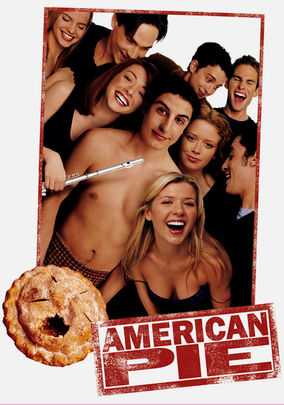
American Pie (1999) finishes the 1990s strongly with a raunchy story that feels fresh and genuinely funny with precarious situations facing the cast, specifically the protagonist and “everyman”, played by Jason Biggs.

The film is a teen sex comedy of the crudest nature yet engulfed with characters audiences like- not mean-spirited, but rather fun-loving and endearing.

An enormous box office hit at the time, the film was all the rage and brought tawdry new meaning to the Americana staples of apple pie and band camp.

Spawning several sequels throughout the next decade, the franchise successfully brought back the teen comedy genre with strong and highly recognizable characters.

American Pie also brought back the fun to R-rated films and put a nice cherry on top of a creative decade in cinema. The film is not high art, but what it aims to do, it does quite well.

Living a middle to upper-middle-class existence in the suburban USA (presumably Michigan), five high school seniors make a pact to lose their virginity by the time they graduate. Most of the group are nerdy, insecure, and sexually naive, the central character being Jim Levenstein (Biggs).

Most events are taken from his point of view and he is continually advised by his very nerdy father, Noah (Eugene Levy).

The setup is an age-old premise with lots of room for jokes and precarious situations in hilarious form. As Jim has the hots for a sexy foreign exchange student, Nadia, she is out of his league.

In a hilarious scene, a “warm apple pie” incident leads to a webcam setup attempt to watch Nadia change clothes. When events go amiss everyone gains access to the webcam link, and Nadia is sent back to Czechoslovakia in shame.

This leads to a new pursuit for Jim, in geeky band camp girl, Michelle (Alyson Hannigan). Surprisingly, they fall madly in love and have fantastic chemistry.

Some of the supporting characters add energy and sometimes hilarity. Jennifer Coolidge is great as the mother of Stifler (the jock of the group), who has eyes for younger men, specifically Finch.

As they finally consummate their relationship on a basement pool table, Stifler walks in at the worst time and faints in horror. These antics are genuine and fresh, with great acting by all principals.

Coolidge, Hannigan, and Levy are arguably the best secondary characters. Each, in a different way from the others, provides comic relief by crafting interesting nuances to the characters.

Levy, as Jim’s father, is well-meaning, yet bumbling. Every teen cringes at the thought of having a father like Noah, yet the pair share a close bond and a classic father-son relationship, so the character is therefore enamoring.

American Pie was successful at coining new pop-culture phrases such as “warm apple pie”, “milf”, and “this one time in band camp…” that the young generation of the time (myself included) enjoyed giggling over and repeating in glee.

The film set the tone for other similar genre films, but none of them lived up to the chemistry and the charm that American Pie had. This film was better than it ever should have been!

The turn-of-the-century version of Animal House, American Pie (1999) introduces a new generation of young people into the world of comedic, R-rated, raunchy fun. Films like this have been churned out by the numbers, but rarely any are as authentic as this film feels.

The franchise was able to sustain its popularity with well-written sequels, most notably American Pie 2 (2001), which developed the situations more, but the original is a fine blueprint for what good comedy can achieve.

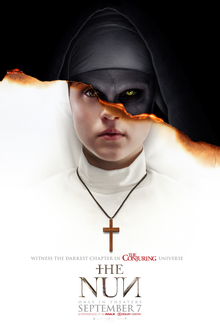
The Nun-2018

The Nun-2018

Director Corin Hardy

Starring Taissa Farmiga, Demian Bichir 

Scott’s Review #812

Reviewed September 19, 2018

Grade: B-

A film such as The Nun (2018) is best described as a genre horror film strong on atmosphere, scares, and effects but weak on story, dialogue, or satisfyingly integrating much of the other films.

To stress, the set pieces and foreboding convent where most events occur are tremendously thought out, adding to the stylistic filming; however, the story stinks, making the overall result barely above mediocre.

This story point, which is said to be connected to The Conjuring (2013) and Annabelle (2014), is all but laughable.

Theoretically, The Nun is a prequel, but since the film is set in 1952, the only connection is a super-quick scene in later years. Ed and Lorraine Warren use a character in The Nun as a case study for their audiences.

Admittedly, I have not seen The Conjuring 2 (2016), but from what I can surmise, what remains of The Nun is a stand-alone film. Was the demonic nun in The Conjuring 2? This may make more sense.

The creepy setting in Romania is a superb choice, given its association with Transylvania and Dracula. The film begins with the suicide of a Roman Catholic nun in a gloomy and largely abandoned Monastery.

Having been visited by an unseen force who kills another nun, a vicious demon appearing in the form of a nun looks on menacingly. Father Burke (Demian Bichir) from the Vatican arrives with Sister Irene (Taissa Farmiga) to investigate, where they meet flirtatious local, Frenchie (Jonas Bloquet).

The atmosphere used throughout almost the entirety of the film is spot on and highly effective.

Most of the scenes are set at nighttime (naturally!) and in or around the vicinity of the spooky, gothic monastery. To double, a gorgeous castle in Romania was used. From the dark and narrow hallways to the crucifixes and obvious religious decor, the props and set design shine through.

The best scenes occur within the grounds of the statuesque building, where dozens of graves can be seen. When bells from the graves begin to ring on their own and spirits can be seen lurking, the audience is in for a good scare.

Even the scenes in daylight hours are fraught with creepy tension. When Frenchy comes upon the nun, dead for days, she dangles from the monastery, eyes gouged and covered with feasting crows, as her blood drips onto the front porch.

The camera close-up of the shot is highly effective, as are others involving the typical jolts and creaky floors that have become a cliche in horror films, but somehow feel fresh and invigorating in The Nun.

And the demonic nun, a grimacing Marilyn Manson-type ghoulish figure, is downright scary.

Unfortunately, along with praise must come some criticisms. The story and the logic do not make much sense, and I stopped trying to figure out the plot points halfway through.

Why the Father and Sister are chosen to go alone to investigate is implausible. A silly, brief mention of a Duke in the old days, evoking a curse in the monastery that was “conjured” up during World War II and must be contained again, is hardly a compelling story.

The plot-driven device (and frankly done to death at this point) attempt to forge a romantic connection between Irene and Frenchy never works. How many times in film have we seen a handsome, young man trying to woo a pretty nun away from her calling?

Filmmakers may have added this for humor, and (hopefully) the characters’ intentional or unintentional religious exclamations of “Oh My God!” or “Mother of God!” are laugh-out-loud silly. With a film like The Nun (2018), riveting writing is not on the wish list- great atmosphere and effects are.

The film delivers excellent content and makes for an enjoyable experience with good thrills and scares. Thankfully, for the horror genre, the film is rated a solid “R” and not watered down for PG-13 audiences.

Just be prepared for some hokey writing.

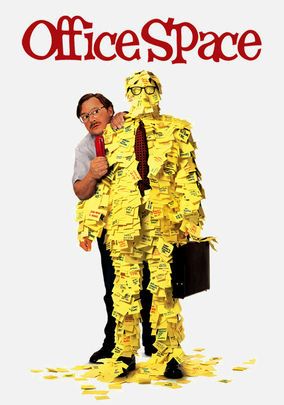
Office Space-1999

Office Space-1999

Director Mike Judge

Starring Ron Livingston, Jennifer Aniston

Scott’s Review #811

Reviewed September 16, 2018

Grade: B+

Having become somewhat of a cult classic since its theatrical release in 1999, Office Space is delightful to watch for anyone who works in a corporate environment- or ever has- they will undoubtedly “get” this movie.

The dark humor and antics may be lost on those who have not, but for the rest of us, the film is quite the treat.

One may never view a stapler or the common office cake party in the same manner. Yes, the story and characters are somewhat over-the-top but more than a few clever scenes ring with truth.

But over time will the film become dated?

Writer and Director, Mike Judge, tells a story about life within a 1990s software firm.

Reportedly, the story is based on Judge’s cartoon series Milton, and his first foray into live-action filmmaking. His first film was Beavis and Butt-Head Do America (1996) if this gives any indication of the type of humor that resounds. Fraternity boy-minded, yes, but the writing is crisp and oftentimes rife with fun.

The film was not a box-office smash at the time of release yet is well-regarded by critics.

Peter Gibbons (Ron Livingston) is a frustrated IT programmer who works for a company named Initech. Alongside two colleagues, one of whom is comically named Michael Bolton (not that Michael Bolton), they despise their sneaky boss, Lumbergh (Gary Cole).

The situation gets worse when two consultants are brought in to downsize the company, leaving everyone in panic mode.

After a failed hypnotherapy session Peter becomes relaxed and confident, even winning praise from the consultants and scoring a promotion. This puts him at odds with Lumbergh, especially after he begins dating a waitress, Joanna (Jennifer Aniston), and assumes she has also slept with him.

Office Space shines the most with the crackling dialogue and clever scenes that take place within the confines of the office. With stuffy cubicles for miles and the standard corporate jargon to make into witty lines, the subject matter is ripe for the picking.

With Cole’s sly requests for his employees to work weekends, Judge creates authenticity and freshness that is incredibly appealing to corporate workers. He successfully knocks down office politics with intelligent, wisely crafted, memorable satire.

In the supporting role of Milton Waddams, character actor Stephen Root is successful at stealing the show with his mumbling and bumbling character. Nearly invisible to all his colleagues, Milton is eventually moved to a basement desk and left out of the cake party.

When somebody borrows his prized red stapler, all hell breaks loose. Increasingly disgruntled, Milton’s fate is instrumental to the hilarious conclusion of the film and he ultimately gets his revenge satisfyingly to all.

The romantic element between Peter and Joanna is okay, but not at all the highlight of the film. The romance seems unnecessary to me but undoubtedly added since comedies of this sort usually require something heartfelt to appeal to mainstream audiences.

Aniston, popular at the time for her role on the television show Friends, was on her way to becoming a marquee movie star, but not quite yet, so she must be content with the standard “girlfriend” role.

She’s cute, but hardly anything more.

Office Space is a fun ride, but the film is not a groundbreaking experience in great film techniques, inventive ideas, or any other technical or story achievements.

What it offers to fans, it does very well and feels like a breath of fresh air in its genre.

The film is a comedy, but not a dumb comedy as a myriad of similar style offerings have been released since the beginning of cinema. With witty one-liners and comic gold, Office Space (1999) is a film to be remembered.

RBG-2018

RBG-2018

Director Betsy West, Julie Cohen

Starring Ruth Bader Ginsburg

Scott’s Review #810

Reviewed September 10, 2018

Grade: B+

In the aftermath of the tumultuous 2016 United States Presidential election that still resonates in 2018, making a documentary about one of the most senior members of the U.S. Supreme Court is perfect timing.

This production features eighty-four-year-old Ruth Bader Ginsburg. It discusses the inspirational woman’s early life, rise to the top, and views on the current Trump administration, offering a fleshed-out chronicle of the inspirational figurehead.

Directed and produced by feminists Betsy West and Julie Cohen, this was an enormously wise move. In my opinion, much of the focus is on Ginsburg’s trailblazing reputation and her achievements with gender-discrimination law.

More than once, it is pointed out that Ginsburg, with her tiny stature, pulled-back hair, and thick glasses, was not to be taken seriously in a world of men. Despite her serious demeanor, she nevertheless proved herself against many odds.

The documentary wisely emphasizes Ruth Bader Ginsburg’s current state. It discusses her childhood, parents, family, and friends in detail, but the heart of the film is positioned in the present.

This can only be assumed because of the volatile and relevant current political state and the importance of the Supreme Court in its current state of conservative leanings.

Ginsburg is now the furthest left-leaning judge- a point the documentary stresses not without some urgency.

The documentary begins with “RBG,” as she has adoringly come to be known, working out with her trainer. At age eighty-four, this is remarkable and encompasses her hard work ethic, inside and outside the courtroom.

The film stresses her endurance and dedication to the job. One family member comments how Ginsburg will frequently work until four in the morning, stay up all night, and then sleep for sixteen hours to play “catch-up.”

RBG—the film—shares sweet moments alongside the legal courtroom facts so that it is not oversaturated by legal jargon and terms.

A nice touch is the focus on Ginsburg’s husband, a lively, boisterous, and comical man who perfectly balances his wife’s mannerisms and characteristics. According to many sources in the documentary, they are a perfect match—this portrays a more romantic (and needed) element to the overall story.

Ginsburg was granted the highest honor during President Clinton’s term, a pivotal time in United States history when the Supreme Court took a more left-of-center turn.

In 2018, the Court swung harshly in the other direction, making Ginsburg a tremendously instrumental figure. In the documentary, the courageous lady astutely points out that she “will do the job as long as she can do the job.”

RBG (2018) is an incredibly important documentary in a highly tumultuous time. Not only are women’s rights, specifically Roe v. Wade, in serious trouble, but the country is also in danger of taking a stark turn to the right and thereby going backward.

Leave it to a dear eighty-four-year-old woman with courage for miles to lead the charge for freedom and the progressive movement. The years ahead will tell us how this turns out, but the documentary excels at relaying its vital importance.

Oscar Nominations: Best Documentary-Feature, Best Original Song-“I’ll Fight”

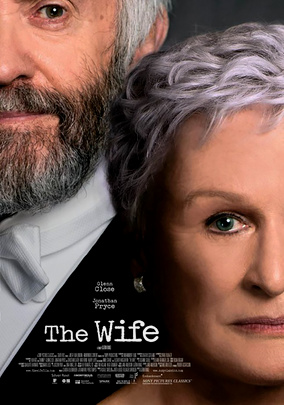
The Wife-2018

The Wife-2018

Director Bjorn Runge

Starring Glenn Close, Jonathan Pryce

Scott’s Review #809

Reviewed September 8, 2018

Grade: A

Swedish director Bjorn Runge crafts a nearly flawless film in The Wife (2018), which elicits a perfect performance from its star, Glenn Close.

The film may be a standard drama, but the performances are the star attraction here. Along with Close, Jonathan Pryce, along with many of the supporting players, deserves his share of kudos.

But the film unquestionably belongs to Close as she plays an overlooked wife with subtle intelligence and enough simmering fury and resentment to astound and compel audiences.

Professor Joe Castleman (Pryce) and his wife, Joan (Close), live charmingly in upscale Connecticut. Joe is an acclaimed author and has just been notified that he will soon be awarded the Nobel Prize in Literature.

As Joe and Joan excitedly jump up and down on the bed in celebration, there is something not altogether joyous about Joan.

Parties are thrown, and Joe and Joan, along with their son David (Max Irons), an aspiring author himself, fly to Stockholm, Sweden, for the coveted ceremony. Joe is flocked with attention while Joan is cast on the sidelines—secrets eventually bubbling to the surface through a nosy reporter, Nathaniel Bone (Christian Slater), who digs into Joe and Joan’s past.

The prime setting of Stockholm is a great plus, adding a cultural and cold vibe to the story. The snowy and blustery Scandinavian locale, with some characters of European descent, brings richness to the film.

The scenes of characters sipping brandy or other warming spirits while a bristling fireplace erupts in the background add good texture.

Close is one of the finest actresses of our time and portrays Joan with refined restraint at every turn. Yes, we know that something is bothering Joan, but we do not know what that is. Close is one of those talents whose face tells so much while she can utter so little, and for a good one-third of the film, this is all we have.

What is wrong with her? Why does she act happy for her husband and do her tasks seamlessly, but harbor rage bubbling beneath the surface?

Slowly, with the help of numerous flashback scenes, we learn how Joe and Joan met- he a young professor in the early 1960s, and she a naive student with delusions of grandeur of becoming a female novelist. She quickly learns how difficult this will be to achieve as she babysits Joe’s young kids, slowly falling in love with the married man.

From flashbacks, we learn more about Joe and Joan’s emotions, aspirations, and limitations. We also learn that Joe has always had a wandering eye for other women—after all, wasn’t Joan “the other woman”?

Back in the present day, a restless Joan needs a day to herself in the bustling city before she explodes at Joe. Before she can head out, she is talked into a drink by Nathaniel, who cagily reveals much of what he knows to Joan.

The scenes between Close and Slater crackle with passion. Is he flirting with her or attempting to get her to buckle under from compliments and booze? Close is purely in control of Joan’s emotions here, but so much is written on the actress’s face.

It is mesmerizing to watch her calm demeanor border on cold and calculated in her responses to Nathaniel’s questions.

Joe and Joan’s son David play key roles in all of this. As with Joan, David harbors resentments towards his father, but his rage is more blatant. He yearns for his father’s approval of a newly written story and is angry with every comment his father makes.

Is he simply experiencing jealousy over his father’s talents?

When David learns a secret, events get good, culminating in a fantastic blowup scene between the three characters in a hotel room, at simply the worst possible time.

Pryce must be given props for playing Joe with much complexity. Partially sympathetic and partially unforgivable, he elicited a mixed reaction from me. Not one to mistreat Joan, he sings her praises from one toast to another.

A cad, he is also a narcissist, yet he does adore and think the world of Joan, so they share a complex love.

The Wife (2018) is an excellent film that appreciates the talents of its cast.

Stalwarts such as Pryce, Slater, and newcomer Max Irons flesh out the supporting roles, which only enhances Queen Bee Close’s bravura performance.

I have always thought there would never be any way Close could rival her breathtaking portrayal of dastardly Alex in Fatal Attraction (1987), but she sure comes close in The Wife.

Oscar Nominations: Best Actress-Glenn Close

Independent Spirit Award Nominations: 1 win- Best Female Lead-Glenn Close (won)

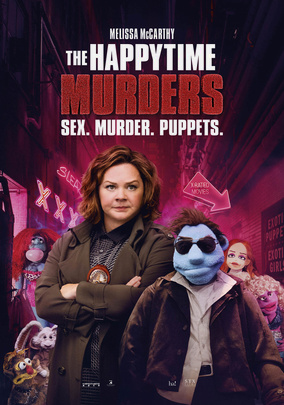
The Happytime Murders-2018

The Happytime Murders-2018

Director Brian Henson

Starring Melissa McCarthy, Maya Rudolph

Scott’s Review #808

Reviewed September 6, 2018

Grade: B-

Some consider it the worst film of 2018, but I had no positive expectations as I walked into an empty movie theater.

In truth, The Happytime Murders is not that bad. It is more in tune with a fun, adult-humored late-night affair. The greatest assets are Melissa McCarthy’s comic talents and the neat whodunit that is the central part of the story.

The human actors acting opposite puppets are bizarre and take some getting used to, but the nice editing (not easy to do!) is to be commended.

Set in modern times, in the underbelly of Los Angeles, puppets live alongside humans and are not treated well. They are constantly bullied and taken for granted.

Sarcastic and angry puppet Phil Phillips (a nod to the American Idol winner?) works as a private investigator. An incident many years ago caused him to be booted from the LAPD police force forever.

When Phil is hired by a sexy blonde female puppet, Sandra, to find out who has been sending her blackmail letters, he stumbles upon a rash of puppet murders.

The killer is knocking off members of an 1980s television show, presumably for profit. Phil’s brother and grizzled ex-partner, Connie Edwards (McCarthy) become central to the story.

The first dynamic that works well in The Happytime Murders is the “chemistry” between Connie and Phil. The connection and good rapport are surprising, considering the human/puppet factor.

One might find it surprising that the two characters play well off each other, but their adult sparring and frequent vulgar language name-calling are oodles of fun to watch. McCarthy is always fantastic with comic timing, so her fans will not be disappointed.

As they shout vulgar “pleasantries” to each other, one cannot help but smirk.

Maya Rudolph plays an interesting role as Phil’s secretary. Named Bubbles, she is sexy, sultry, and coquettish—an unusual role for Rudolph, but she pulls it off in spades.

Otherwise, Elizabeth Banks, cast in the small role of Jenny, Phil’s blonde ex-girlfriend, is entertaining. Despite being a puppet, Phil is quite the lady’s man, and Sandra (a nymphomaniac) is his main conquest.

In one lewd scene, Phil beds her right in his office, spewing strands of white goo meant to be semen, and Sandra exposes her purple pubic hair.

The film is clearly for adults only, and hopefully, unwitting parents do not mistake the puppet characters for a kids’ movie. The film contains many scenes bordering on X-rated territory, yet the inclusion of puppets undoubtedly gives off a humorous, not-to-be-taken-too-seriously element.

The Handsome Joel McHale, as a Special Agent on the case along with a Lieutenant, Connie’s superior, makes it clear the characters are along for the comic ride, and the film never takes itself too seriously.

I admittedly had low expectations, so I was surprised to find myself enjoying the puppet characters and the rapport between them most of all. Phil, charismatic in a Dick Tracy sort of way, balances the other “over-the-top” puppets, including a drug lord, two puppet prostitutes, and a puppet bunny addicted to porn.

The creations are lively and unique.

Let’s not get carried away, though- The Happytime Murders is not the genius that Who Framed Roger Rabbit? (1988) is, but its crass nature is of some appeal.

I adored the Los Angeles setting as the sunny locale perfectly counterbalanced the murderous antics of a hooded killer. The big reveal I did not see coming added to my surprise.

To summarize, The Happytime Murders is not a work of art or anything spectacular.

Presumably, it will be forgotten, especially since McCarthy is appearing in another “more serious” film in 2018, Can You Ever Forgive Me?, which has enormous Oscar potential. Therefore, the focus will assuredly be on that film.

However, a work like The Happytime Murders (2018) does have its place as perhaps a fun late-night offering.