Dolly-2025
Director Rod Blackhurst
Starring Max the Impaler, Fabianne Therese, Seann William Scott
Scott’s Review #1,532
Reviewed May 3, 2026
Grade: B+
Dolly (2025) is a disturbing yet effective slasher film patterned after the 1974 horror masterpiece The Texas Chain Saw Massacre. With grainy filmmaking, a remote, woodsy locale, and hints of inbred country folk living a secret, macabre existence, the parallels are clear.
Following the film’s viewing, it’s almost a necessity that a prequel is in the works, as many questions remain, especially among the family.
While following a standard slasher film in terms of a masked, unknown assailant, jump out of your seat scares, and characters making inane decisions, Dolly has a uniqueness all its own.
Since Dolly is an independent horror film, the low-budget nature works in its favor.
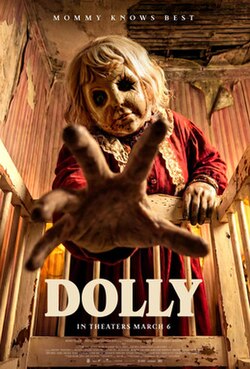
The opening sequence features a hulking woman wearing a porcelain doll mask, clutching a decapitated body. In her bedroom, she sobs with grief and appears emotionally wounded as she utters wounded, animalistic sounds.
The room is infested with buzzing flies, creating a hot summer atmosphere.
The plot then follows Macy (Fabianne Therese) and Chase (Seann William Scott), a happy couple on their way to a remote mountain-top getaway where Chase nervously intends to propose marriage.
A silly and superfluous add-on about Chase having a young daughter from a previous relationship and Macy’s uncertainty about being a stepmother, since her own mother was a shitty parent, is discussed via FaceTime with her sister.
This has nothing to do with the main story.
Chase and Macy briefly hike and enjoy the picturesque views before noticing an array of doll figures strewn across the forest and an eerie music box lullaby barely within earshot.
Naturally, since Dolly is a horror film, the couple separates as Chase goes to figure out what the mystery is all about, leaving Macy alone and both of them vulnerable.
Why they don’t go together is beyond me.
Eventually, Macy is abducted by the hulking mask-clad woman and dragged to a dilapidated house in the woods. She fights for survival after she realizes the woman intends to raise her as her infantile child.
Dolly is never a boring experience; it is divided into six chapters aptly named Mother, Father, Daughter, and so on. While the film is ambiguous, the chapters at least help the viewer ascertain that something weird is going on in the house, involving a family.
But is the hulking woman, assumed to be named ‘Dolly’, a victim herself? Why does she put Macy in a baby dress and give her a pacifier? Did she kill the decapitated body or did someone else?
Dolly is certainly nuts, but why is she nuts?
Eventually, another character is introduced who provides a shred of clarity but also raises even more questions. Why is the character bound and tied, and can they be trusted?
To offset the gruesome physical suffering and emotional trauma the characters endure, the audience can have some good, clean, slasher fun. Macy, in particular, makes one dumb decision after another, which may make the viewer scream out to the screen in comical frustration.
Seemingly countless times, Macy foregoes escape to either pause and ponder the situation, wasting precious time, or merely wounds her assailant instead of decapitating them to ensure she is safe.
There are also clichés like a character wearing headphones and blasting music, not hearing a victim’s pleas for help, a barricaded door, tripping and falling in the forest, curiously yelling out ‘hello?’, and various other devices to keep the character trapped and in peril.
It also makes Dolly seem predictable, especially as the conclusion draws near.
I wouldn’t say I was glad Dolly ended when it did, but it felt like it went as far as it could with what might be ‘Act 1’ of a multiple-film experience.
Dolly (2025) has an excellent horror vibe, great elements, and decent acting, but provides few answers to a myriad of questions.
While riddled with clichés from many past horror films, the setup is there, and the film successfully intrigues its audience enough, prompting a follow-up.